
How to Force Glute Dominance in the Gym (5 Lab Tested Techniques)
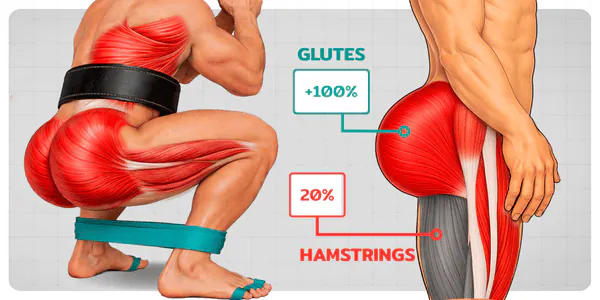
What if you could turn any exercise into a glute-building exercise?
I found 5 simple, research-backed techniques that force your body into a more glute-dominant pattern.
To test them, I went into an exercise science lab, strapped EMG sensors to my glutes, and squatted through each one. Stacked together, they raised my glute activation by over 65%. Same exercise, same weight, completely different output.
If you have been training hard but your glutes still are not growing, this is for you.
The 5 techniques:
Belly bracing
Activate posterior oblique sling
Short foot
Silicone toe spacers
Resistance bands
Technique 1: Belly Bracing
What it is:
Stiffening your midsection to stabilize the pelvis.
How it works:
Belly bracing stiffens your midsection, which locks the pelvis in place. Since the glutes anchor onto the pelvis, a stable pelvis gives them a firm base to contract from, so they contract more powerfully.
Think of how much faster you can run on a road than on sand.
Belly bracing also tightens the thoracolumbar fascia, the tissue connecting your core to your glutes, which triggers a stronger co-contraction between them [1].
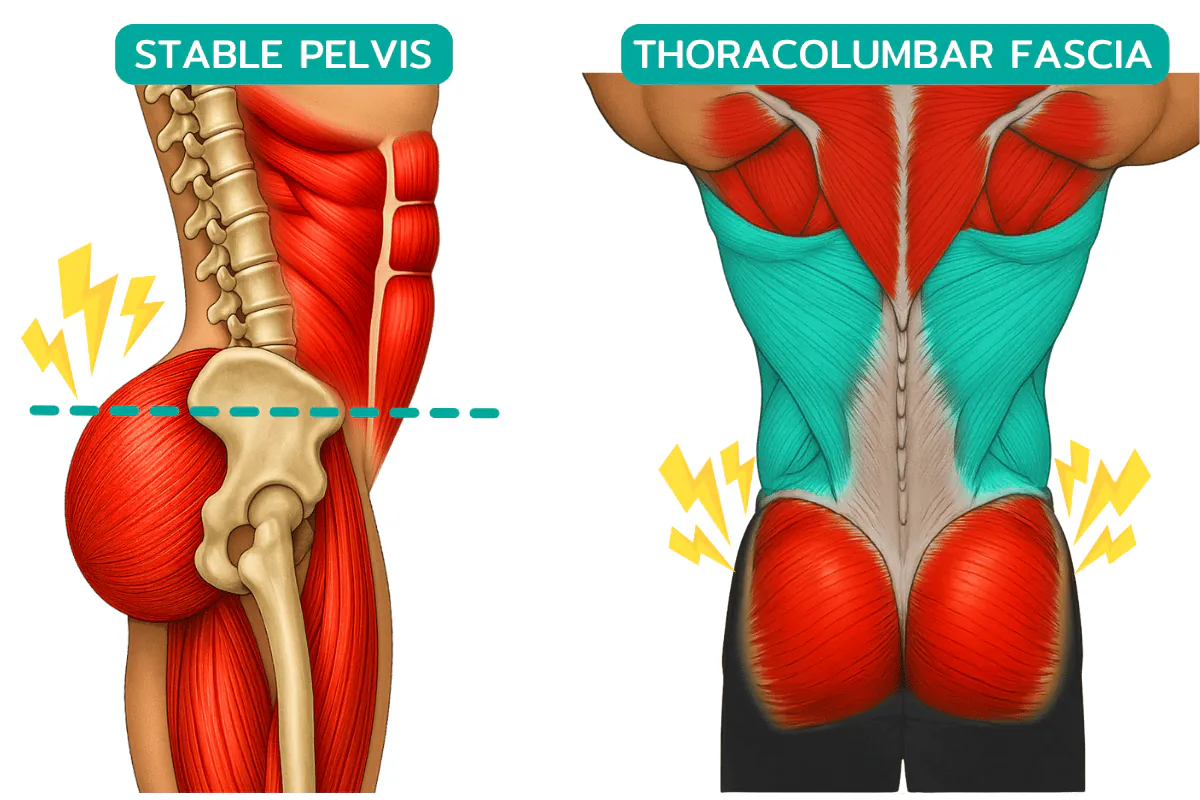
One study even found that glute activity more than doubled when the core was activated [2].
Why do you think the world's best powerlifters brace hard against a belt before every heavy lift?
Lab result:
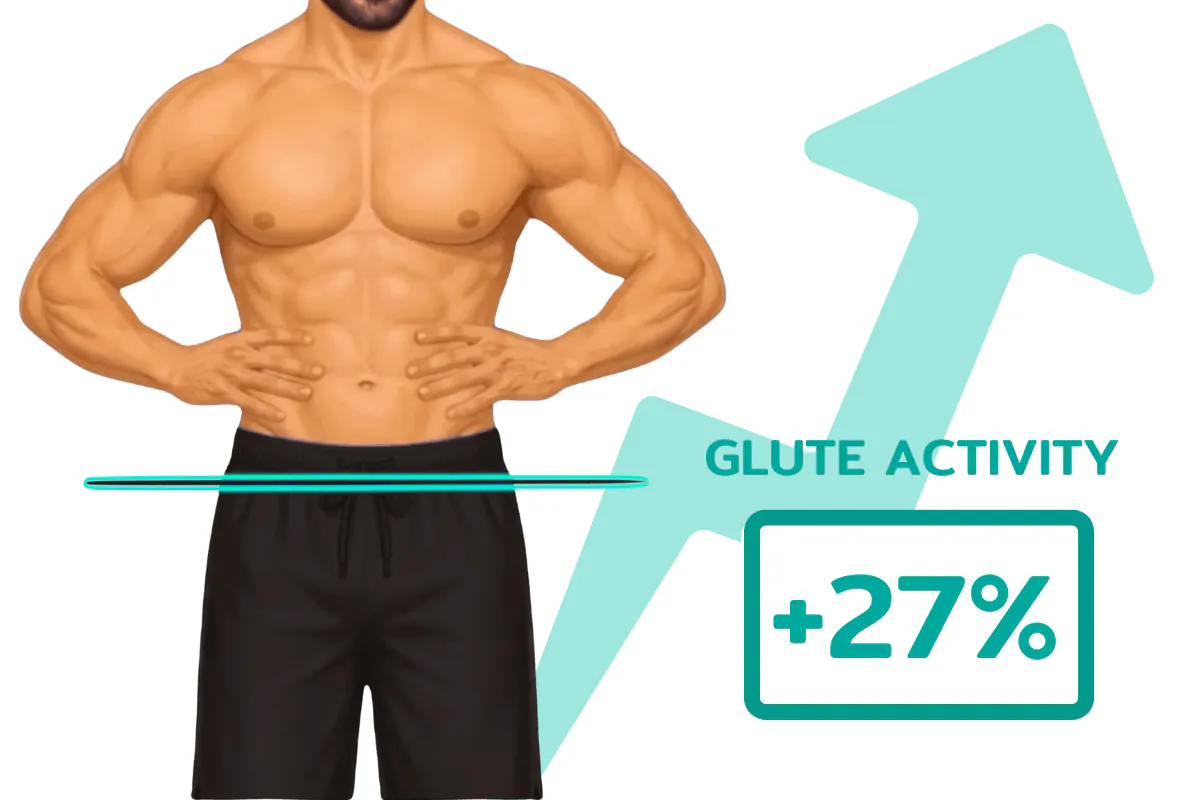
Belly bracing increased my glute activity by 27.5% over baseline on the squat.
How to do it:
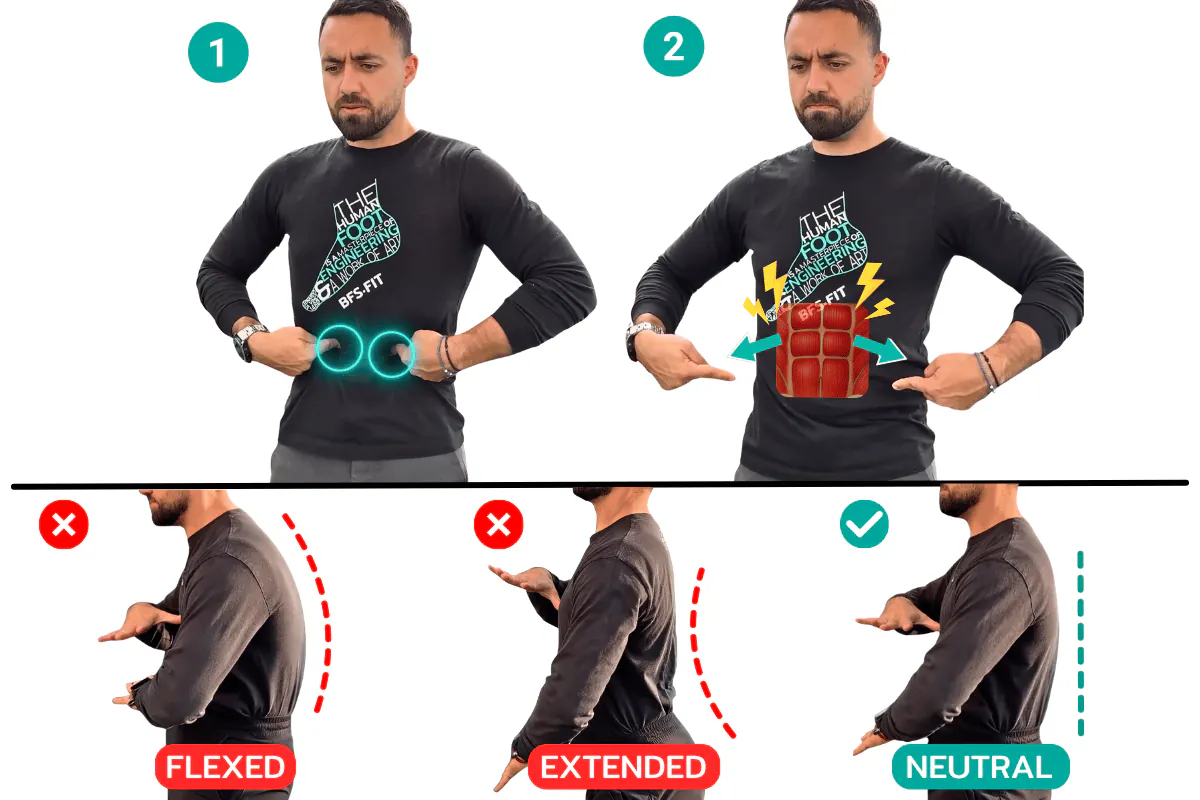
Before each rep, poke your fingers deep into your abdomen.
Contract your abs to force your fingers back out.
!! Keep your spine neutral, do not flex or extend it.
» MORE: How to Unlock Glute Strength With Core Stability
Technique 2: Activate Posterior Oblique Sling
What it is:
Engaging your lats to drive the opposite glute.
How it works:
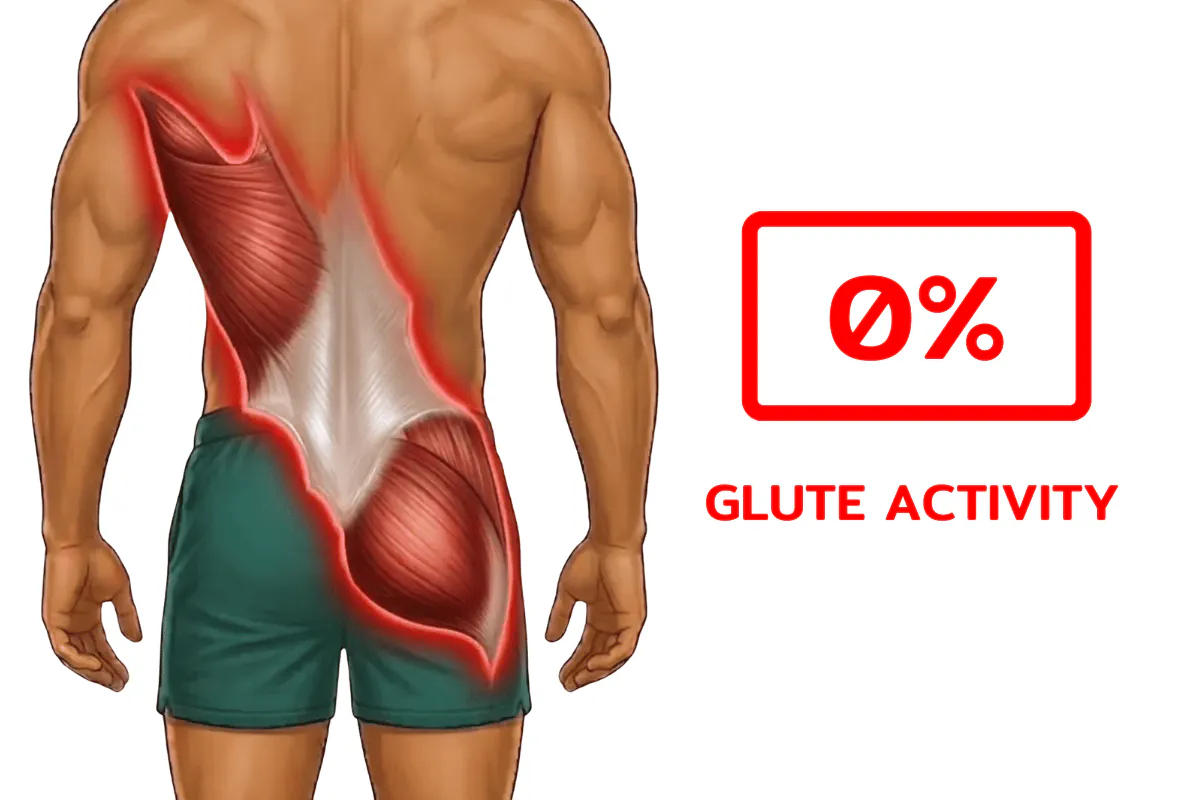
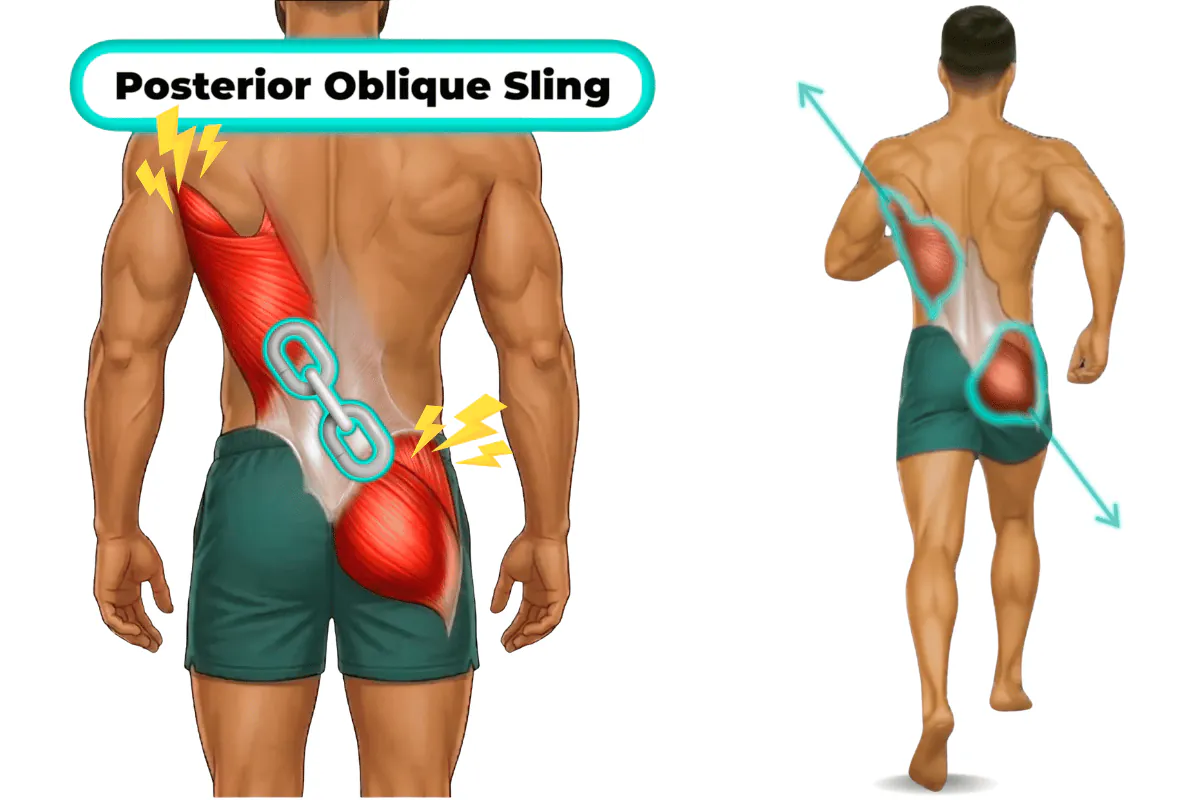
Your lats connect diagonally to the glute on the opposite side through a thick band of fascia in the lower back, called the posterior oblique sling [3]. And its purpose is to allow the two muscles to work together as a unit to produce a greater force output.
Why do you think your arms swing every time you walk and run?
During the swing phase of gait, the lat on one side and the glute on the opposite side are pulled apart, stretching the fascia that connects them like a slingshot being drawn back.
Then, during push-off, that stored tension snaps back, driving a powerful contraction through both muscles simultaneously.
This is the posterior oblique sling at work, and it’s what gives your stride its force and efficiency.
Lab result:
No gain in glute activity on the squat.
I tried firing the sling isometrically by pulling the bar hard into my traps to keep my lats engaged, but activation actually dropped slightly.
My theory: the sling needs that alternating stretch-and-release to fire, and in a squat both lats are locked on symmetrically, so there's no slingshot effect.
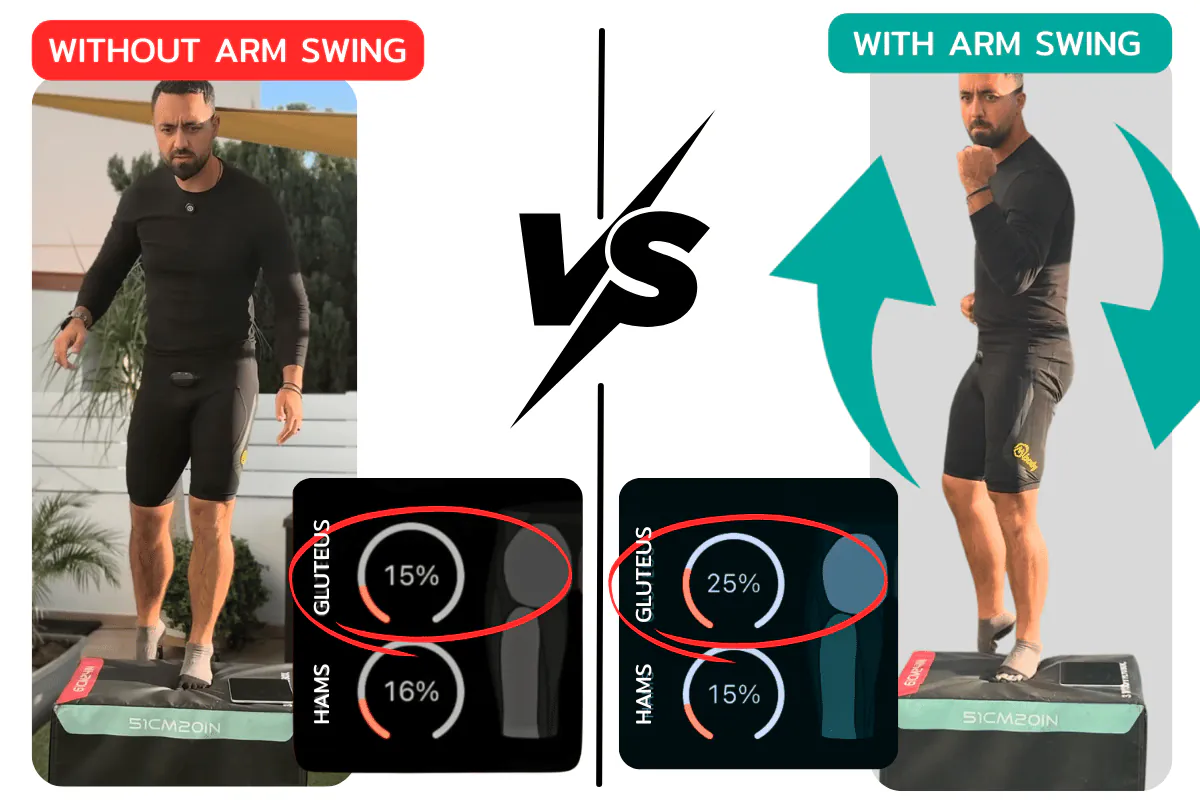
But in our step-up testing, adding an arm swing raised glute activity and cut quad involvement.
How to do it:
Add an arm swing to free-arm movements: lunges, step-ups, single-arm kettlebell work.
» MORE: The Best Glute Exercise For Strength & Endurance (Science-Based)
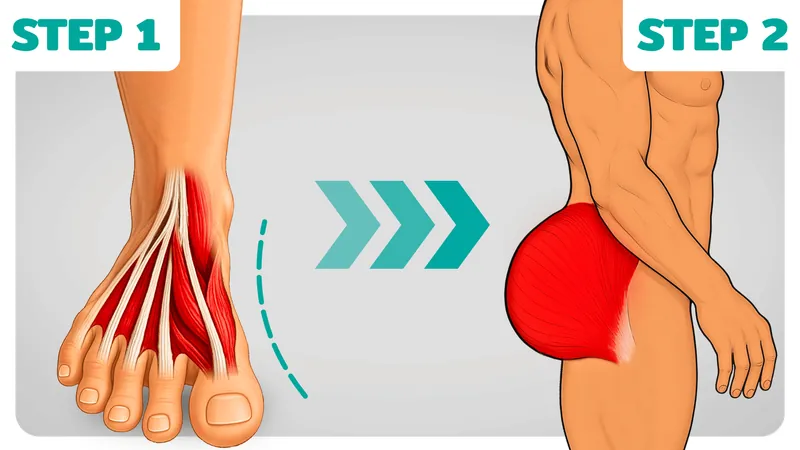
Technique 3: Short Foot
What it is:
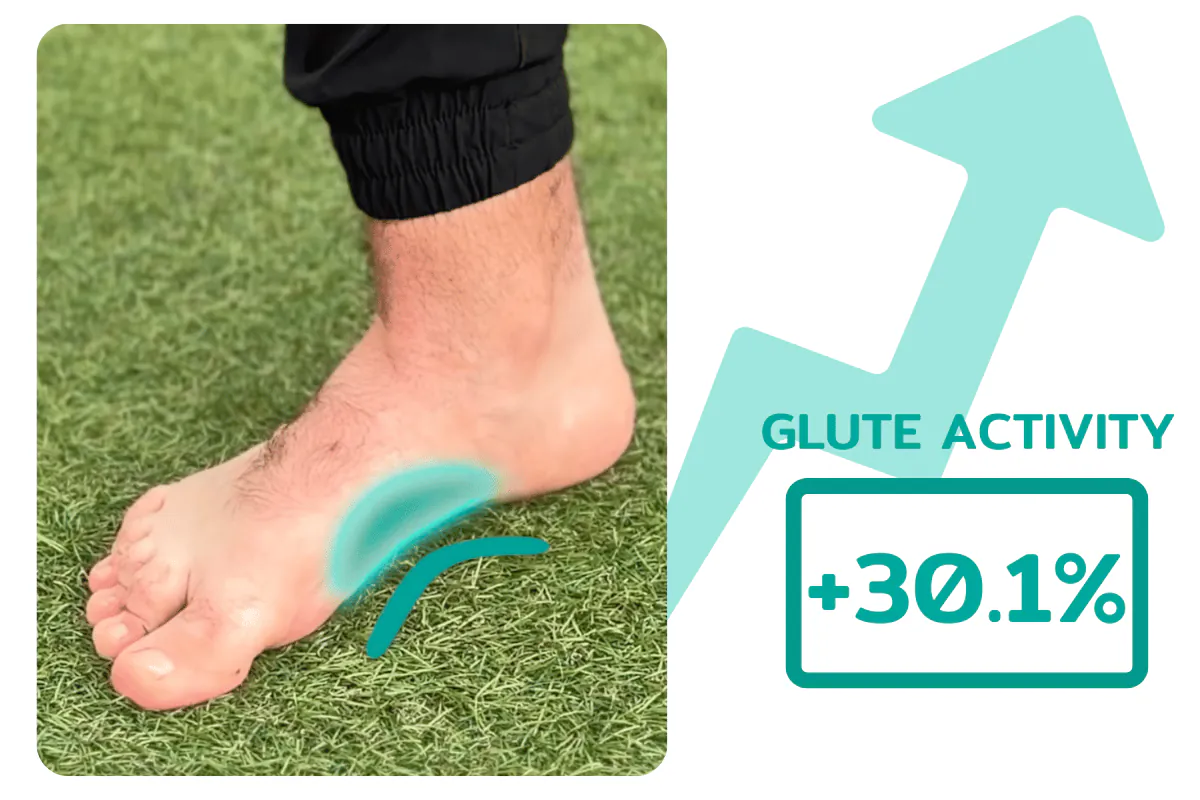
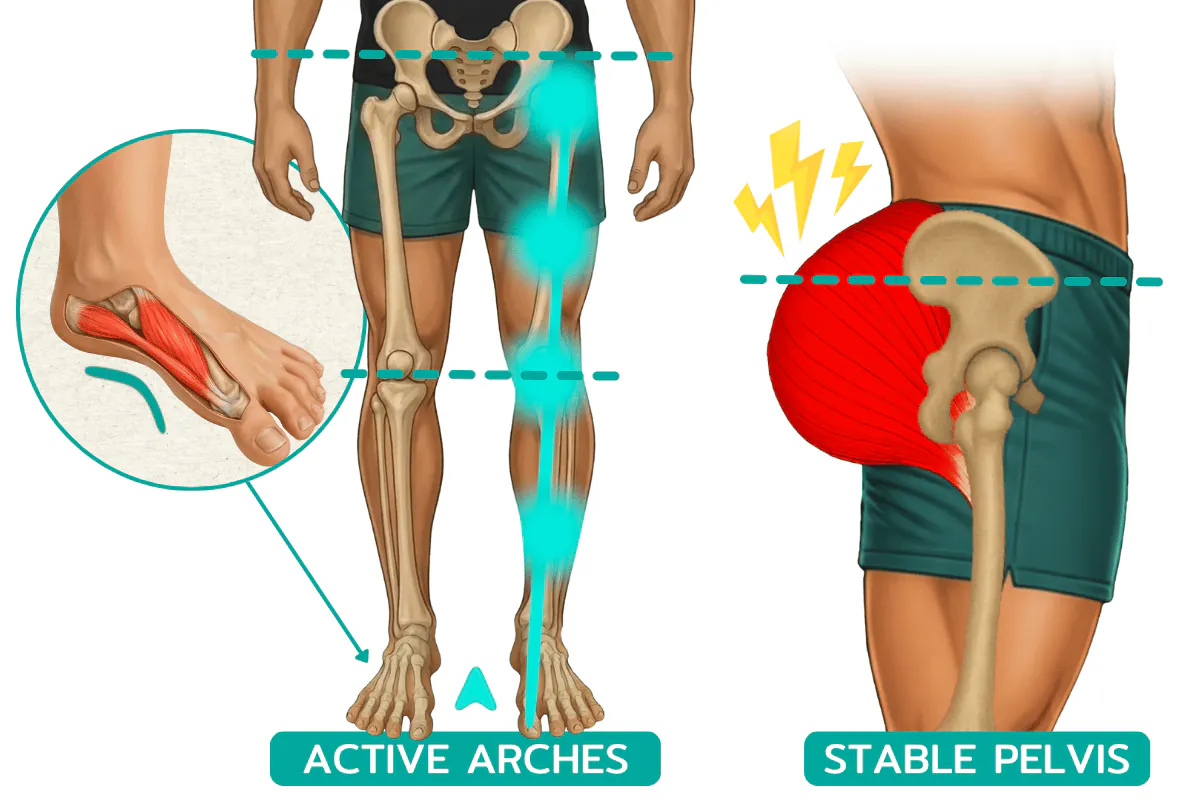
Pressing your toes down to lift and lock your arches.
How it works:
When you press your toes into the ground, the muscles linking your toes to your arch activate, lifting the arch and keeping the foot stable under load [4] [5].
That stable foot keeps everything above it (shin, knee, thigh and pelvis) in line, holding the pelvis in a neutral position [6]. And since the glutes anchor to the pelvis, that neutral position is exactly what gives them a stable base to contract powerfully from.
It's why a 2021 study found people with higher arches had significantly more glute activation than those with flat arches [7].
Lab result:
+30.1%, the single biggest jump in glute activity of the session.
How to do it:
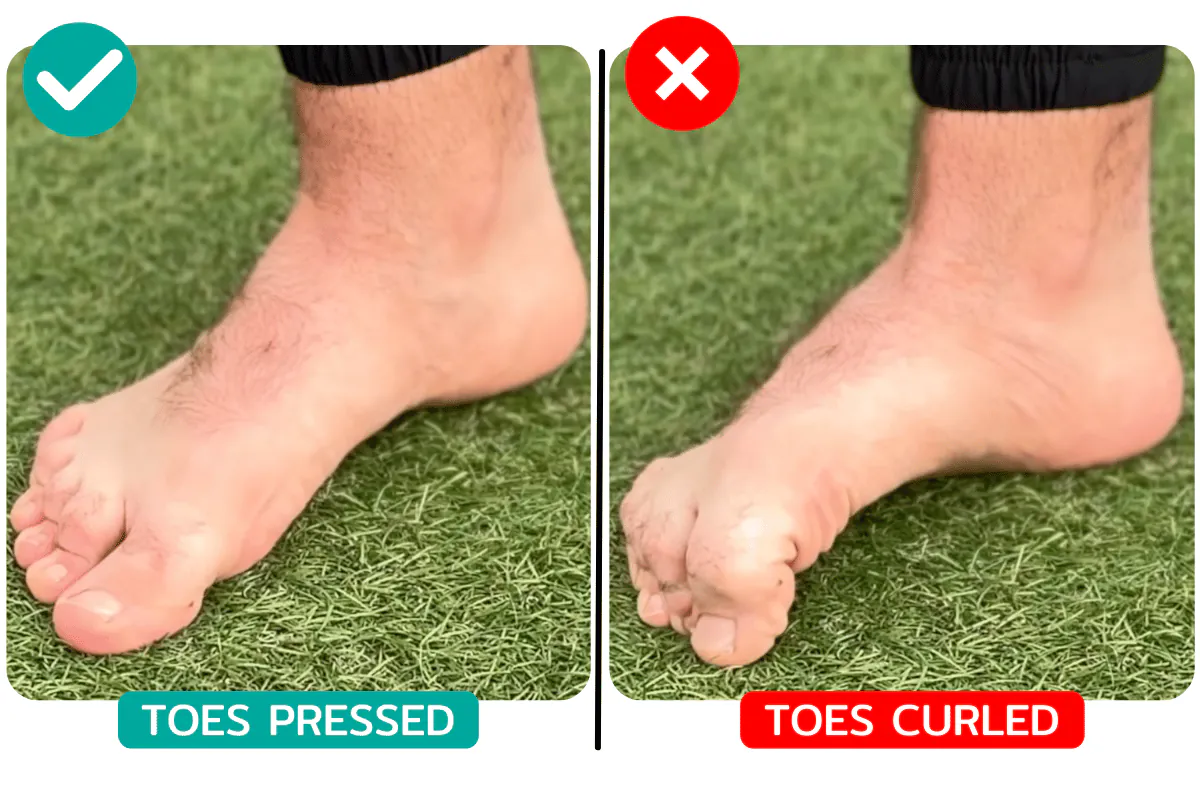
Before each rep, press your toes flat into the floor.
Do not curl the toes.
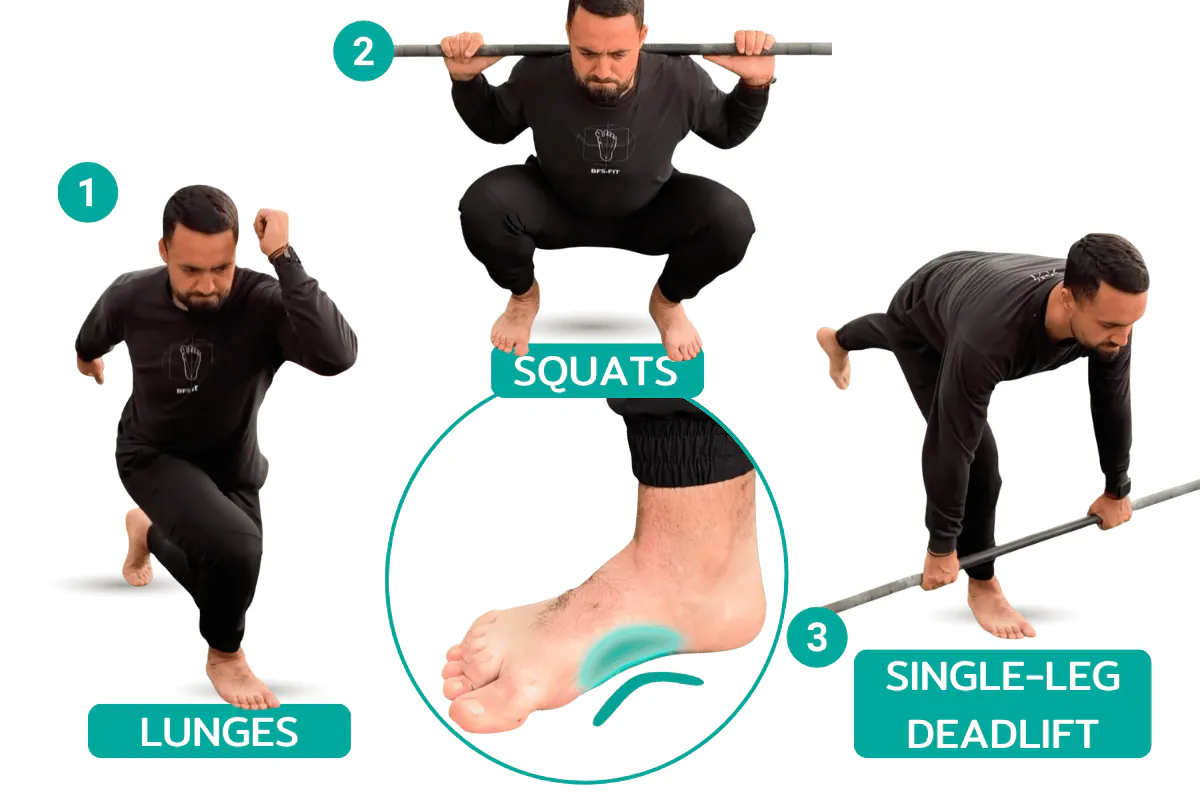
For lunges: set the short foot on the front leg before you descend.
For squats: light pressure down, then drive your toes hard into the floor when you stand up.
For single-leg deadlift: lock the standing foot first.
» MORE: How to Get Strong Feet & Glutes at The Same Time (with exercises)
Technique 4: Silicone Toe Spacers
What it is:
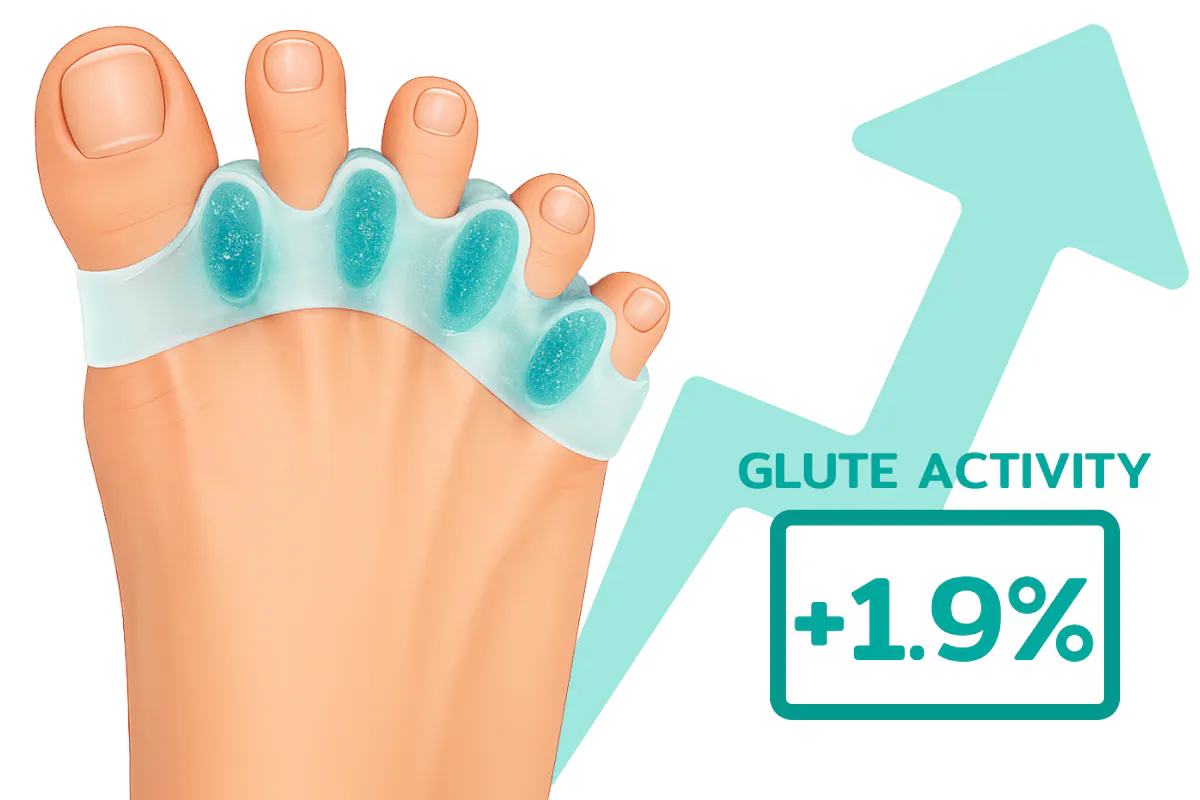
Wearing silicone toe spacers to splay and align the toes.
How it works:
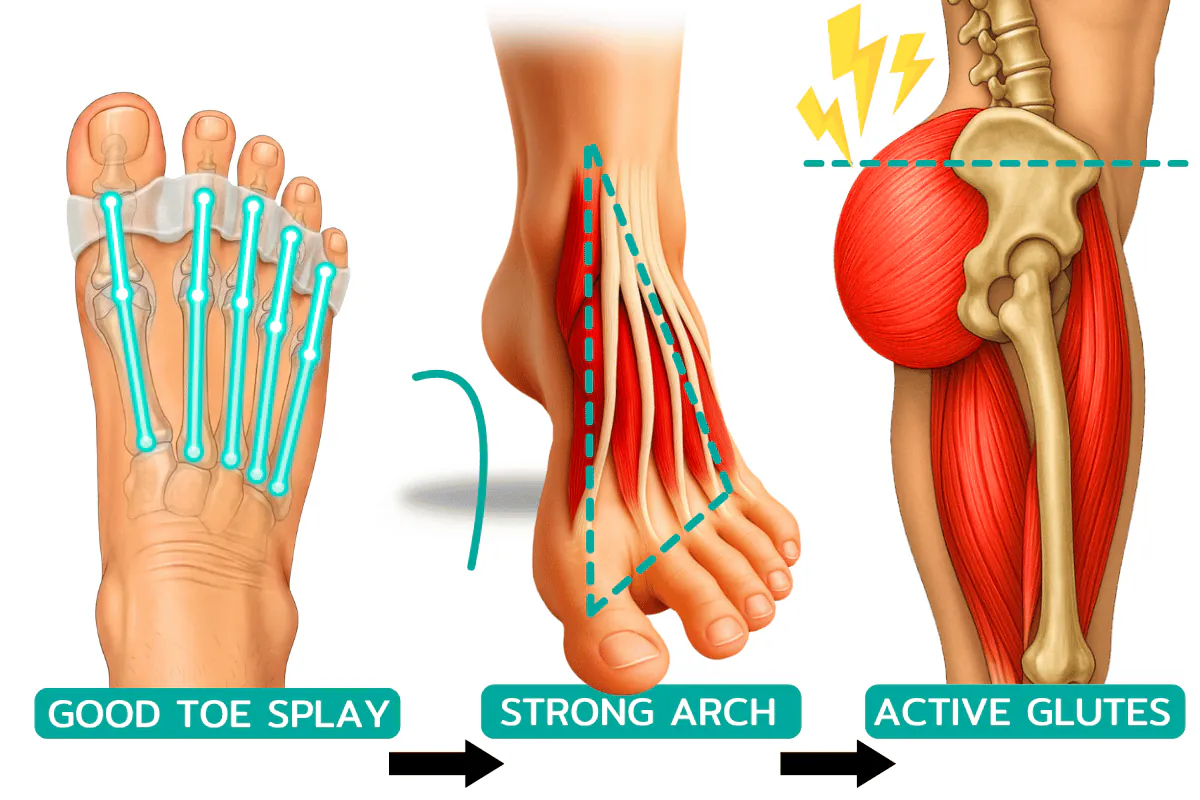
Spacers splay the toes back into alignment, which widens the foot's base and stabilizes the arch. When the toes are misaligned, like with a bunion, the base narrows and the arch collapses. [8] [9]
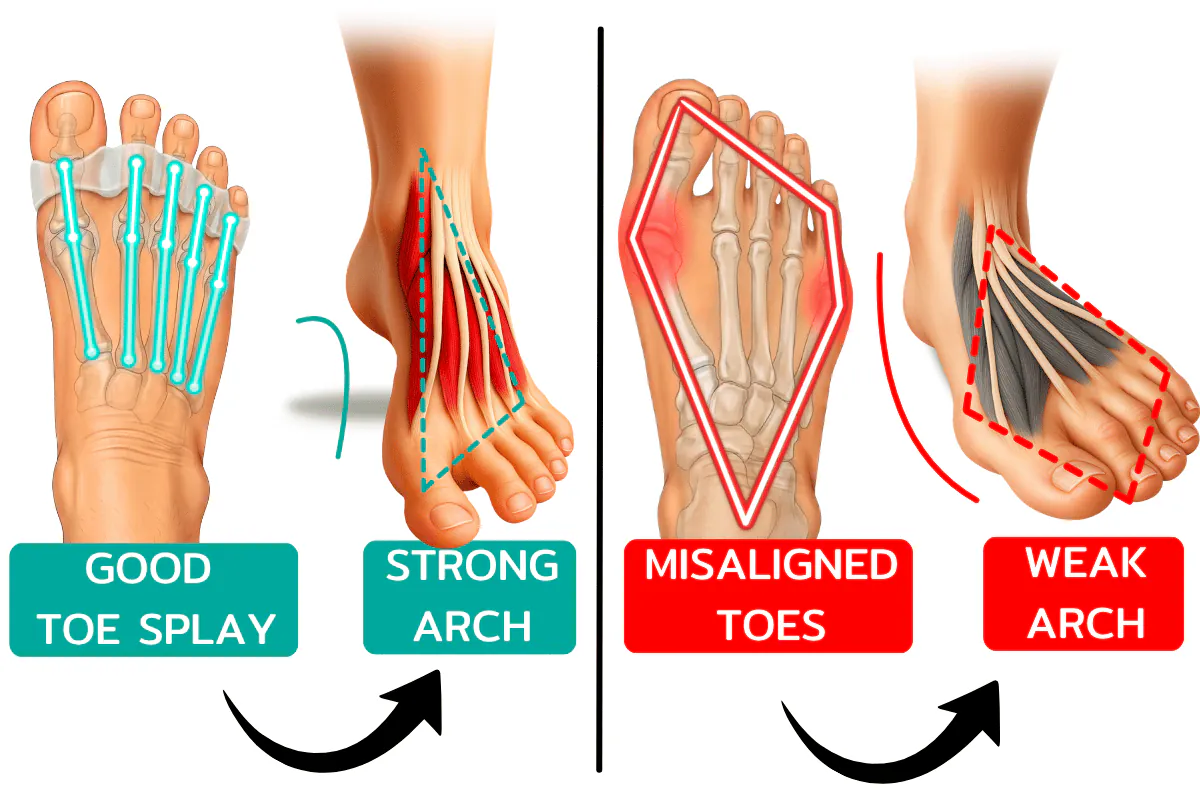
And a collapsed arch pulls the whole chain above it out of line, tilting the pelvis out of neutral. Once the pelvis loses that stable position, the glutes lose the base they need to contract powerfully [6].
Spacers realign the toes immediately, restoring that foundation.
Lab result:
+1.9% jump in glute activity.
My own gain was small since I have no toe misalignment. So expect a bigger effect for someone with toe misalignment issues, like a bunion or bunionette.
!! It’s also important to note that toe spacers will only work in shoes if the shoes are wide enough to accommodate them. Wearing toe spacers inside shoes that were too narrow actually produced a negative result in glute activity for me.
How to do it:
Wear spacers while training barefoot or in barefoot shoes.
Make sure your shoes have enough room to accommodate toe spacers, otherwise they will lose their function.
» The toe spacers we recommend: #Strength Tools
» The wide toe-box shoes we recommend: #Barefoot Shoe Finder
Technique 5: Resistance Bands
What it is:
Adding a resistance band around the legs.
How it works:
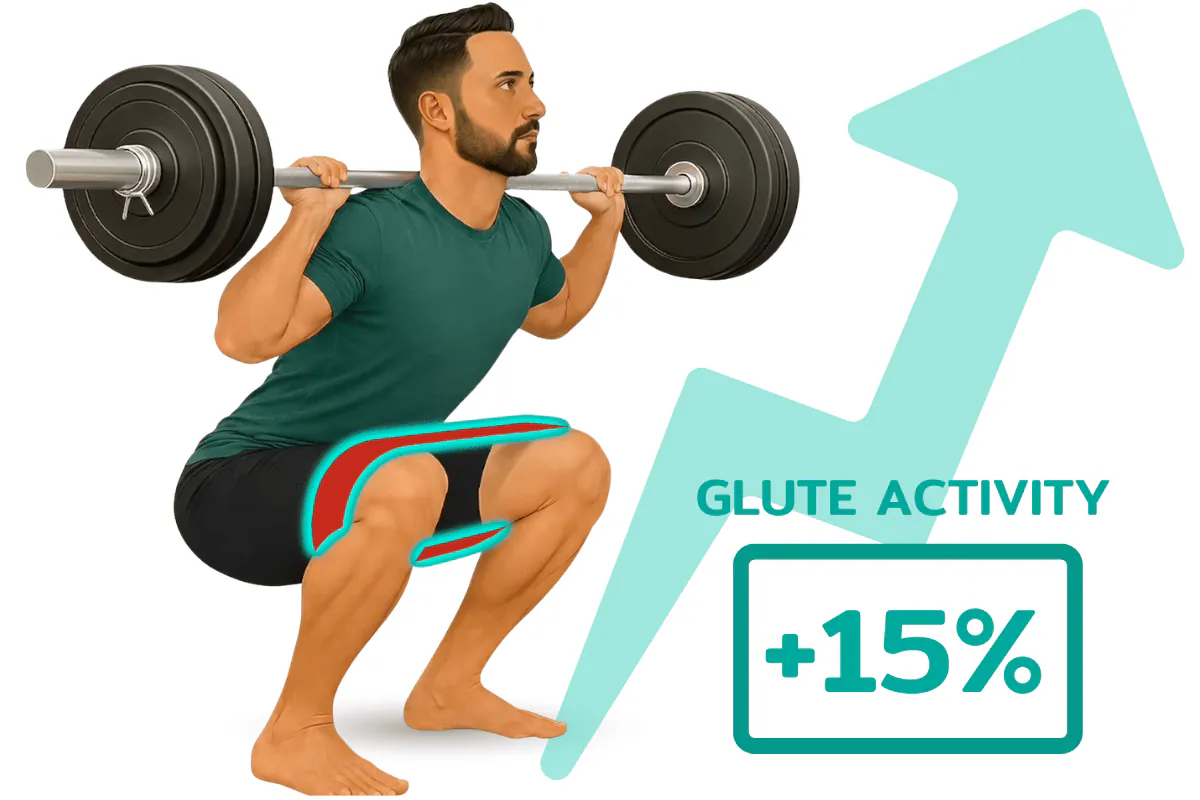
A 2020 study found that placing resistance bands around the knees during barbell back squats increased glute activity by 23% [10].
That's because the band pulls the knees inward, forcing the glutes to fire harder through hip abduction and external rotation to resist it.
But the study also revealed a downside: at the knees, heavy band tension pulled some lifters into knee valgus [10].
Placing the band lower avoids this, and research shows it makes the glutes fire even more [11] [12]. That's why my preferred placement is the ankles: you get the most glute activation and you avoid the valgus risk.
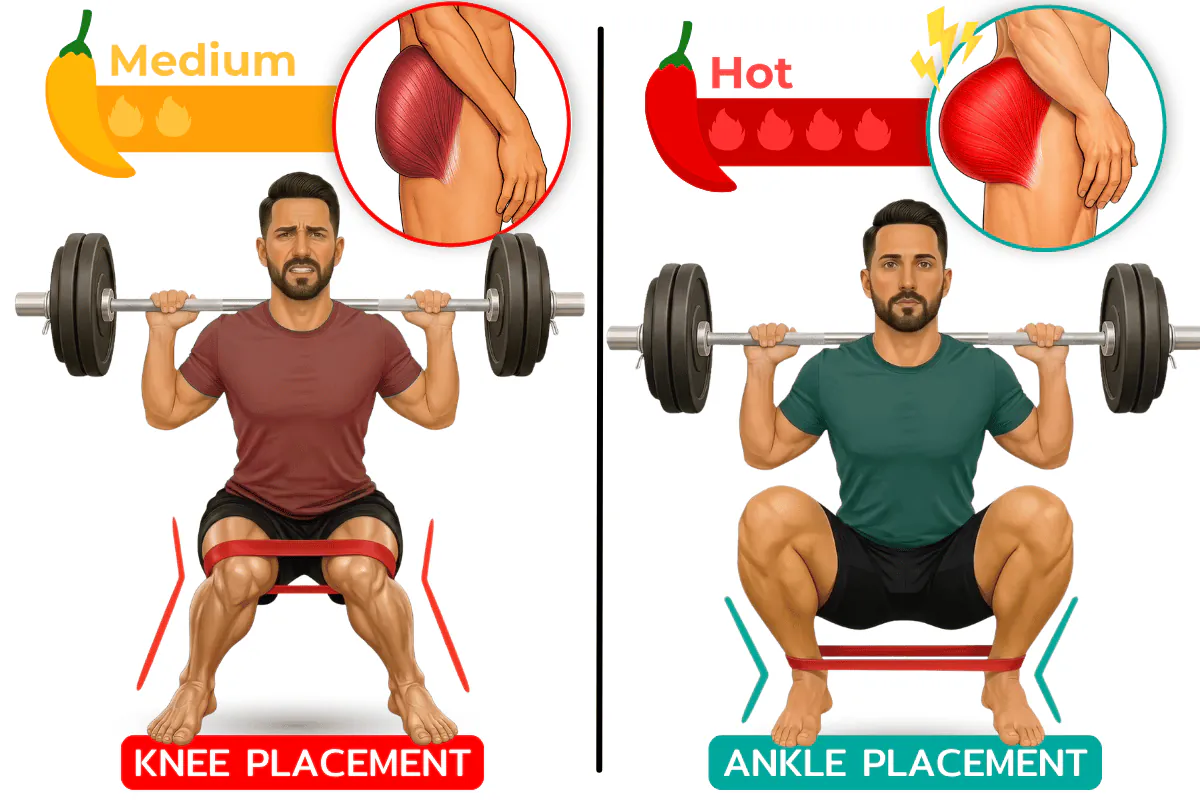
At the ankles it also trains your arches, since it introduces gentle pronation forces, which encourages you to supinate to stay stable.
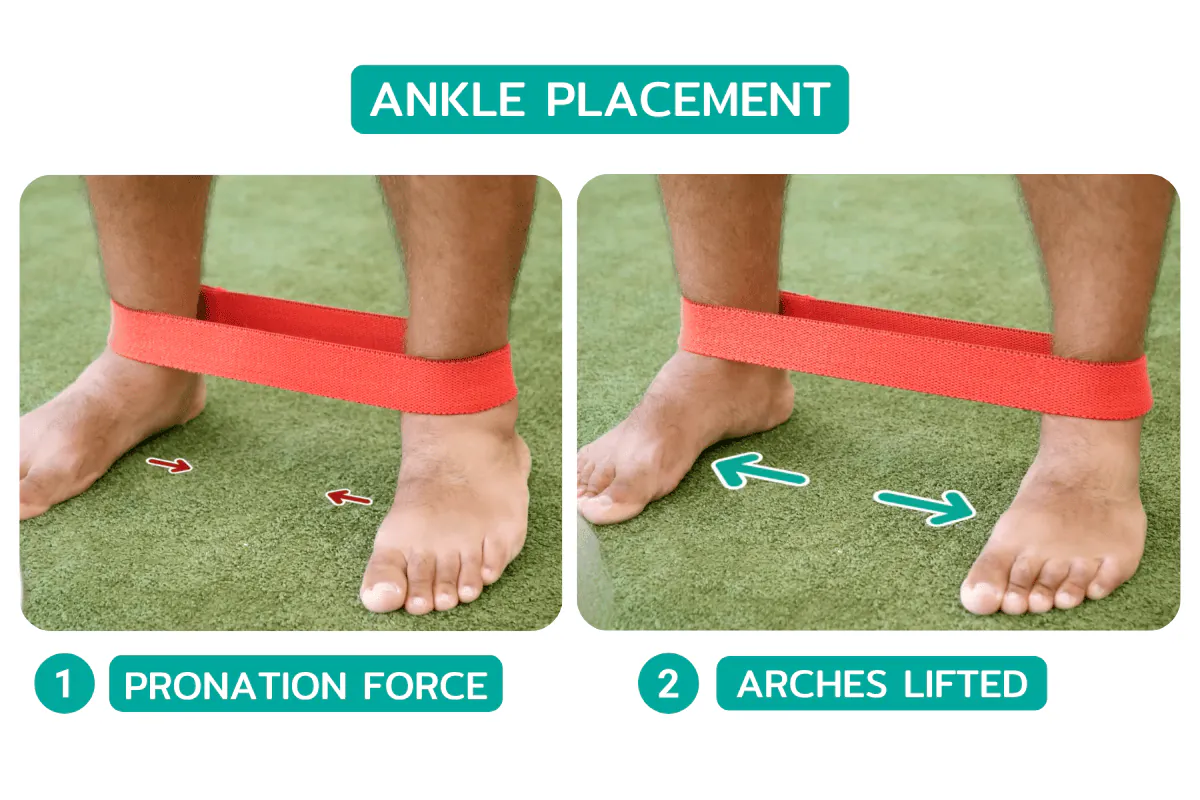
Lab result:
+15% in glute activity.
How to do it:
Loop the band around your ankles and make sure your arches are lifted.
Add it to movements like squats, deadlifts, wall balls, overhead presses, and even farmer carries.
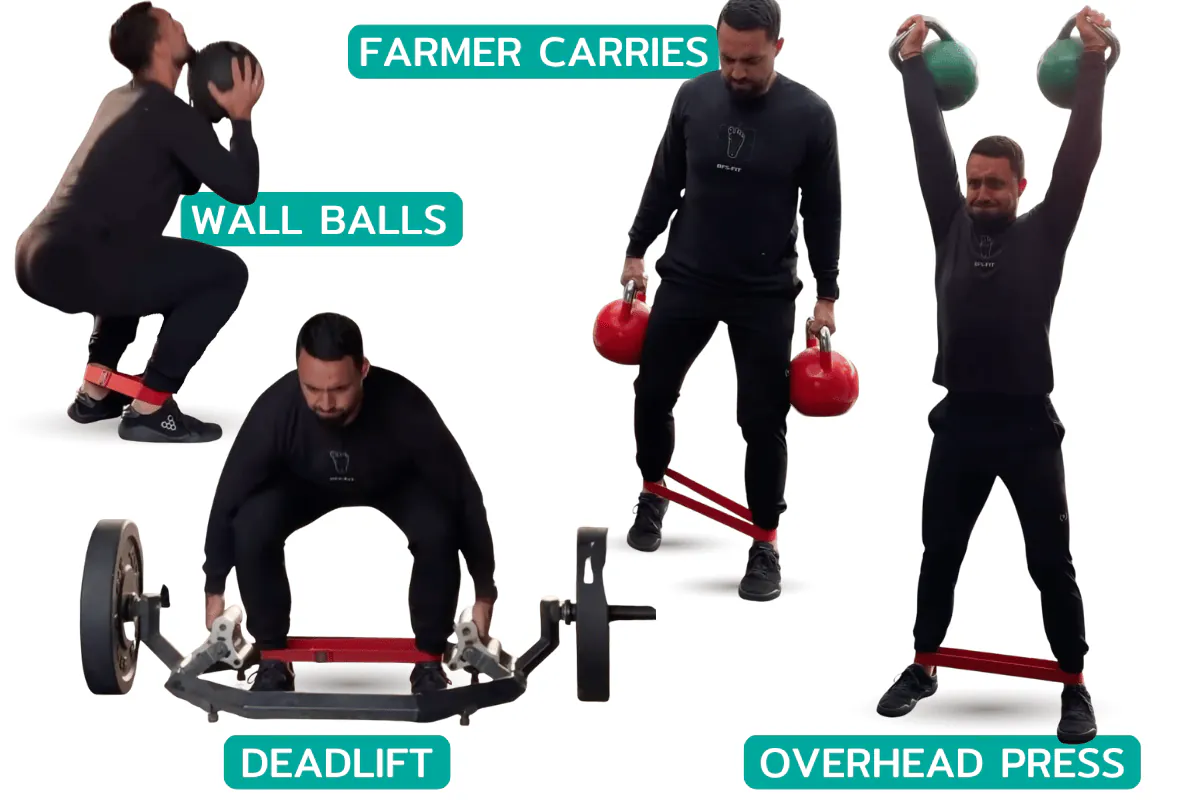
» The resistance bands we recommend: #Strength Tools
The Final Results
With all the techniques stacked, I saw a 65.4% increase in glute activity over the baseline (0.041 mV → 0.068 mV).
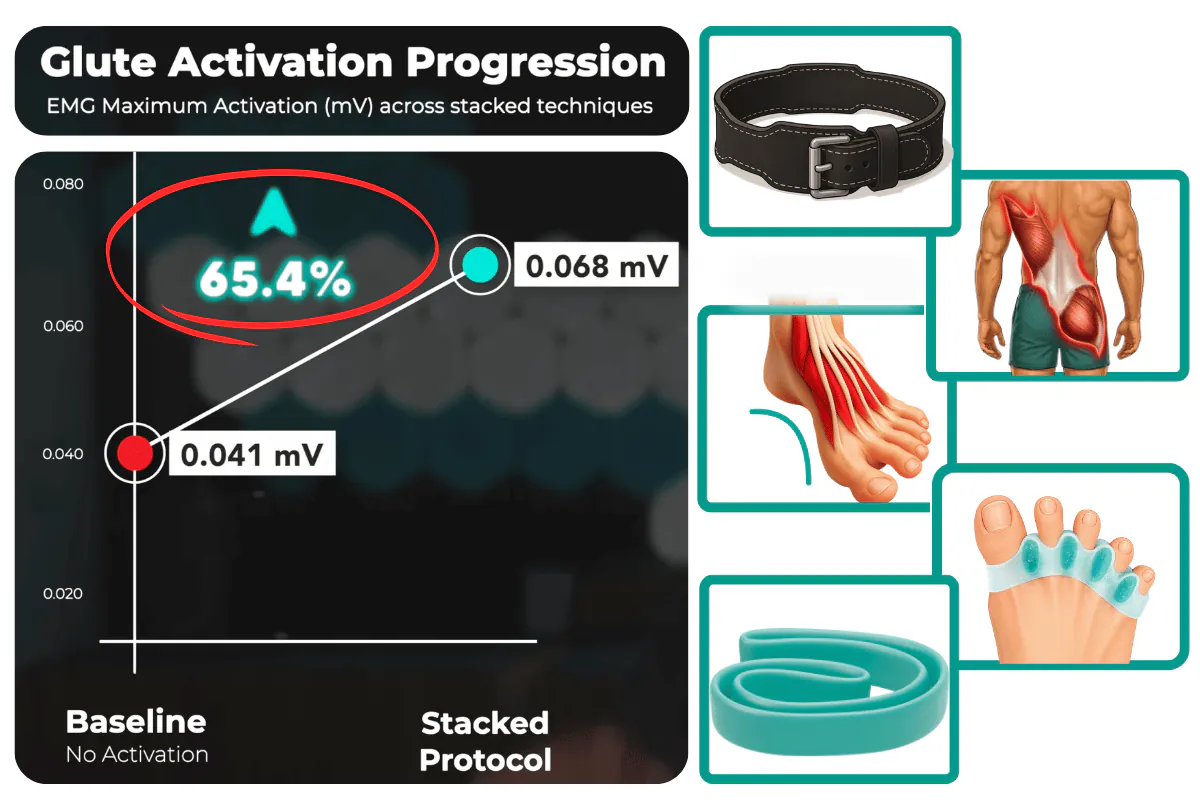
That’s a two-thirds jump in glute output with no change to the exercise, weight, or tempo. And remember, not every technique contributed here.
With all five dialed in, the gain could be even bigger.
Build the Foundation First
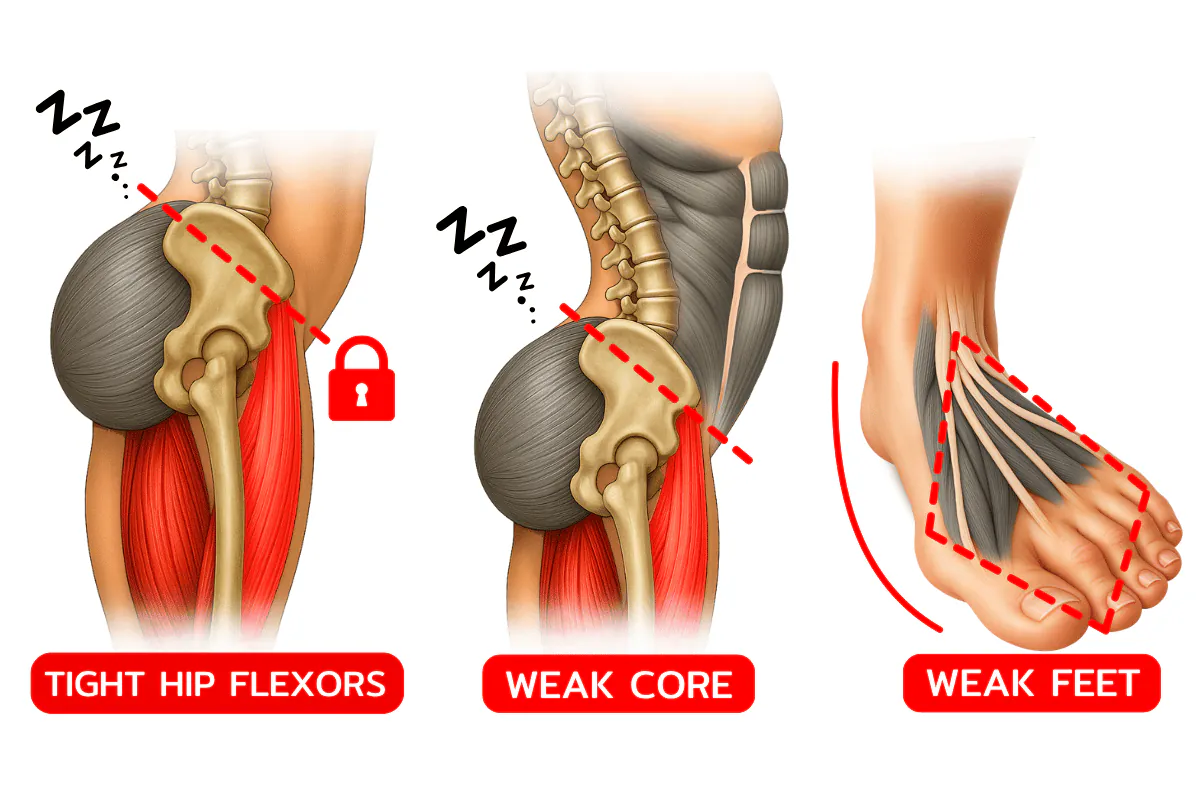
So, clearly these techniques work. But it's important to note that they work best when your body has the foundation to support them and is not limited by any dysfunctions.
For instance:
If you have tight hips, it will block hip extension and full glute contraction.
If you have stiff ankles it will keep you from squatting deep enough to fire the glutes.
If you have weak feet, it will limit how much short foot can do.
Ready to Transform Your Glutes?
The 5 techniques give you the tools, but a well-functioning body is what lets you use them. That is exactly what we build at the Barefoot Strength Academy.
Our system starts with personalized assessments to pinpoint your mobility and stability weaknesses, then gives you over 150 targeted exercises and follow-along workouts with guided progressions to fix them.
With those fundamentals in place, you can stack these 5 techniques on top for maximal glute strength and endurance.
Start Your Transformation >>Sources
The sources cited in this article. Select a small reference number to return to its place in the article.
- The effect of activation of thoracolumbar fascia on the thickness of abdominal muscles: An ultrasonographic study.. Turan Z, Özyemişçi-Taşkıran Ö.. Turk J Phys Med Rehabil. 2022. 1
- Effects of performing an abdominal drawing-in maneuver during prone hip extension exercises on hip and back extensor muscle activity and amount of anterior pelvic tilt. Jae-Seop Oh, Heon-Seock Cynn, Jong-Hyuk Won, Oh-Yun Kwon, Chung-Hwi Yi. The Journal of orthopaedic and sports physical therapy. 2007. 2
- Myofascial force transmission between the latissimus dorsi and gluteus maximus muscles: an in vivo experiment.. Carvalhais VO, Ocarino Jde M, Araújo VL, Souza TR, Silva PL, Fonseca ST.. J Biomech. 2013. 3
- Fatigue of the plantar intrinsic foot muscles increases navicular drop.. Headlee DL, Leonard JL, Hart JM, Ingersoll CD, Hertel J.. J Electromyogr Kinesiol. 2008. 4
- The foot core system: a new paradigm for understanding intrinsic foot muscle function. Patrick O McKeon, Jay Hertel, Dennis Bramble, Irene Davis. British Journal of Sports Medicine. 2014. 5
- Increased unilateral foot pronation affects lower limbs and pelvic biomechanics during walking.. Resende RA, Deluzio KJ, Kirkwood RN, Hassan EA, Fonseca ST.. Gait Posture. 2015. 6a 6b
- An exploratory study investigating the effect of foot type and foot orthoses on gluteus medius muscle activity.. Sadler S, Spink M, de Jonge XJ, Chuter V.. BMC Musculoskelet Disord. 2020. 7
- Relationship Between Hallux Valgus and Pes Planus: Real or Fiction?. Atbaşı Z, Erdem Y, Kose O, Demiralp B, Ilkbahar S, Tekin HO.. J Foot Ankle Surg. 2020. 8
- Relationship between adolescent bunions and flatfeet.. Kalen V, Brecher A.. Foot Ankle. 1988. 9
- Barbell back squat: how do resistance bands affect muscle activation and knee kinematics?. Reece MB, Arnold GP, Nasir S, Wang WW, Abboud R.. BMJ open sport & exercise medicine. 2020. 10a 10b
- Progressive hip rehabilitation: The effects of resistance band placement on gluteal activation during two common exercises. Edward D.J. Cambridge, Natalie Sidorkewicz, Dianne M. Ikeda, Stuart M. McGill. Clinical Biomechanics. 2012. 11
- Looped Elastic Resistance during Squats: How Do Band Position and Stiffness Affect Hip Myoelectric Activity?. Martins EC, Steffen LB, Gomes D, Herzog W, Haupenthal A, de Brito Fontana H.. Journal of functional morphology and kinesiology. 2022. 12
Watch the video
FREE 7-DAY EMAIL COURSE
Sign up for our free Strong Feet and Glutes course
Get a lesson in your inbox every day for 7 days.
Start your free course
You'll also join our newsletter. Unsubscribe at any time.