
The Best Glute Exercise For Strength & Endurance (Science-Based)
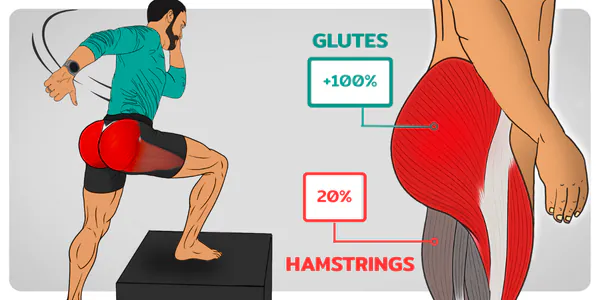
Very few exercises activate your glutes as deeply as the step-up. Research confirms it achieves over 100% maximum voluntary contraction (MVIC), placing it among the top glute activators out there. [1].
So, what makes the step-up uniquely beneficial for both strength and endurance?
Why the Step-Up Activates the Glutes So Effectively
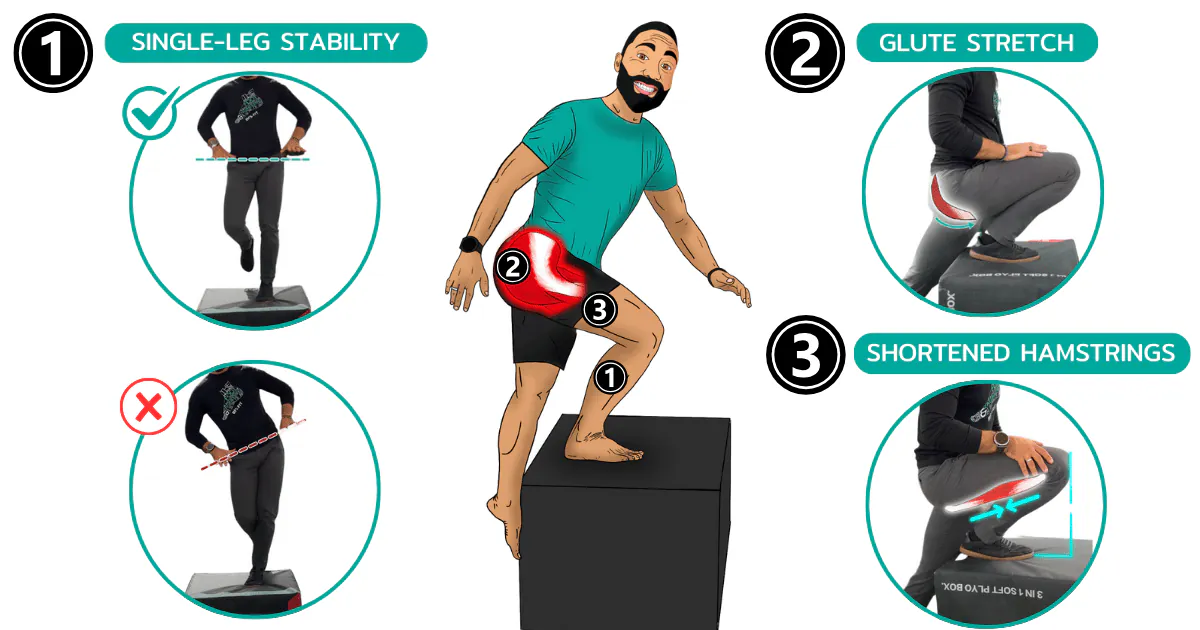
There are three key reasons:
1. Single-Leg Stability
Balancing on one leg forces your glutes to stabilize the pelvis, preventing lateral tilt and engaging the muscle deeply. This instability significantly boosts glute activation compared to bilateral movements like traditional squats [1].
2. Increased Glute Stretch
Using a higher box (around 45cm or more) positions your hips lower relative to your feet, stretching your glutes and activating them more effectively [2].
3. Reduced Hamstring Involvement
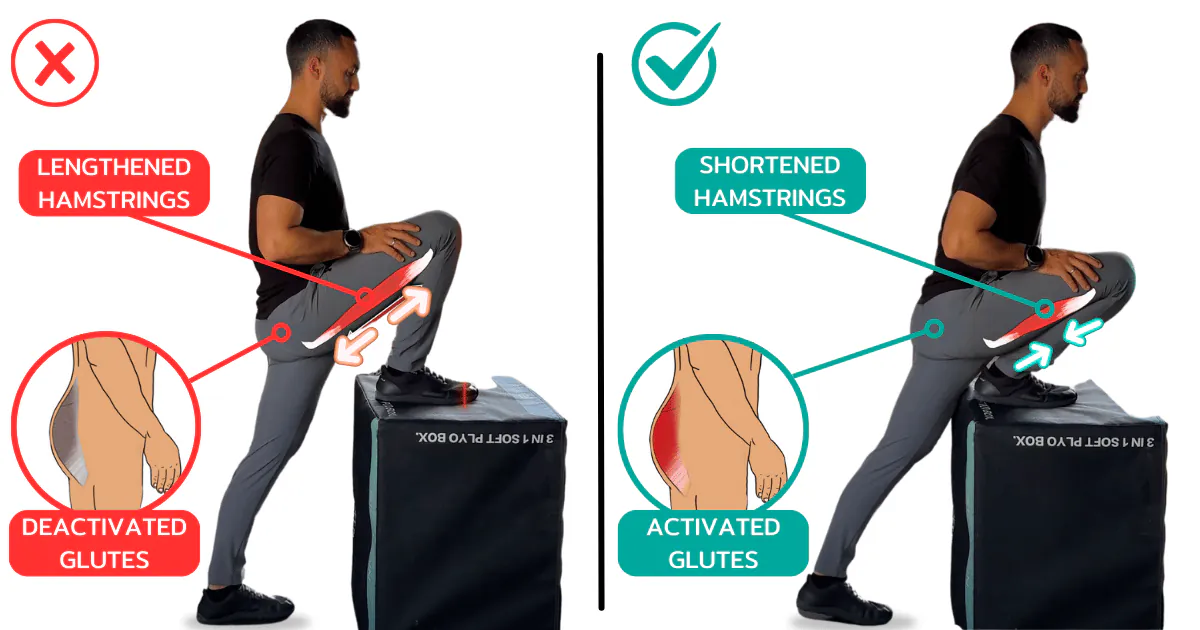
When stepping up, your knee naturally moves ahead of your toes, shortening your hamstrings and reducing their ability to contract forcefully. This positional advantage ensures your glutes—not your hamstrings—dominate the movement [3].
Why The Step Up is Great For Endurance Training
Matt Fraser, five-time CrossFit Games champion, credits the step-up variant (stair climber) as a key conditioning exercise, noting it helped him sustain a high heart rate over a long period of time during his intense training.
Because this exercise targets the glutes—the body’s largest muscle—it increases oxygen demand, triggering an aerobic response and improving endurance.
Unlike bilateral exercises, step-ups also allow the alternating legs to recover briefly between reps, enabling sustained exercise duration without excessive muscular fatigue.
Additionally, Fraser and many athletes find step-ups gentler on joints, especially the lower back, due to easier maintenance of neutral spine alignment. This allows you to train the step up longer and harder without requiring as much recovery time after sessions.
Note: To target endurance specifically, simply lower the box height. Since you perform step-ups one leg at a time, each leg naturally gets a short rest between repetitions, helping you train longer.
Use Our Modified Step-Up to Maximize Glute Activation
Using EMG muscle-tracking technology, I validated four scientifically backed techniques that significantly increase glute activation during step-ups:
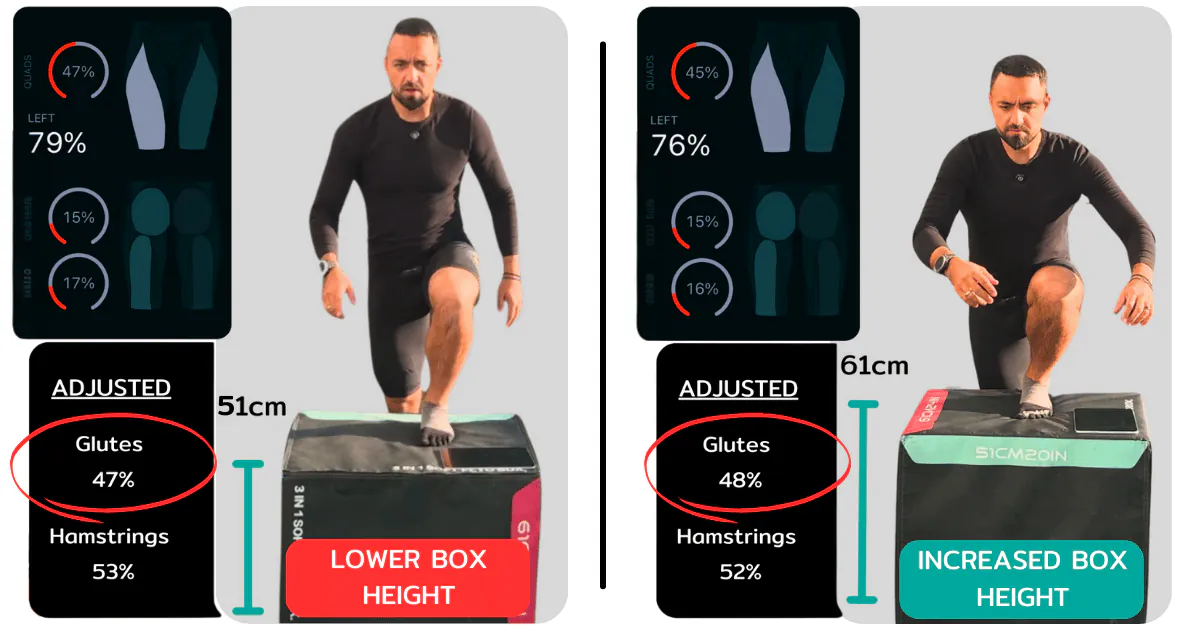
1. Higher Box Height
Increasing the box height from 51cm to 61cm slightly increases my glute activation by +1%.
2. Silicone Toe-Spacers
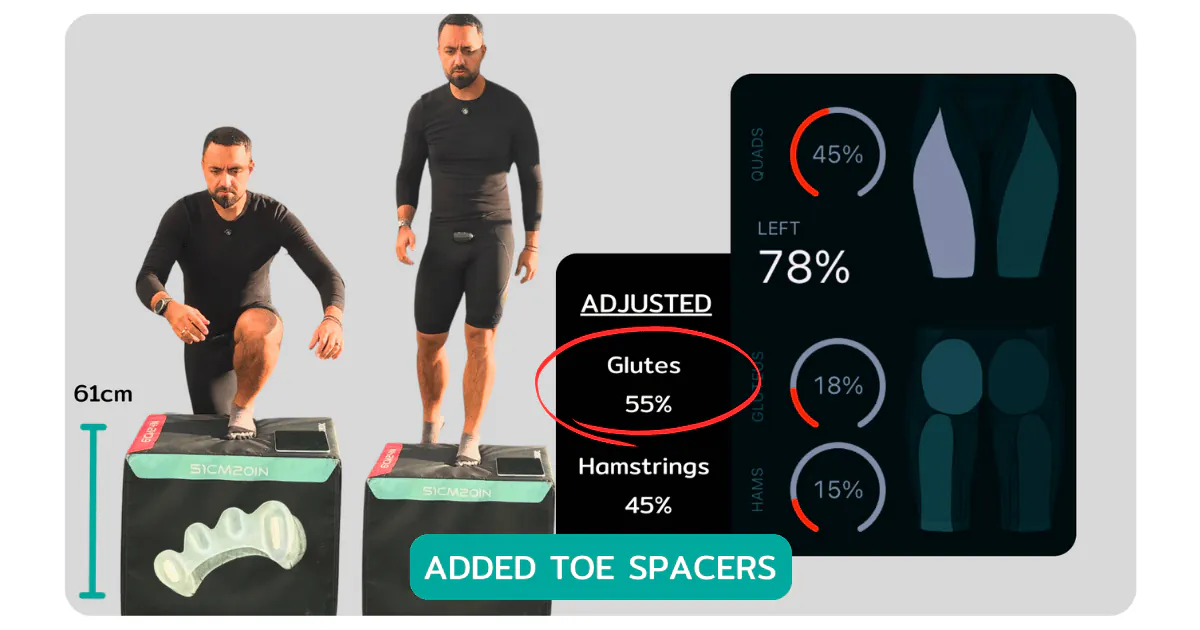
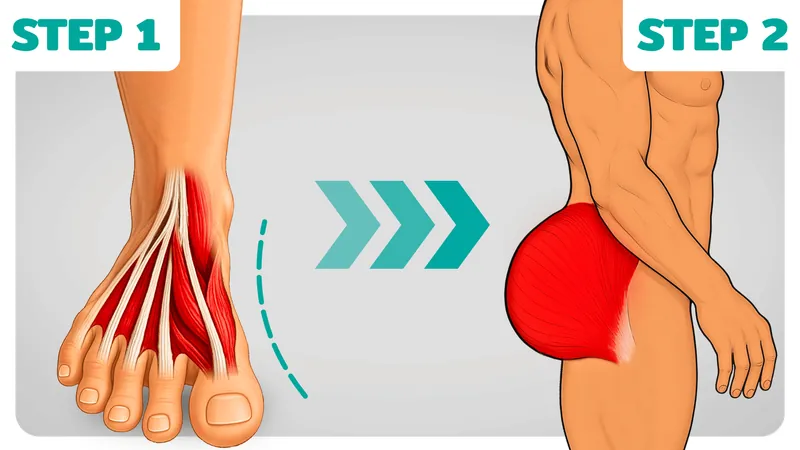
Expanding the foot’s base with silicone toe spacers aligns the toes and stabilizes the arch, significantly boosting glute dominance (+7%). This single change shifted me from hamstring to glute-dominant in the step-up.
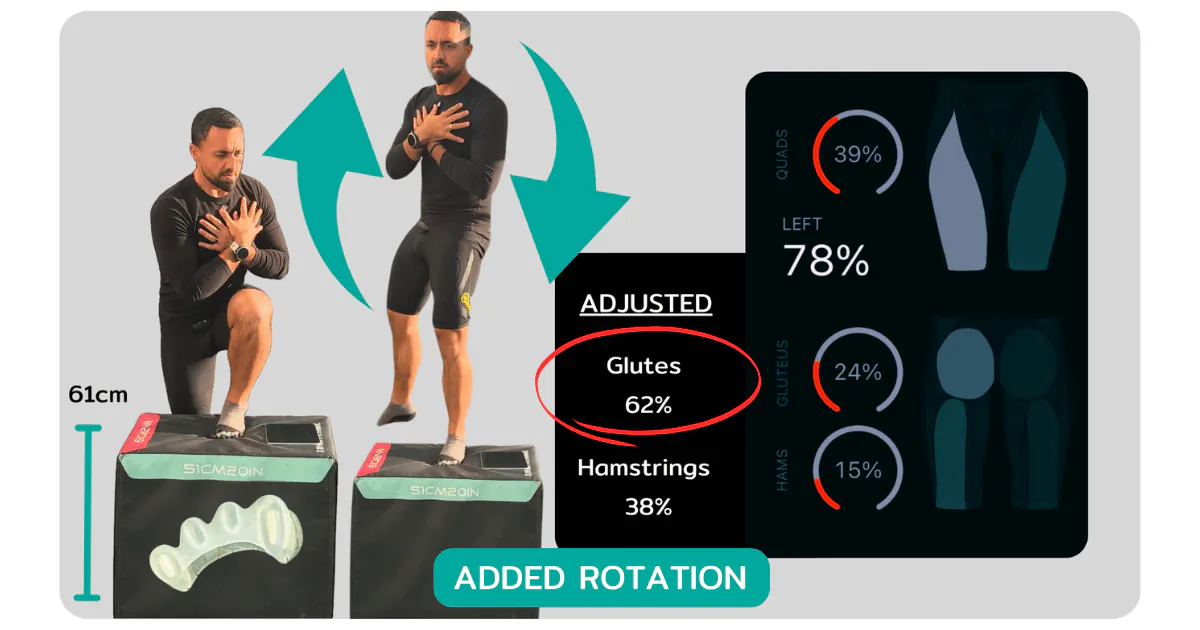
3. Adding Hip Rotation
Introducing internal hip rotation at the start and external rotation while stepping up engages your glutes in all three movement planes (sagittal, frontal, and transverse), substantially enhancing activation.
This move bumped up my glute activity by another +7% over the hamstrings.
4. Controlled Arm Swing
Engaging your arms through controlled swinging leverages the fascial connections between your lats and glutes, known as oblique slings, further increasing glute activation.
This also makes the movement more efficient, similar to running [4].
Although glute activity increased by just +1% over hamstrings with this technique, quad involvement dropped by -5%, highlighting the efficiency gains achieved with this adjustment.
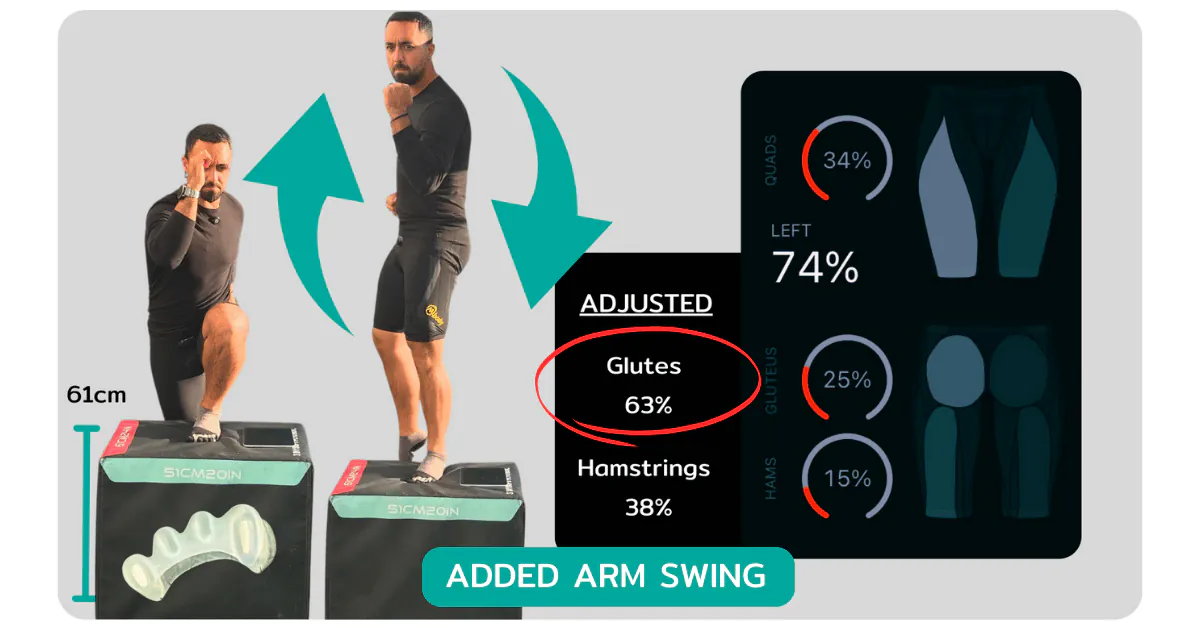
Note: For strength specific workouts you can increase the box height and add a weight vest. Since your entire body weight, plus the external load is supported entirely by just one leg, you can get a strong strength stimulus.
Limitations to Maximizing Glute Gains and Endurance in The Step-Up
While these techniques significantly enhance glute activation, they depend heavily on fundamental mobility and stability. Without proper preparation, attempting these advanced techniques can risk injury:
Hip Mobility:
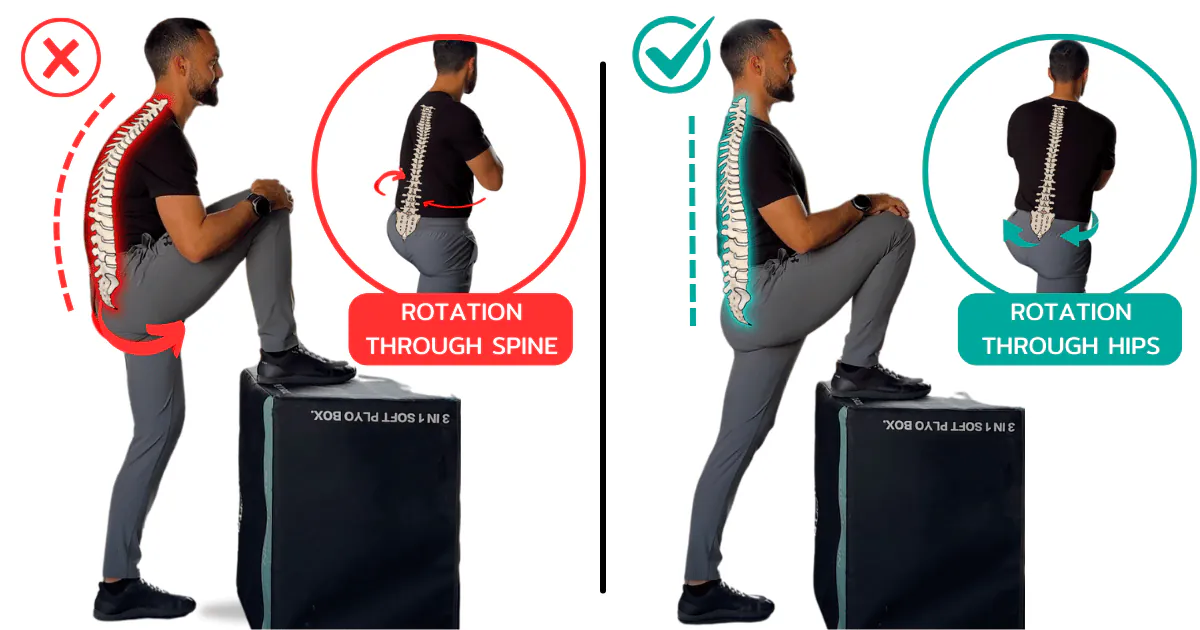
Poor hip flexion may cause the pelvis to tuck when using a higher box, resulting in spinal misalignment and strain.
Tight hips can also restrict hip rotation, causing the spine to compensate by becoming the primary rotator.
Ankle Mobility:
Tight ankles limit knee travel, causing excessive hamstring activation and reducing glute involvement.
Strong Feet:
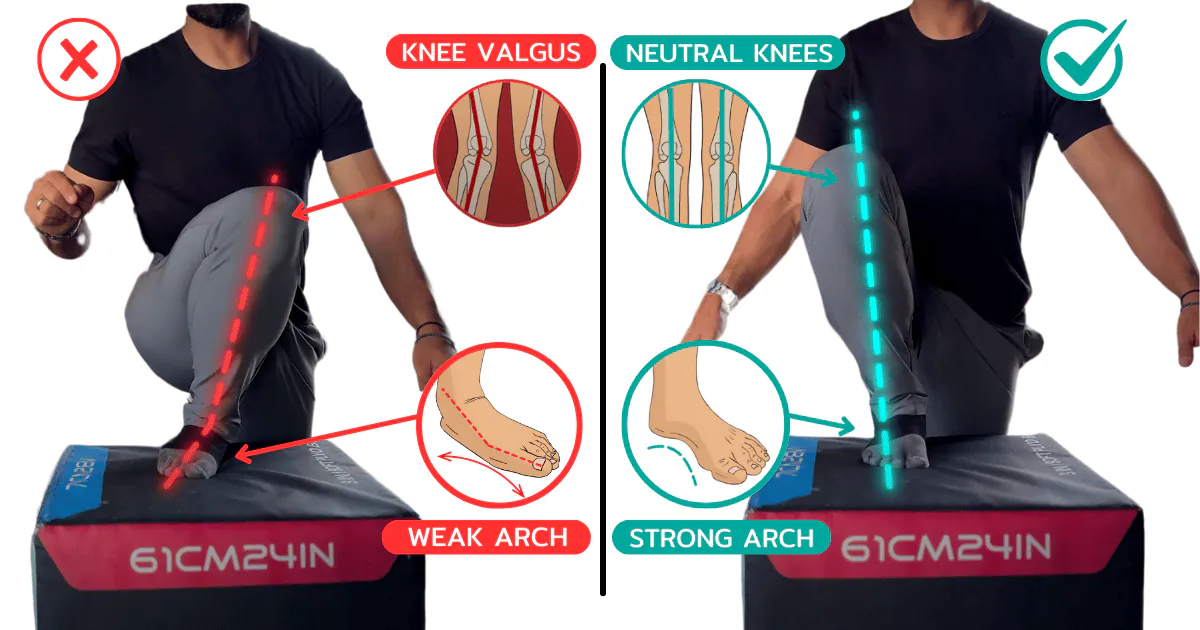
Weak, collapsing arches can pull the knees into a valgus position and destabilize the pelvis, reducing glute efficiency.
Core Stability:
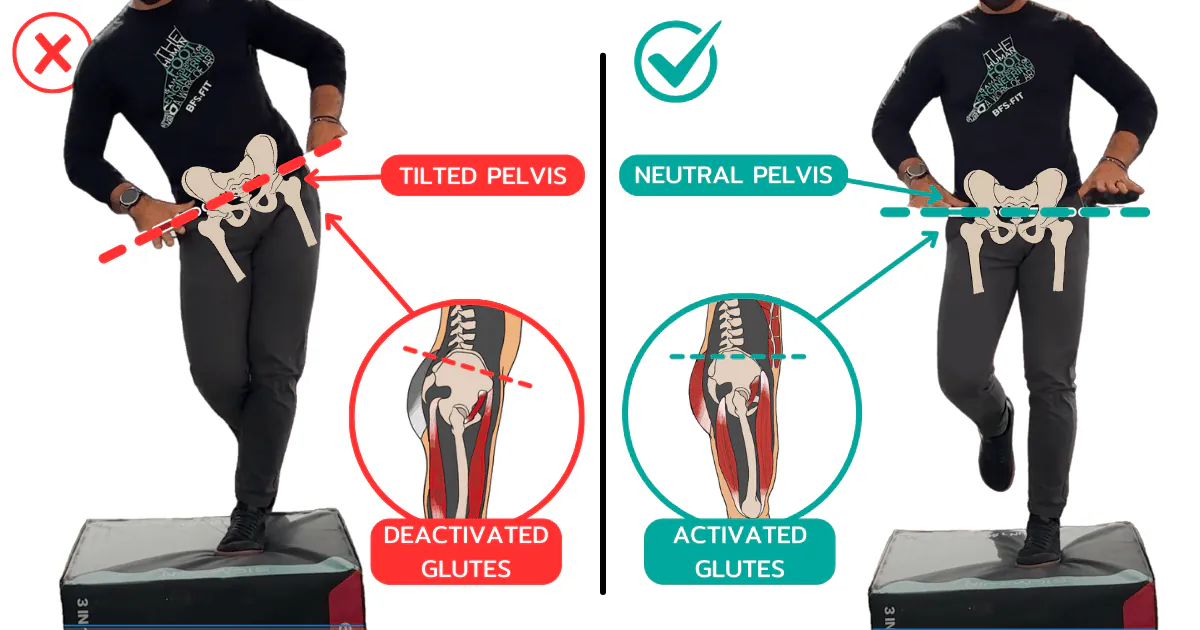
Insufficient core strength compromises pelvic stability, undermining glute engagement.
Building Your Foundation First
Addressing these fundamentals is crucial. In our Barefoot Strength Academy, our members first complete nine functional tests to identify mobility and stability weaknesses. Based on their scores, we create a personalized exercise plan to help them address these weaknesses. #Member Consultations Your consultation will be delivered within 30 calendar days after we receive your complete intake form and all required assessment videos. If your purchase includes an earlier agreed delivery deadline, that deadline still applies.
Once the fundamentals are in place, members can then utilize optimized movements like our modified step-up for maximal glute strength and endurance.
Ready to Transform Your Glutes?
Join the Barefoot Strength Academy today.
See you inside!
Sources
The sources cited in this article. Select a small reference number to return to its place in the article.
- Gluteus Maximus Activation during Common Strength and Hypertrophy Exercises: A Systematic Review. Walter Krause Neto, Enrico Gori Soares, Thais Lima Vieira, Rodolfo Aguiar, Thiago Andrade Chola, Vinicius de Lima Sampaio, Eliane Florencio Gama. Journal of sports science & medicine. 2020. 1a 1b
- Electromyographical analysis of lower extremity muscle activation during variations of the loaded step-up exercise. Christopher J Simenz, Luke R Garceau, Brittney N Lutsch, Timothy J Suchomel, William P Ebben. Journal of strength and conditioning research. 2012. 2
- BUILDING A BETTER GLUTEAL BRIDGE: ELECTROMYOGRAPHIC ANALYSIS OF HIP MUSCLE ACTIVITY DURING MODIFIED SINGLE-LEG BRIDGES.. Lehecka BJ, Edwards M, Haverkamp R, Martin L, Porter K, Thach K, Sack RJ, Hakansson NA.. Int J Sports Phys Ther. 2017. 3
- Arm swinging saves energy. Kathryn Knight. Journal of Experimental Biology. 2014. 4
Watch the video
FREE 7-DAY EMAIL COURSE
Sign up for our free Strong Feet and Glutes course
Get a lesson in your inbox every day for 7 days.
Start your free course
You'll also join our newsletter. Unsubscribe at any time.