
How to Become Glute Dominant in 2 Weeks
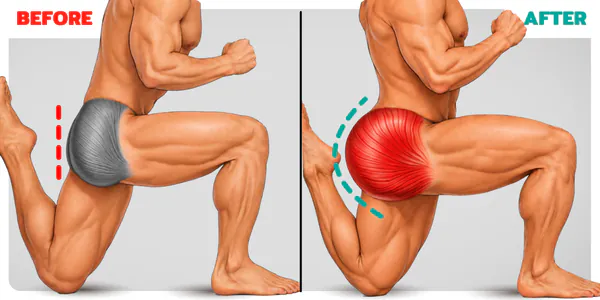
In just three months, my glutes went from strong and dominant to barely firing.
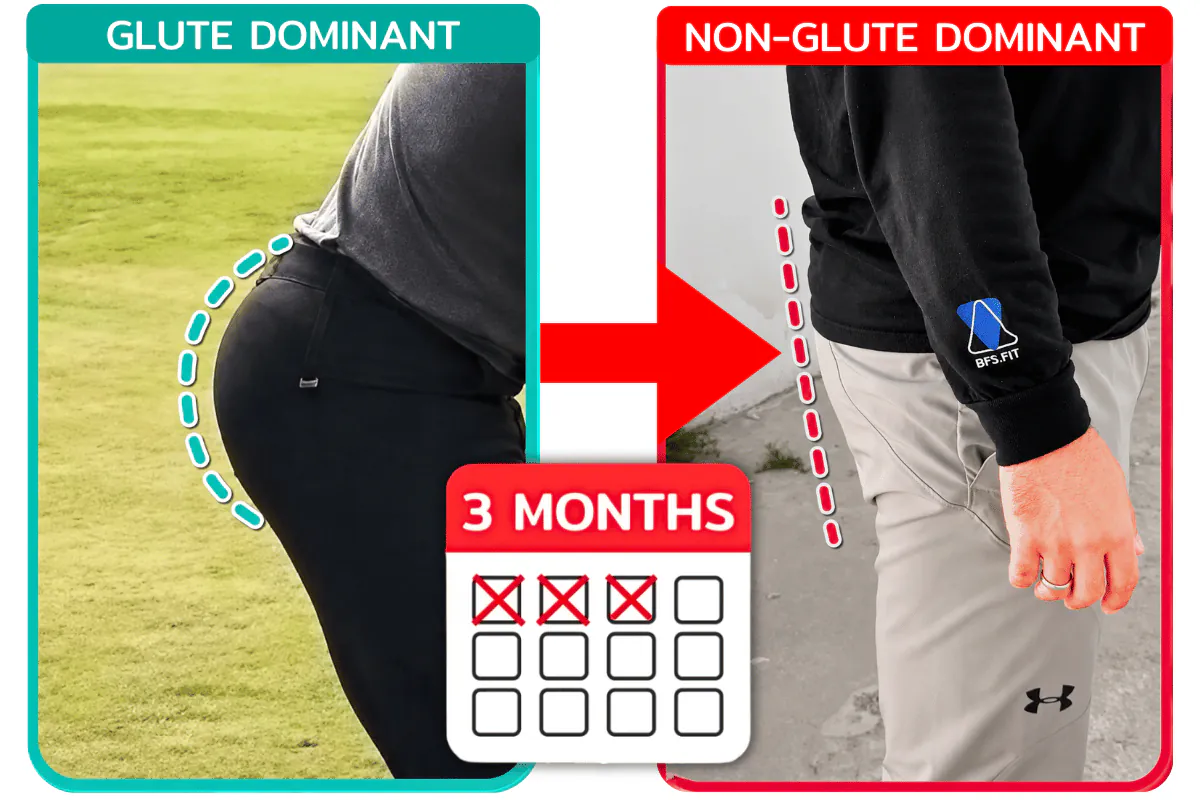
The cause was one daily habit most people never think twice about. But it made my once-dominant glutes, lose strength, start to shrink, and it left me with hamstring cramps and lower back pain.
But in two weeks, with three simple changes, I brought them back. EMG data confirmed my glute activity jumped over 159%, the cramps and back pain vanished, and my glutes started growing again.
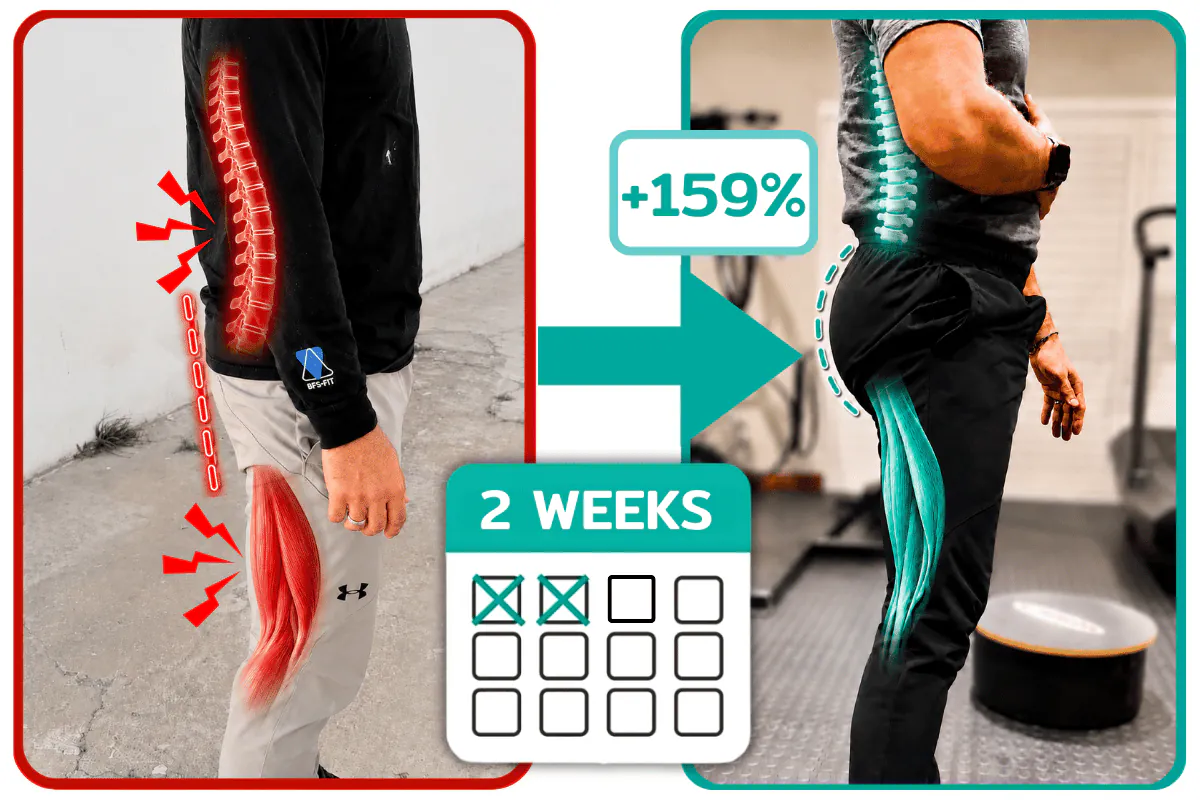
In this post, I'll show you the exact protocol I used, so that you can have the same glute transformation.
How to Tell If Your Glutes Have Switched Off
Before we get into the exact protocol I used for my transformation, you first need to assess just how underactive your glutes are. There are two ways to find out:
1. Look for the patterns
The Compensation Signs:
Your glutes are the primary engine for every hip-driven movement: running, lifting, swinging, squatting.
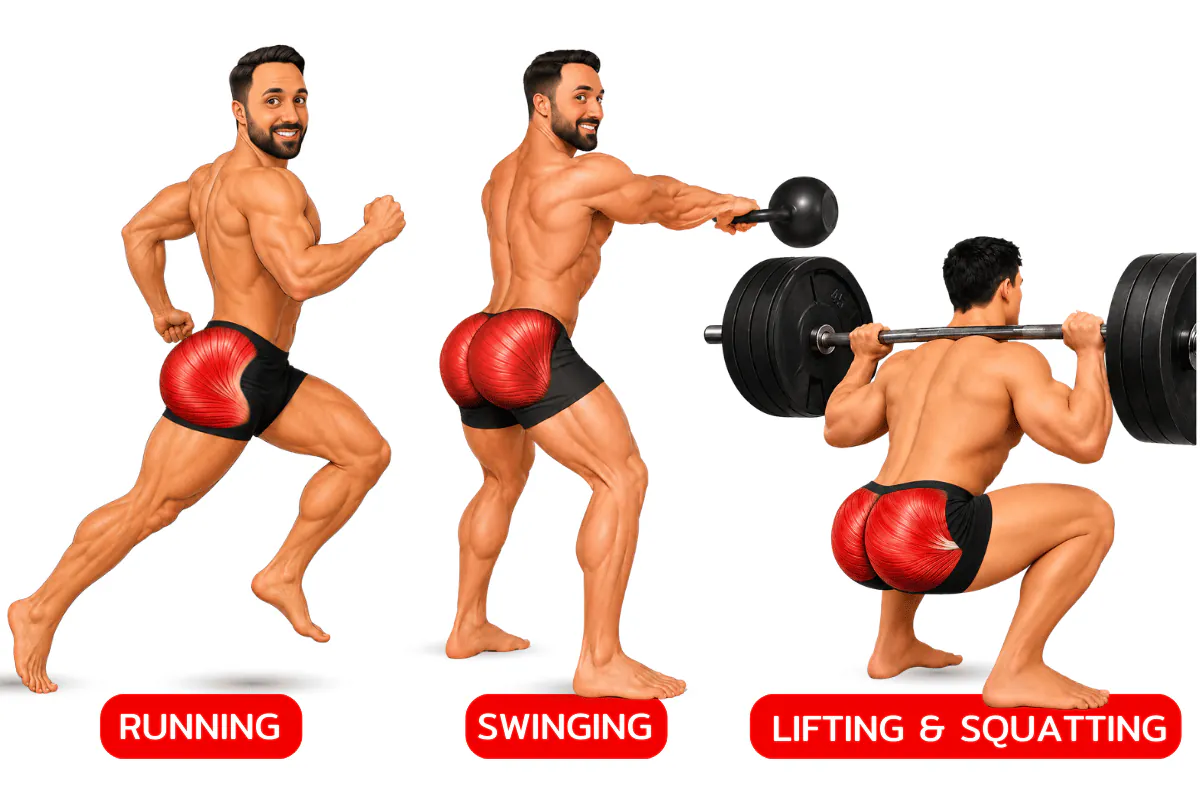
When they go quiet, your body still has to get the job done, so it recruits backup muscles.
For instance:
the hamstrings take over hip extension
the lower back takes over rotation and forward flexion
This is called synergistic dominance.
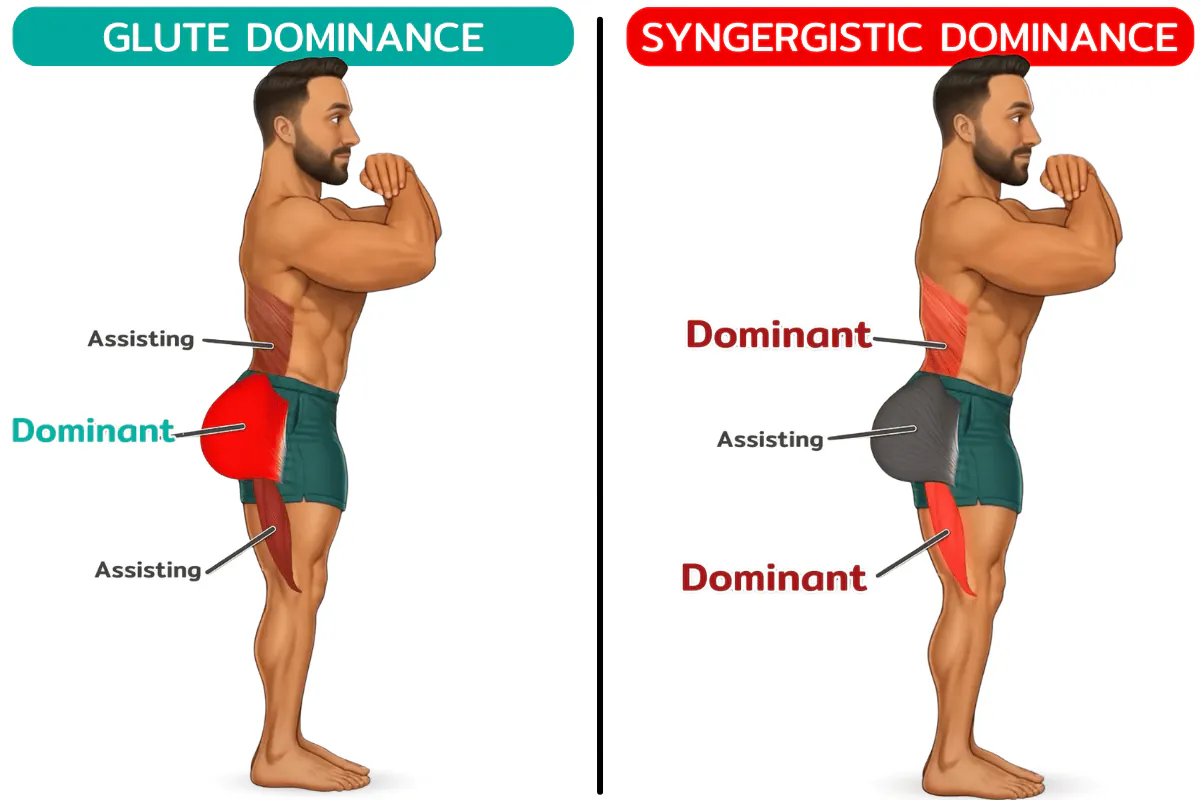
The problem is that the hamstrings and lower back are built to assist, not to lead. When forced into the lead role, they get overworked, which is why studies consistently link hamstring cramps and lower back tenderness to glute dysfunction [1] [2].
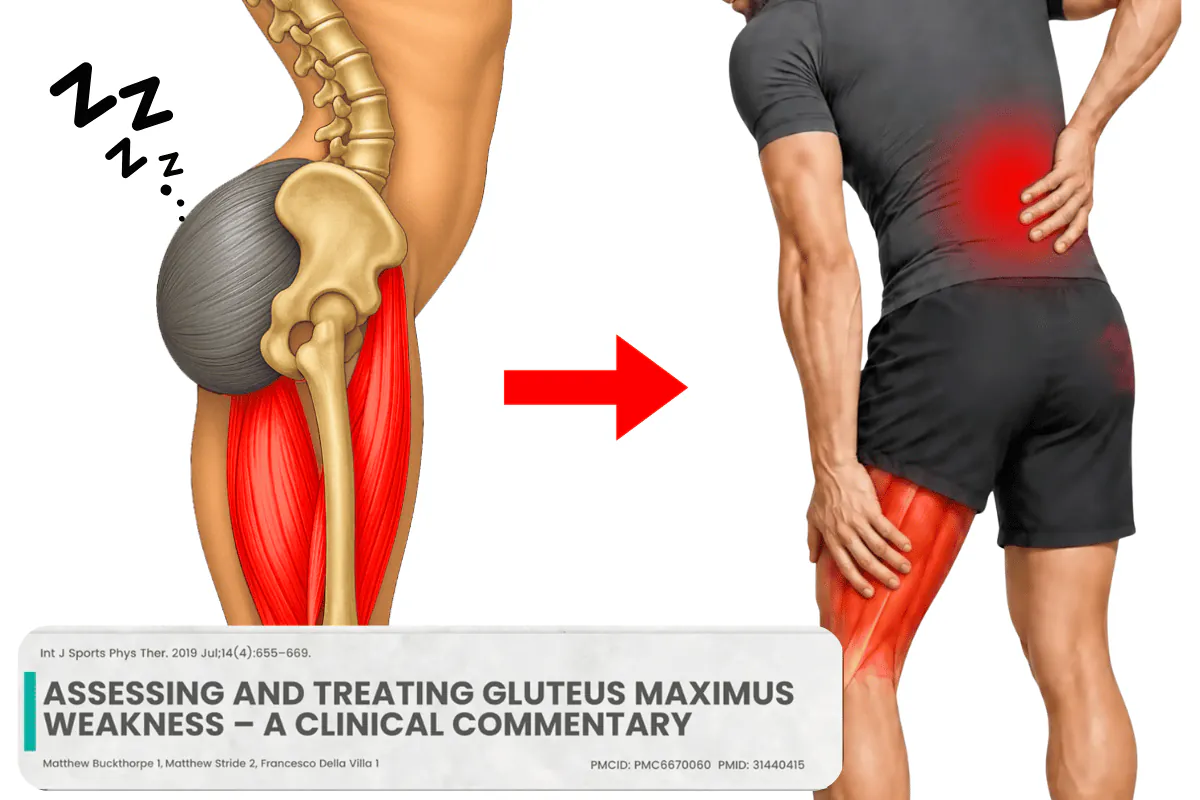
This was exactly what I was experiencing: hamstrings on the edge of cramping during longer workouts, and a sore lower back.
» MORE: How to Become Glute Dominant (Not Hamstring Dominant)
The Stability Signs:
Your glutes also stabilize the pelvis and lower limbs.
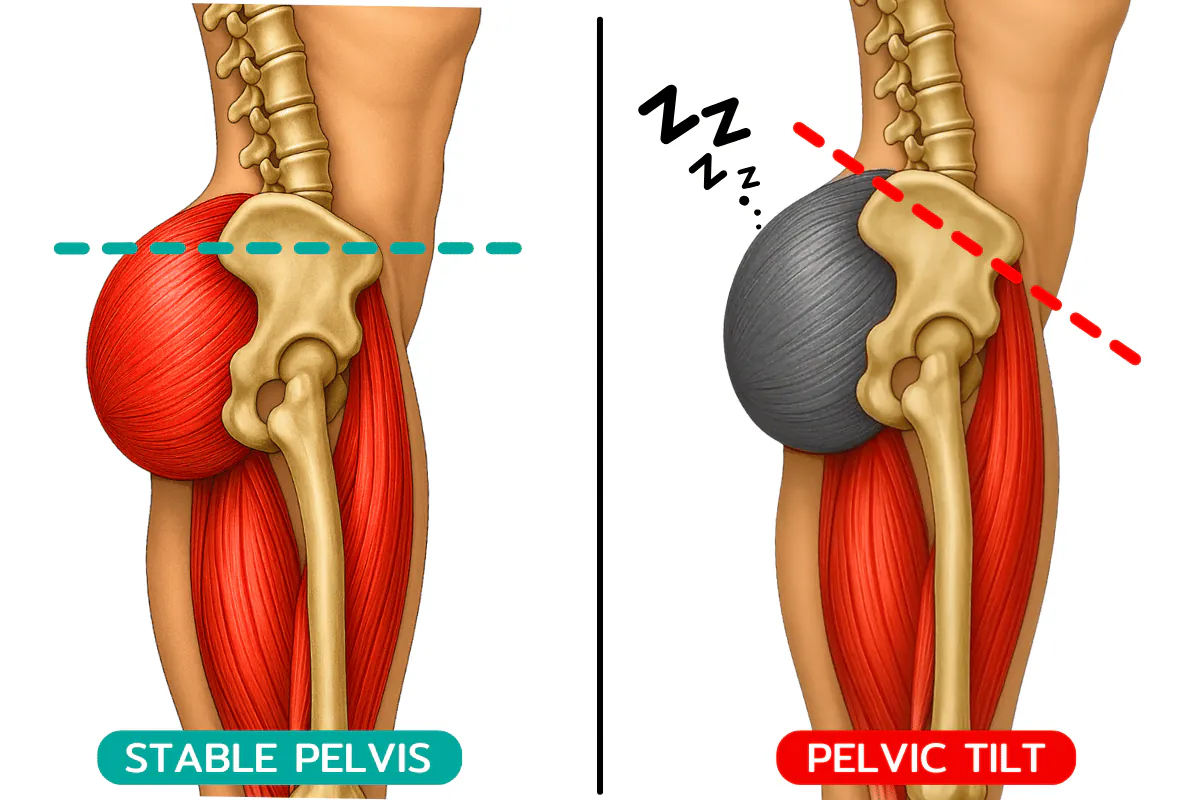
So weak glutes can also show up as:
Poor knee control in movements like squats and step-ups, which can cause knee pain.
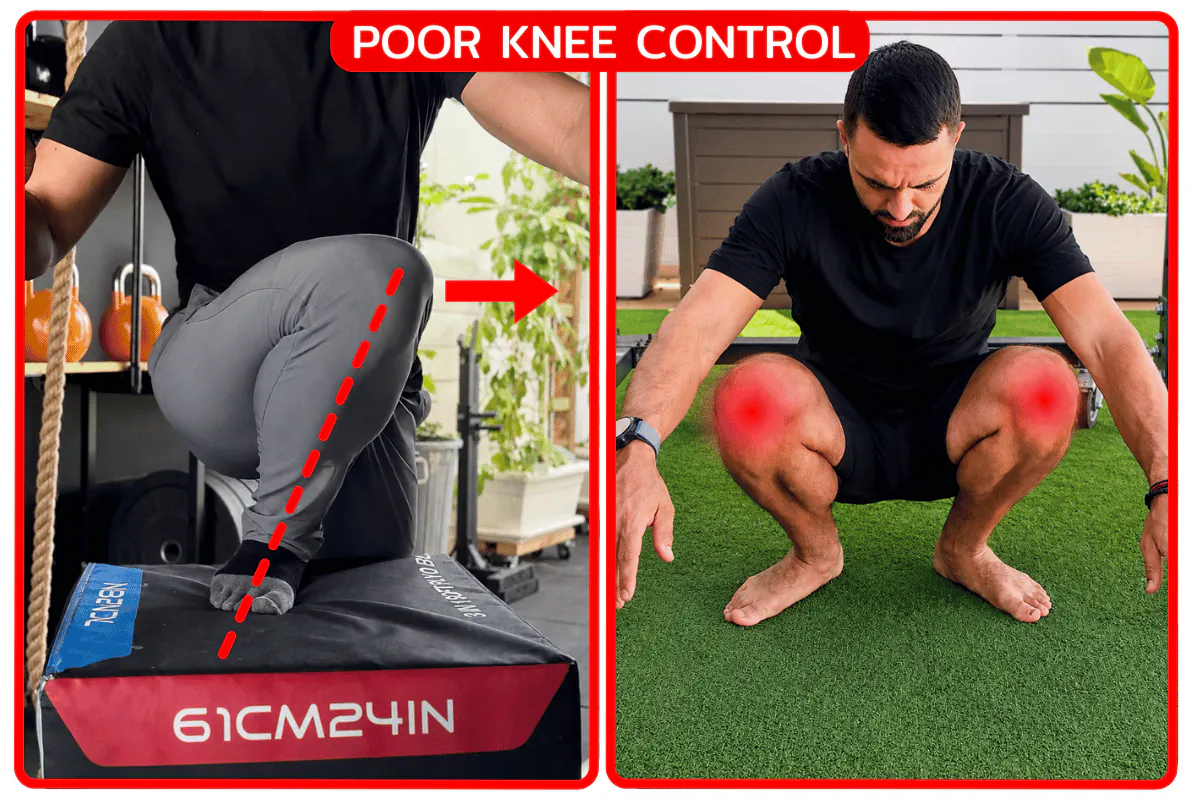
And difficulty balancing on one leg, which can show up as overpronation when you walk or run.
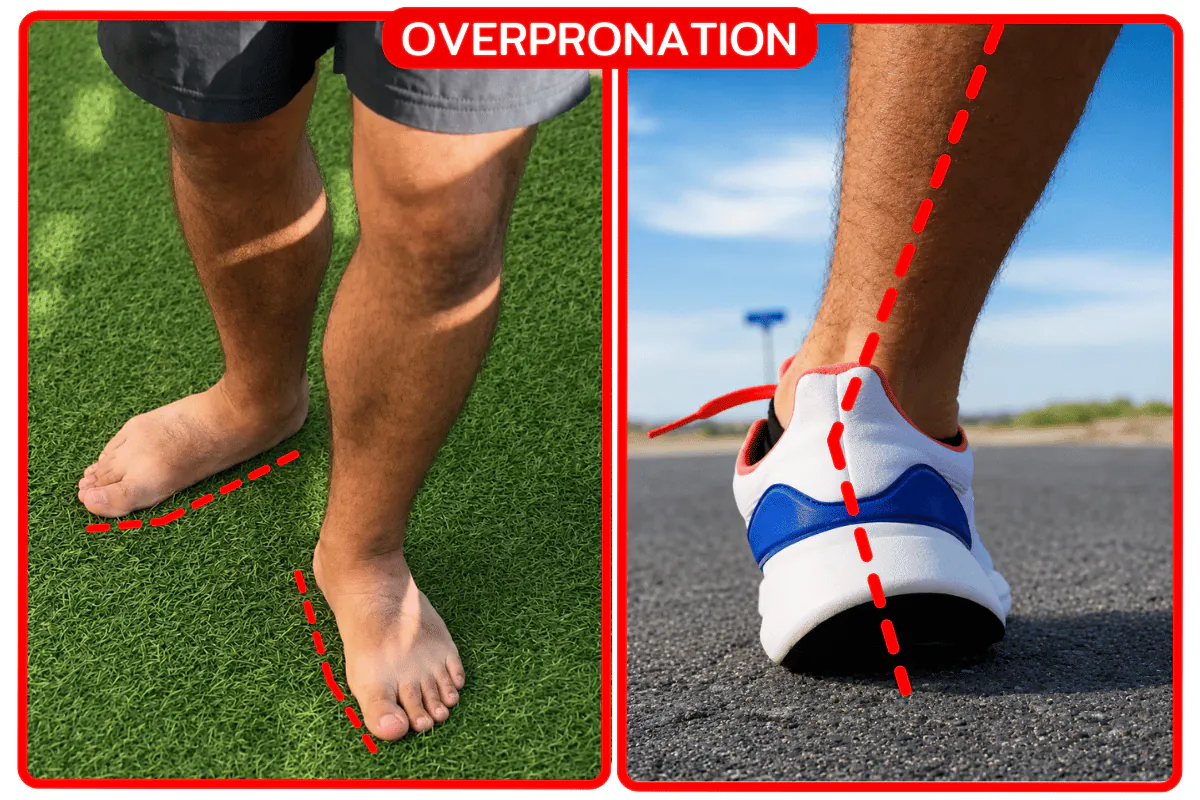
I didn't experience these issues, but they are some additional patterns to look out for when trying to identify if you have under-active glutes.
» MORE: How to Get Strong Feet & Glutes at The Same Time (with exercises)
2. Test it Directly:
When the hamstring and lower back signals showed up for me, I had a hunch my glutes weren't pulling their weight. And a university-lab EMG test confirmed it: glute activity was way down, hamstring activity was way up.
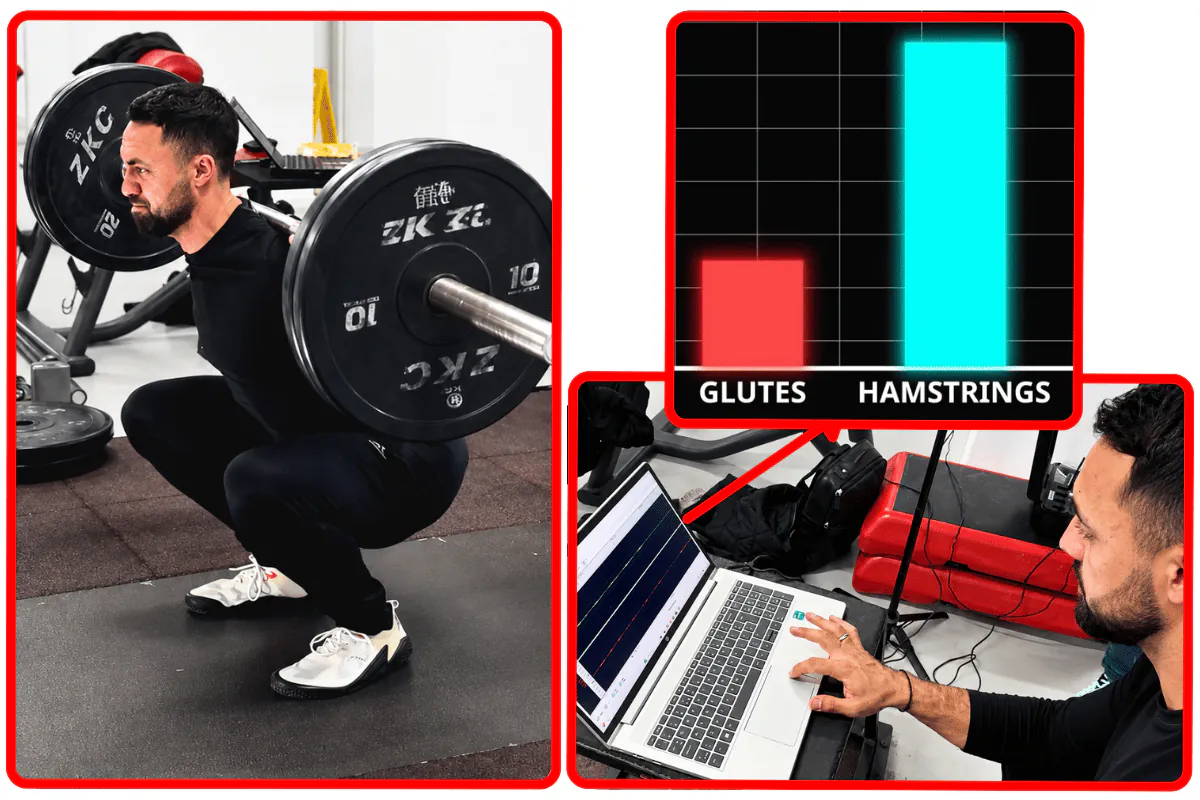
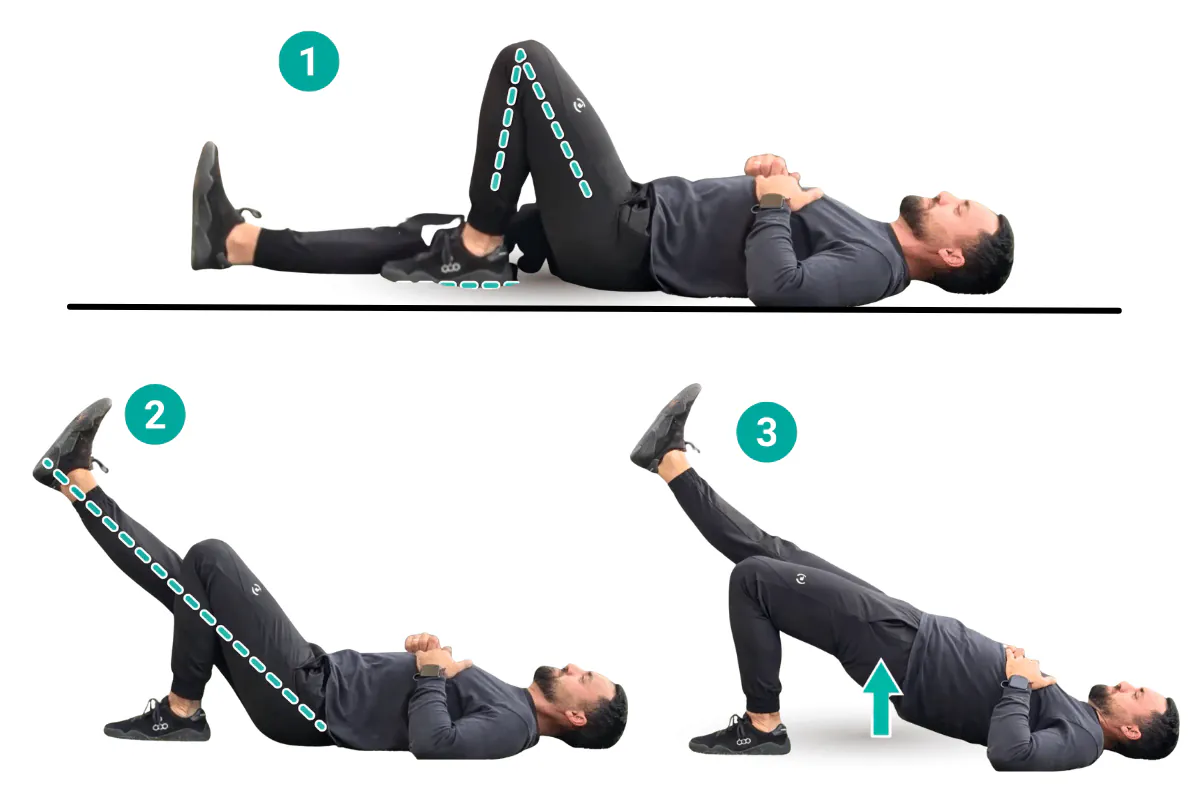
You can get the same accurate feedback on your glute function with this at-home glute dominance test. It's one of the 10 functional tests we use in our Academy [3].
Lie on your back, both knees bent, feet flat.
Lift one leg and straighten it out in front of you.
Using only the grounded leg, push through your foot into a bridge.
Hold for at least a minute, noticing which muscles fatigue first. Repeat on the other side.
If you feel it in your glutes, they're driving your hip extension.
But, if you feel it in your hamstrings, lower back, or quads, your glutes are likely weak and underactive.
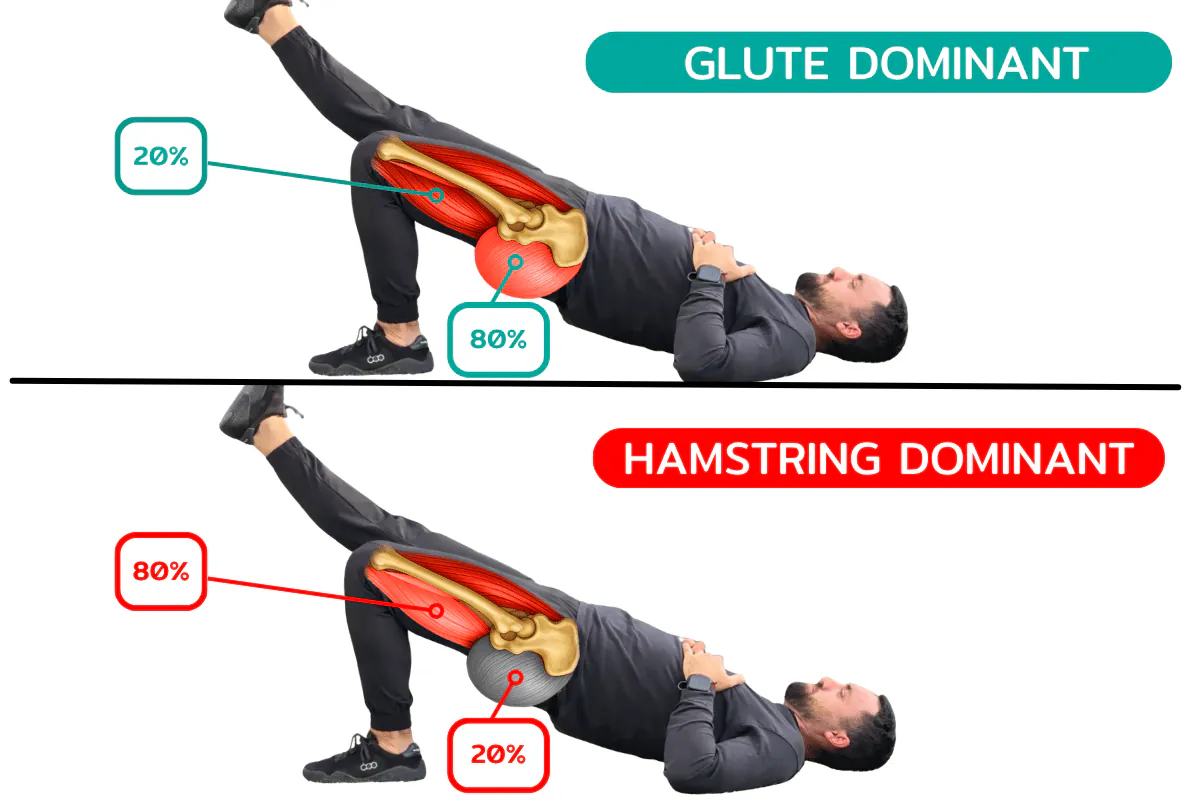
One tip: note the exact second your hamstrings take over during the test. That's your baseline for measuring progress when you retest after following the protocol.
What Caused My Glutes to Shut Off
The first step to fixing my glutes was figuring out what caused the regression. After 14 years in sport science, I've learned lifestyle is almost always to blame.
And my habits had changed significantly. I'd moved to a co-working space with no standing desks, and my smartwatch showed a 50% drop in standing and activity time over three months, all while doing far less mobility work to offset the long hours of sitting.
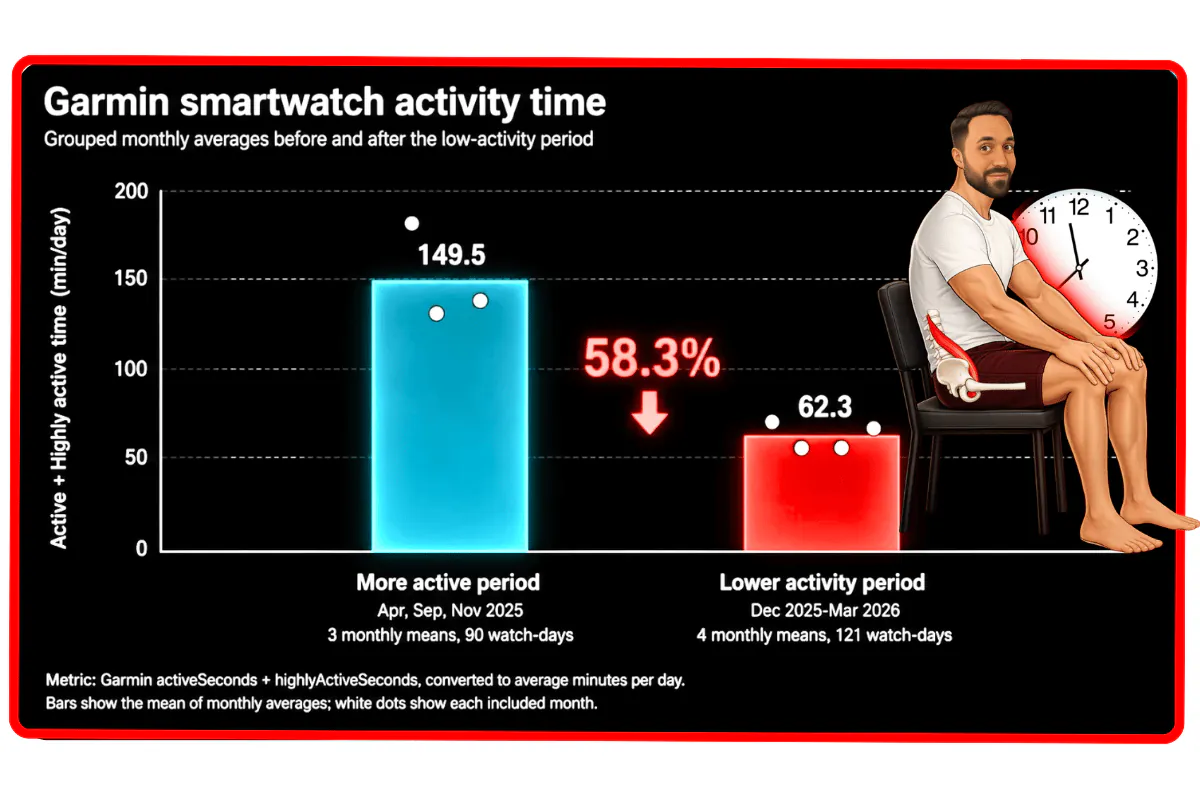
We all know sitting is bad. But here's what it actually does to your glutes.
The Problem:
When you sit, your hip flexors are held in a shortened position. If you're sitting for long periods of time they begin to adapt to that length and will eventually become chronically tight.
And tight hip flexors literally block your glutes from firing.
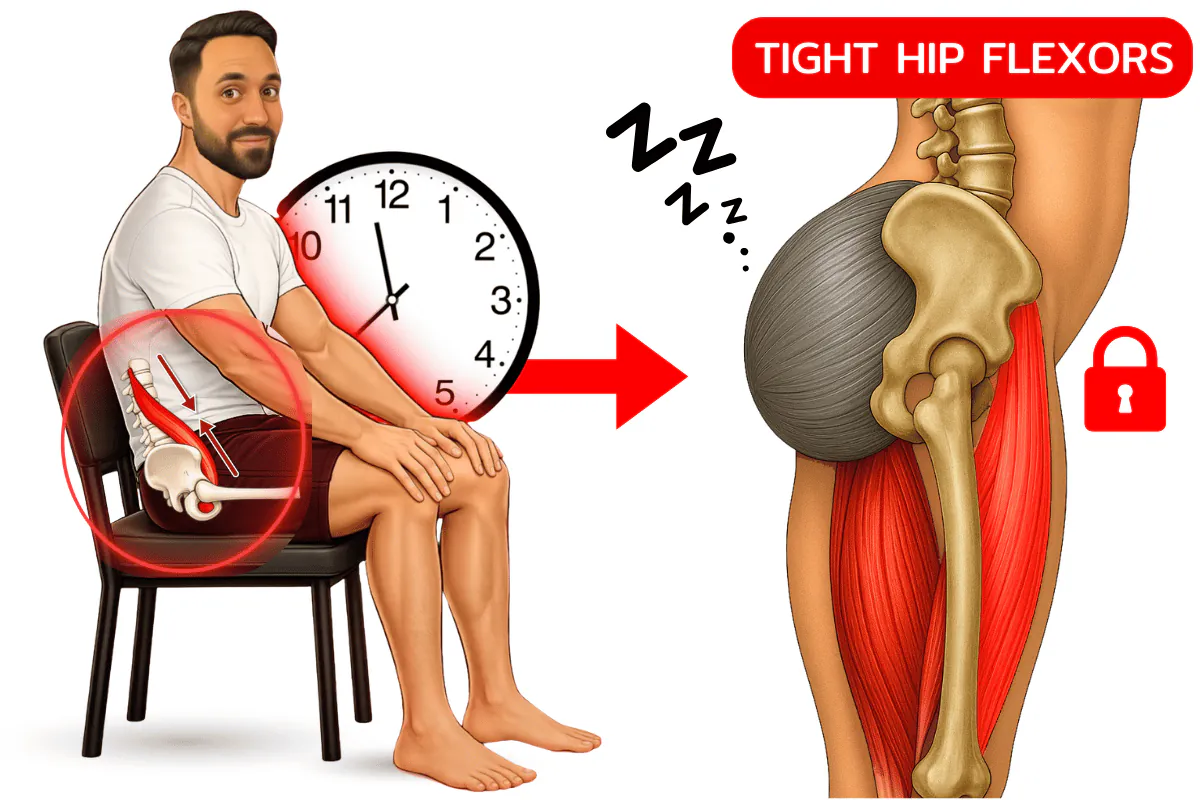
The Mechanism:
Muscles work in opposing pairs, so when one contracts, the other lengthens, like the bicep and tricep at the elbow.
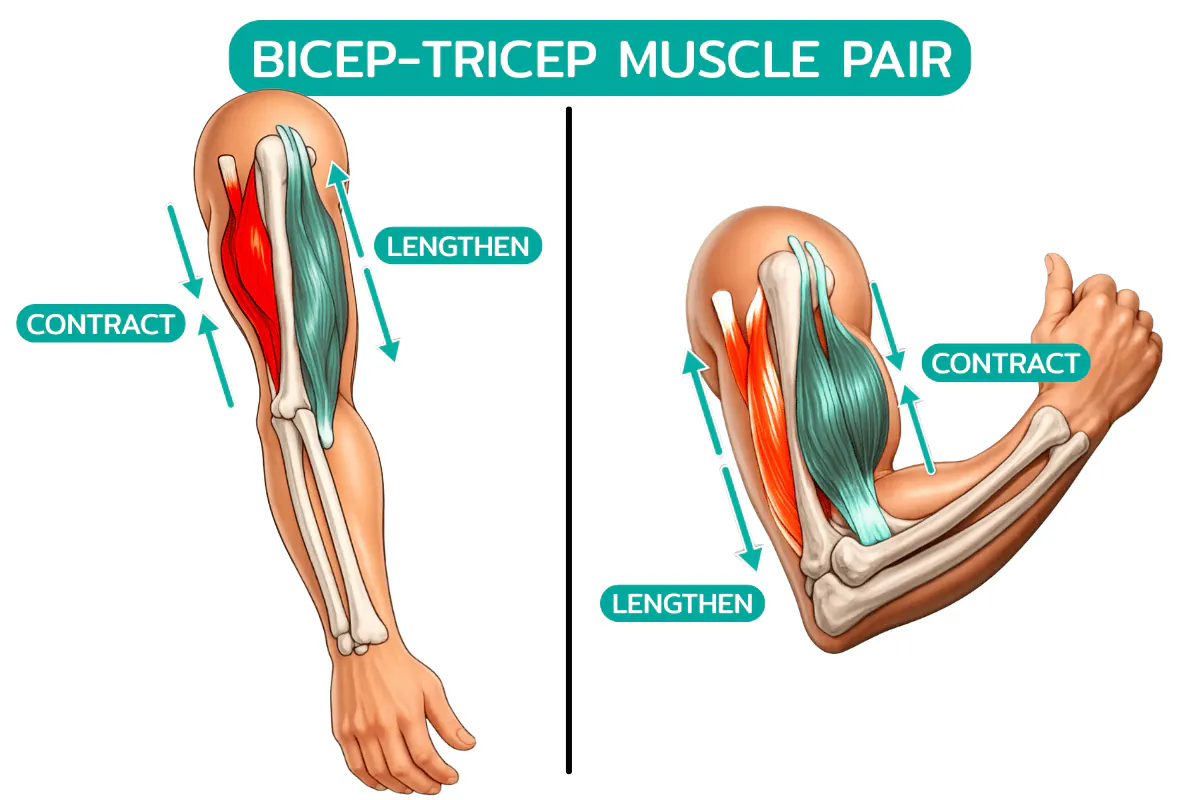
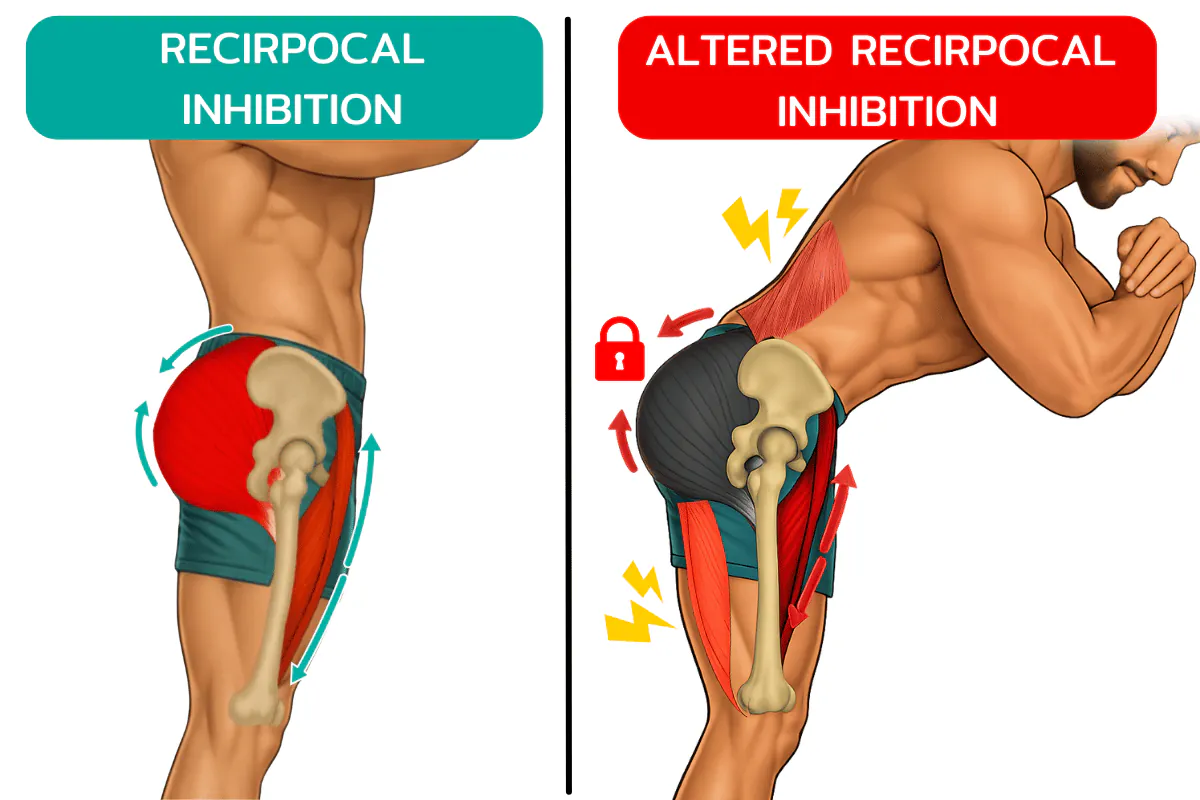
The hip flexors and glutes are another one of these pairs: as the glutes shorten to extend the hip, the hip flexors lengthen.
This is called reciprocal inhibition.
But when the hip flexors are chronically tight and can't lengthen, they block the glutes from contracting, forcing the hamstrings and lower back (the secondary muscles) to take over.
That's altered reciprocal inhibition.
A 2024 study confirmed this relationship between the hip flexors and glutes. Their participants with tight hip flexors showed 60% less glute activation and 2.6x more hamstring activity during squats than those with normal mobility [4].
The result? Your secondary muscles get overworked and injury-prone, and they overdevelop relative to the glutes.
That's exactly why my glutes were visibly shrinking despite all my training.
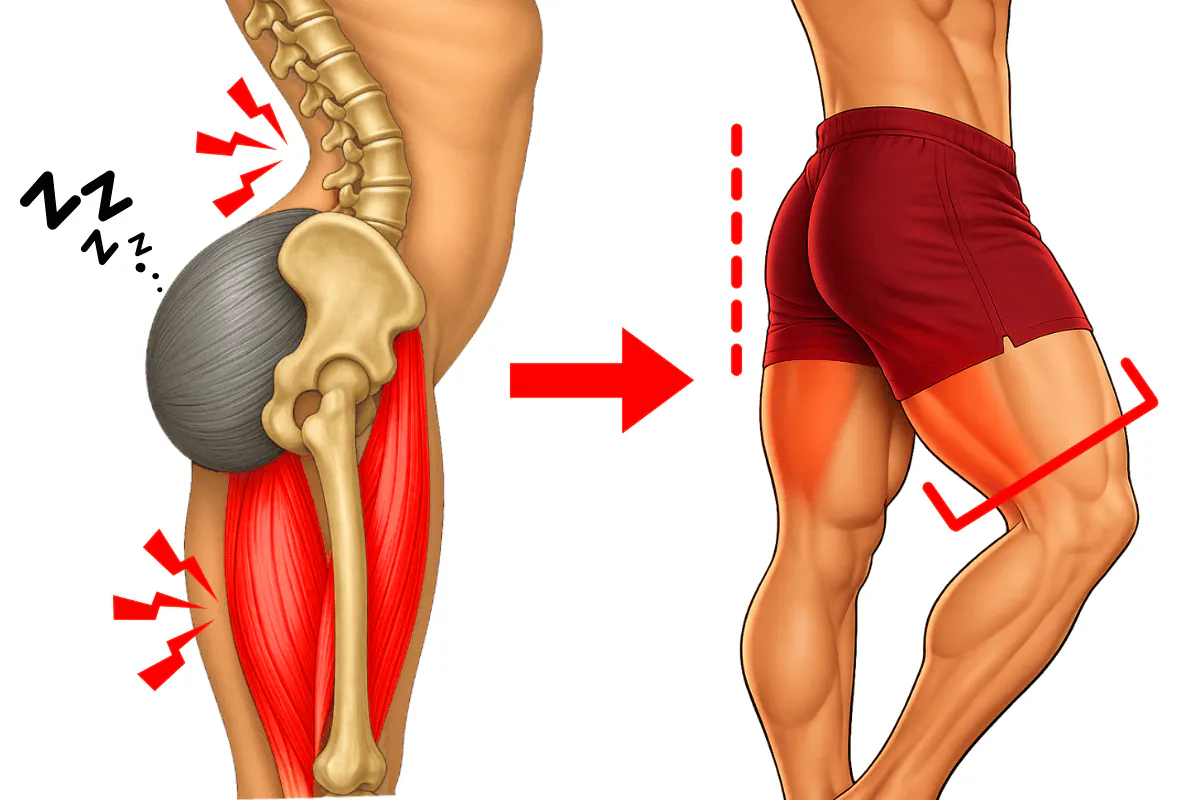
So, if sitting and tight hip flexors are holding your glutes back, as they were for me, let me give you the three steps I used to overcome these issues and regain my glute dominance.
» MORE: How to Become Glute Dominant (Not Hamstring Dominant)
The 3-Step Protocol I Used
Step 1: Daily Hip Flexor Stretching
Once I knew that tight hip flexors were blocking my glutes during exercise, the short term fix was obvious: do some mobility work to lengthen the hip flexors.
My go-to is the kneeling hip extension drill, once or twice a day.
We have multiple levels to this drill – work at the one that challenges you, then move up:
Level 1: Kneel with your back shin flat on the ground.
Level 2: Raise your back foot onto a couch or bench.
Level 3: Raise your front foot as well.
Level 4: Lie all the way back to the floor.
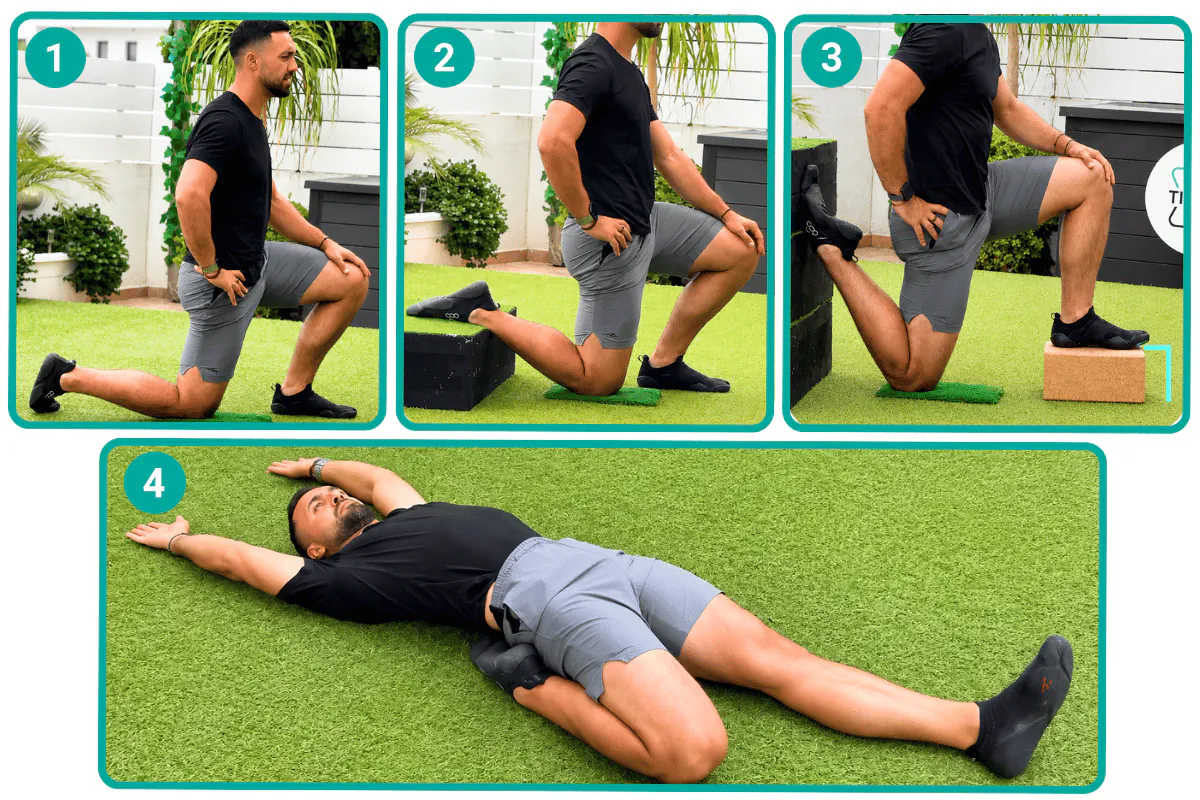
Research shows hip mobility work like this significantly improves glute dominance [5] [6].
But this is where most people stop.
They don't actually address the habit that made them get into this position in the first place.
I often tell our members that bad lifestyle habits dig a hole and your training tries to climb you out. Skip the lifestyle fix and you just climb in and out of the same hole. You only make real progress once your lifestyle stops undoing your training.
So for me to regain glute function, I had to address the cause too: the sitting itself.
» MORE: How to Get Perfect Hip Mobility in 3 Steps (Science-Based Approach)
Step 2: Sit Less, Progressively
I knew I had to reduce my sitting time but I had to do it in a sustainable way. Most people swing from sitting all day to standing all day and quit within a week.
Instead, I kept the friction low:
I got a portable laptop stand that turns any table into a standing desk. It might be my most useful purchase in years.
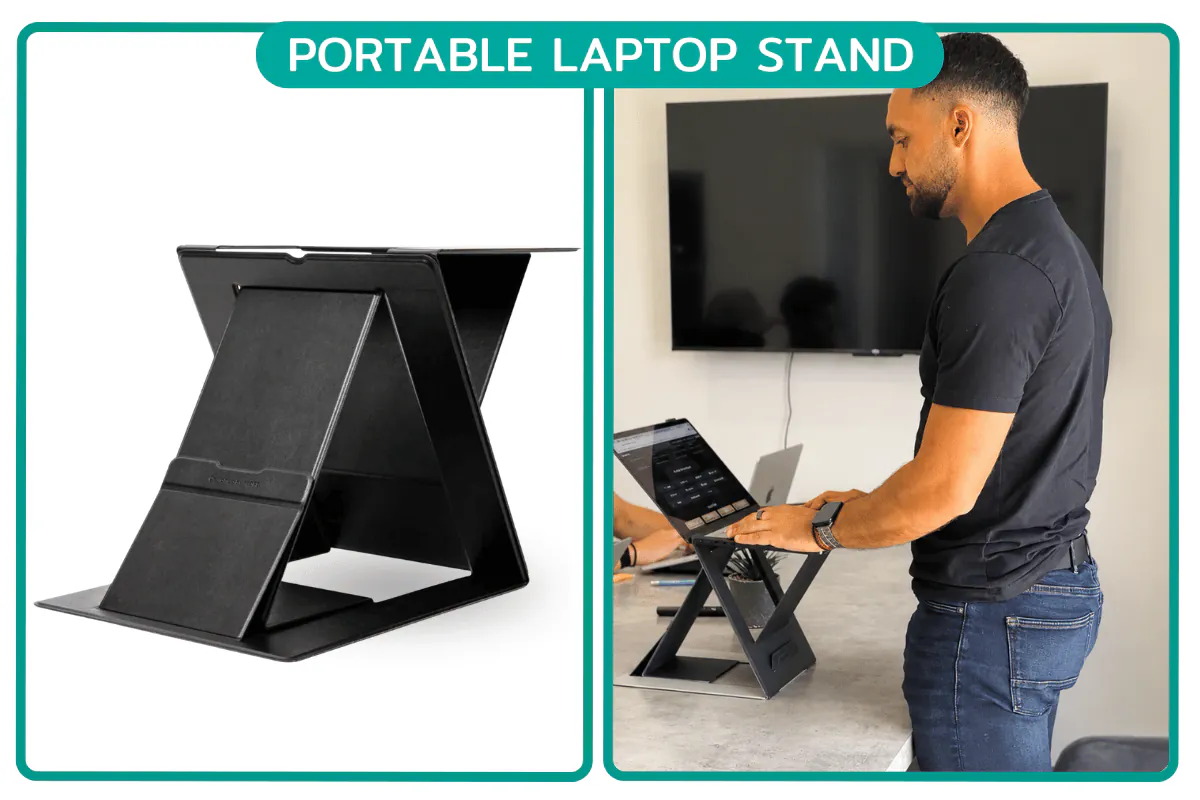
I alternated between sitting and standing at regular intervals, slowly working toward a 1:1 ratio between the two.
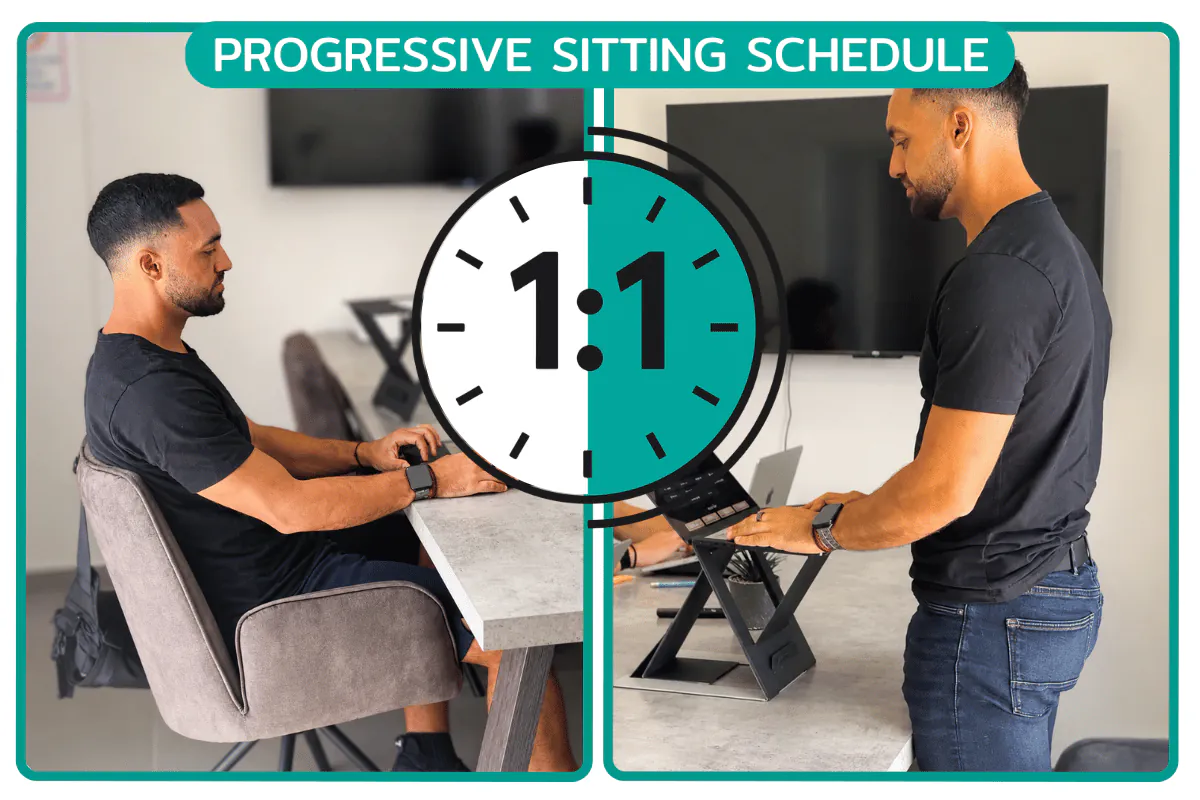
The goal isn't to stand all day. It's to interrupt sitting often enough that your hip flexors never settle into a shortened position.
» The standing desks we recommend: #Strength Tools
Step 3: Choose a Better Default Seat
The second low-friction optimization I made was improving how I sat. I swopped out traditional chairs for a kneeling chair.
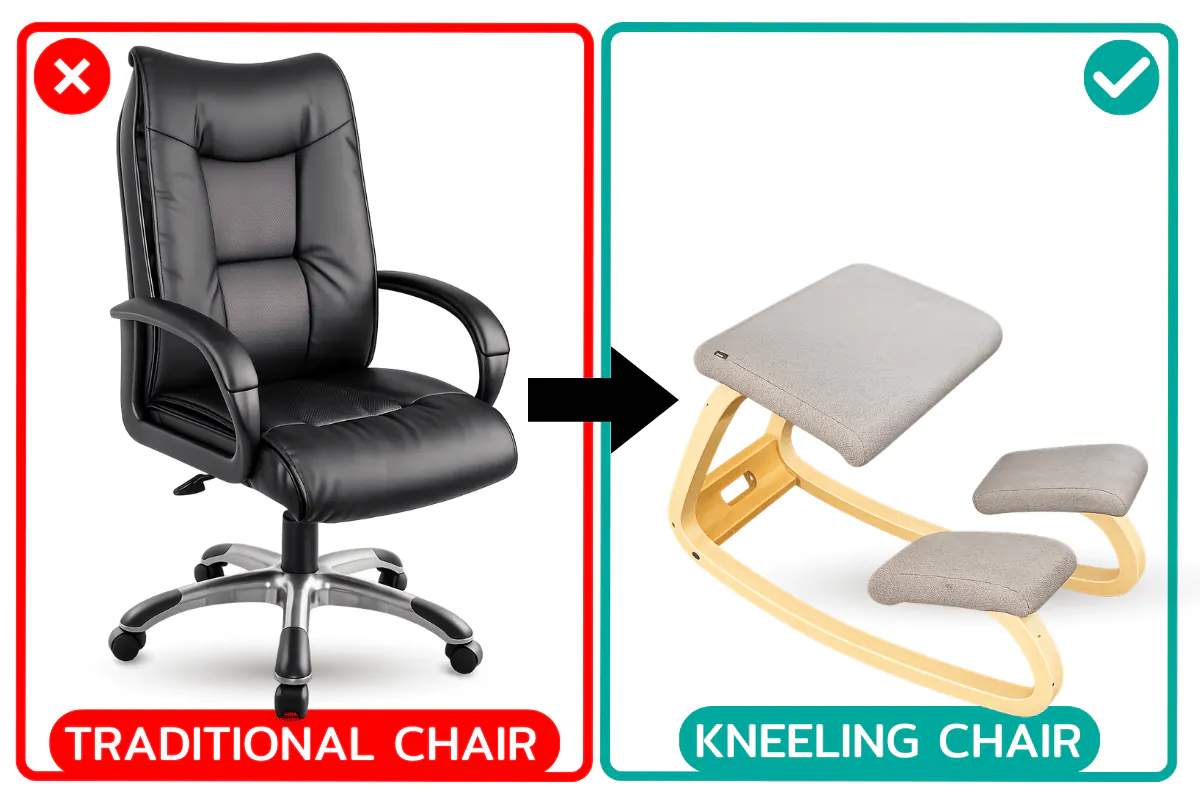
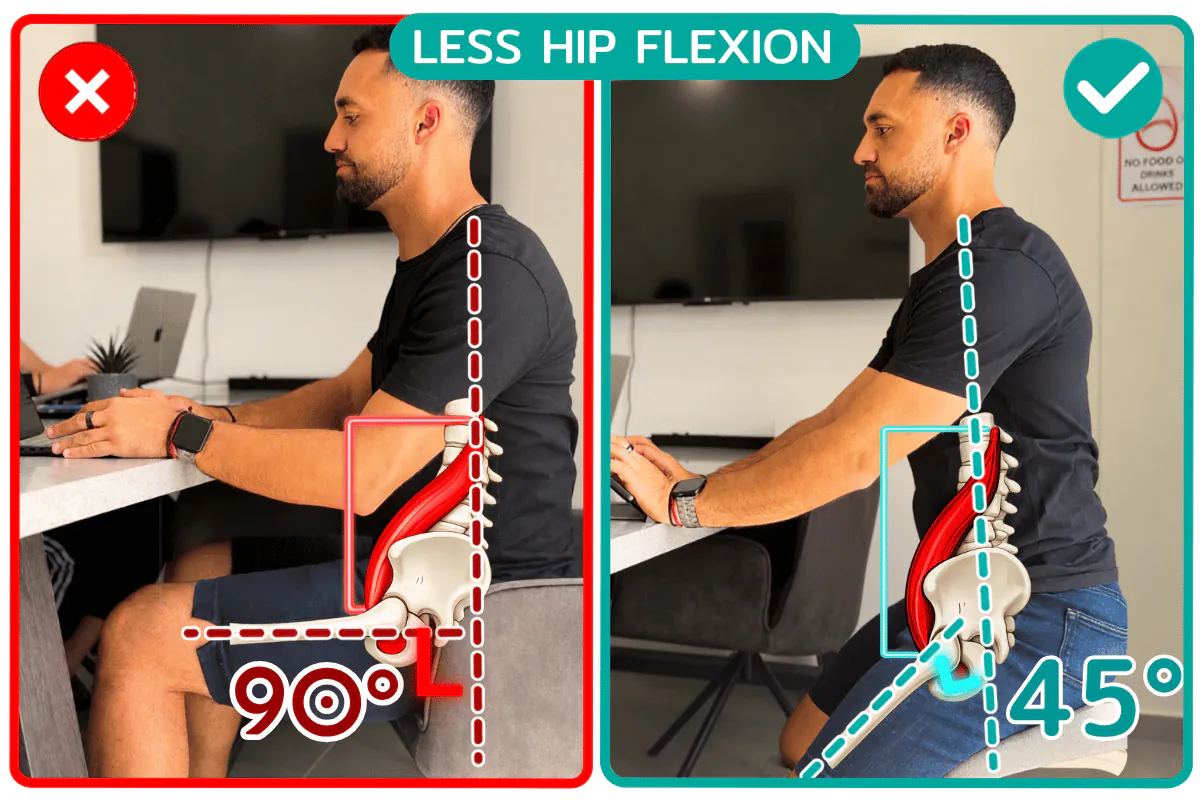
Here are 3 reasons why it’s better:
Less hip flexion: your hips rest at around 45° instead of 90°, keeping the hip flexors far less shortened.
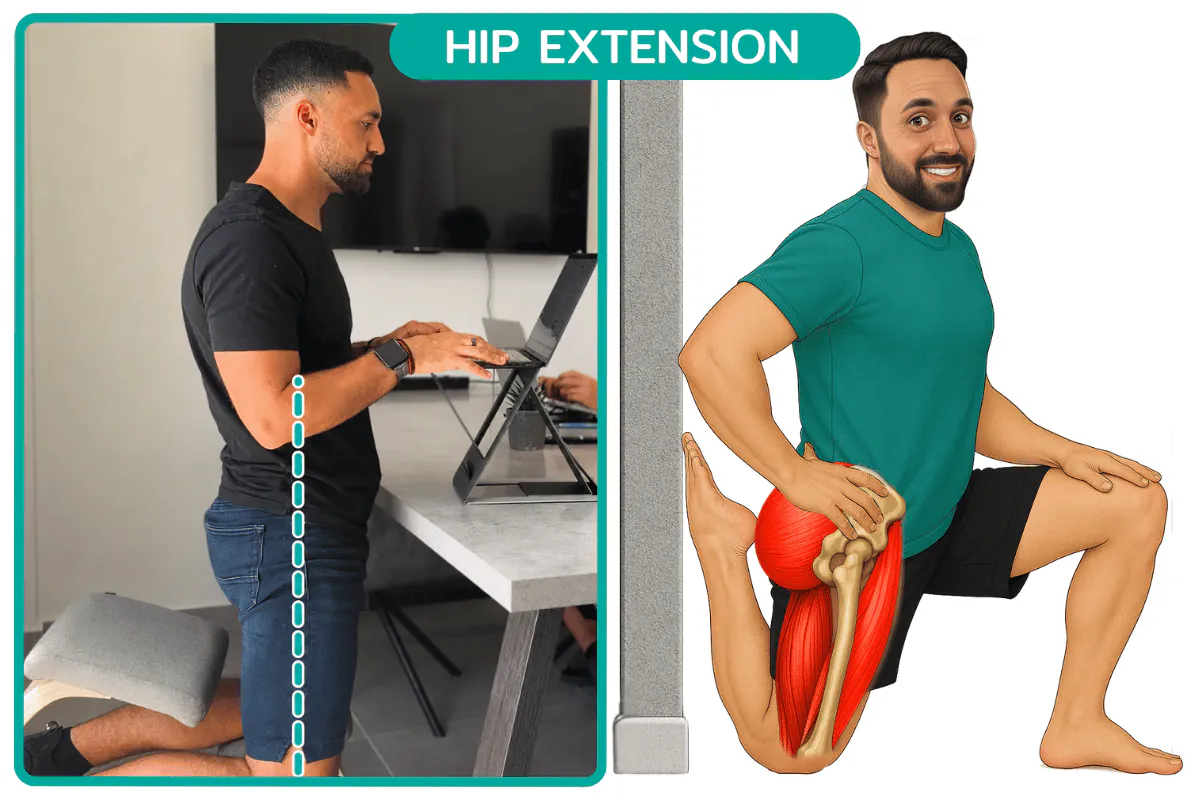
Easy hip extension: I could shift forward onto my knees for full hip extension. It was like sneaking in dozens of mini hip flexor stretches, without leaving my desk.
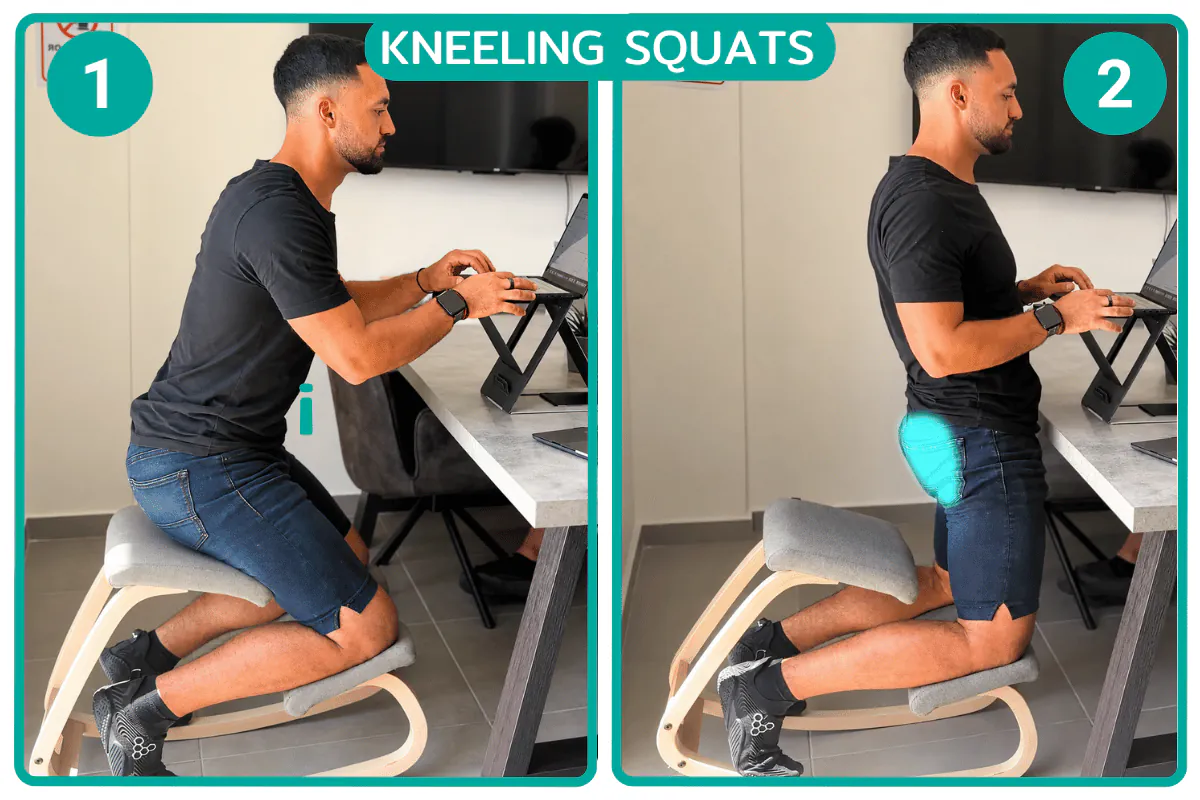
A glute-work platform: I'd do a few squats straight from the kneeling position for a strong glute contraction each time. So my chair went from switching my glutes off to switching them on.
If you don’t have access to a kneeling chair:
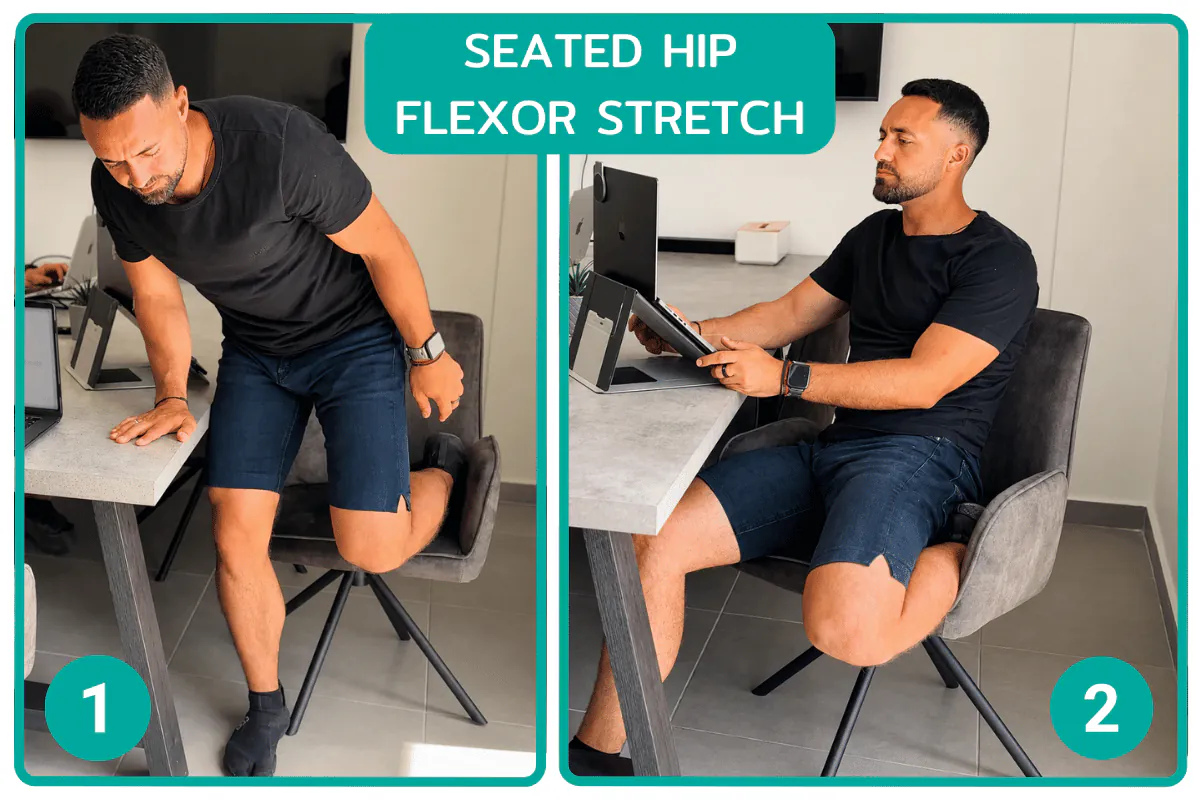
Try to change your sitting position often, e.g. tuck one foot under your glute for a light hip flexor stretch.
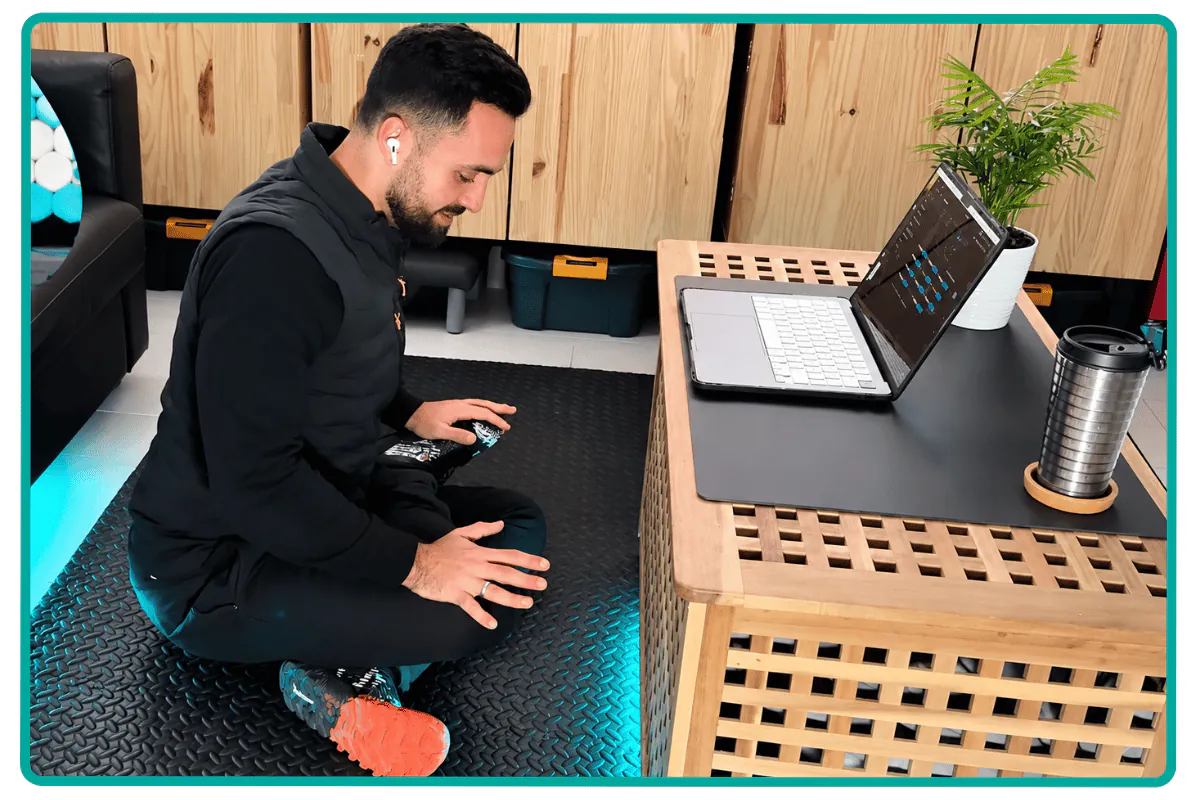
At home, sit on the floor. It forces more range of motion out of your hips.
So by doing these 3 things: regularly performing hip mobility drills in conjunction with more standing time and more optimized seating choices, I was able to increase my glute activity by 159%.
Now, why I was able to do that in just two weeks brings us to the caveat of this post and one of the most important lesson I learned about regaining glute dominance.
» The ergonomic chairs we recommend: #Strength Tools
Why It Worked So Fast
1. Tight hip flexors was the only dysfunction limiting my glutes
Others may also be dealing with other dysfunctions that can affect the glutes, like:
weak core
anterior pelvic tilt
flat feet
tight thoracic spine
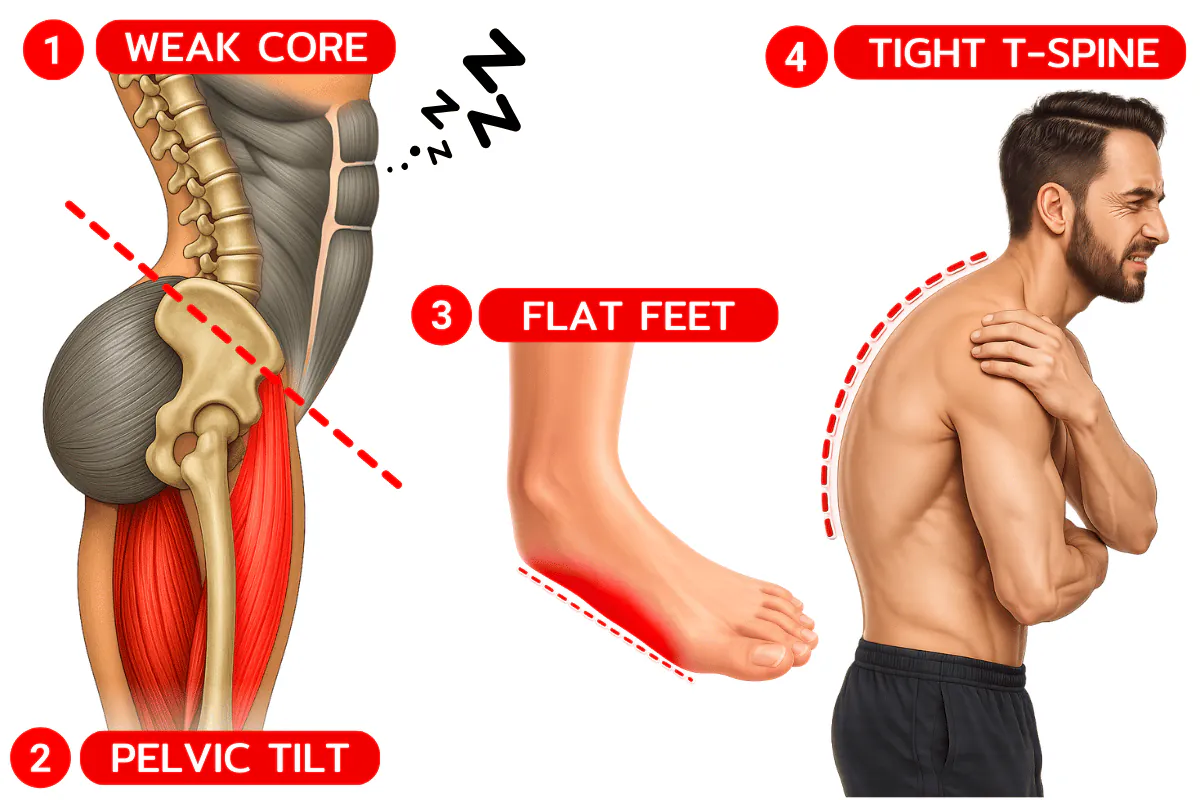
Fixing one helps, but the rest still need work to see similar results.
» MORE: How to Unlock Glute Strength With Core Stability
2. I'd already built glute-dominant patterns
I had previously worked hard to establish glute dominant patterns as my default. So my glutes had the muscle memory in place to quickly return to that pattern once the mobility and lifestyle restrictions were removed.
But, if you've spent years defaulting to your hamstrings or lower back, those patterns can persist even after every restriction is gone. That's where glute re-education comes in: retraining your glutes to be the default driver of hip motion.
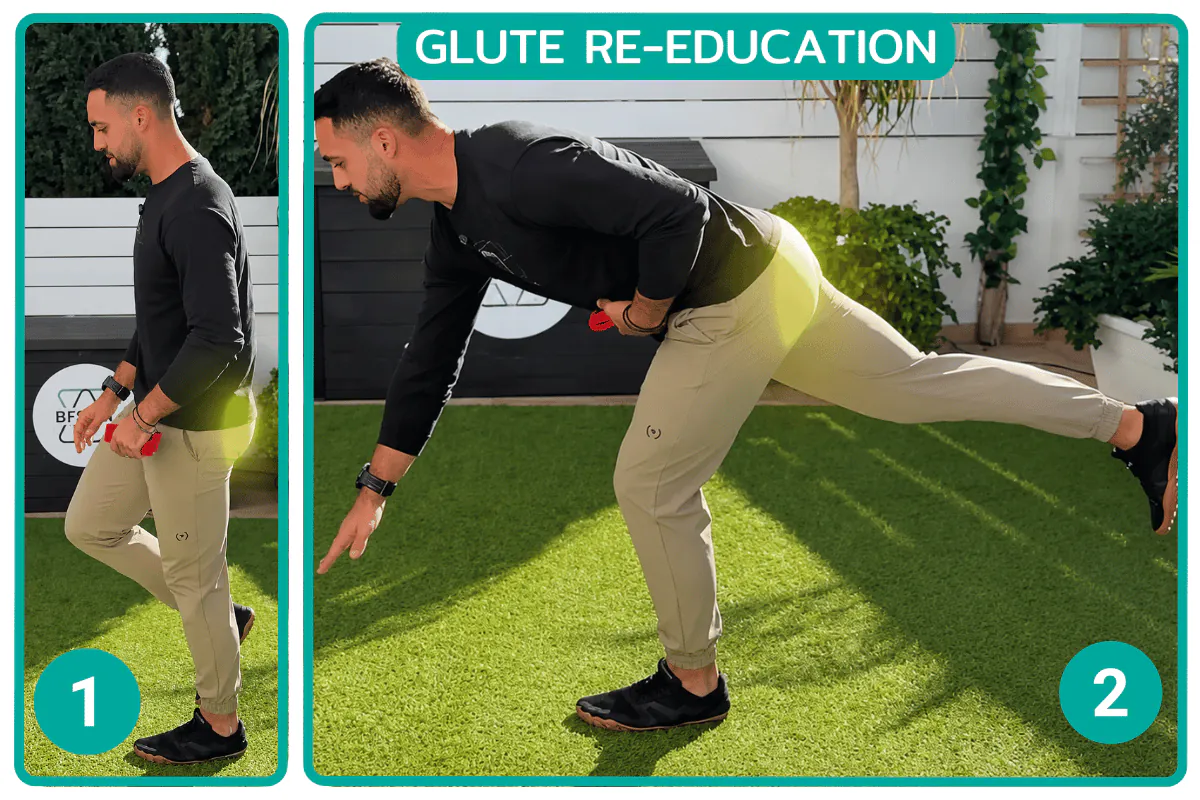
Once you can consistently call on your glutes during movement, then every exercise you do becomes a “glute exercise”. And this is when you start to see real glute gains.
» MORE: 3 Science-Based Steps to Strong Glutes
Ready to Transform Your Glutes?
If you want to make the same long-term investment in your glutes, by:
identifying and removing any possible restriction on them
building glute dominant muscle memory,
Then join our Barefoot Strength Academy. This is exactly what we’ll help you achieve.
Start Your Transformation >>Sources
The sources cited in this article. Select a small reference number to return to its place in the article.
- ASSESSING AND TREATING GLUTEUS MAXIMUS WEAKNESS - A CLINICAL COMMENTARY.. Buckthorpe M, Stride M, Villa FD.. Int J Sports Phys Ther. 2019. 1
- Strengthening and Neuromuscular Reeducation of the Gluteus Maximus in a Triathlete with Exercise-Associated Cramping of the Hamstrings. Tracey Wagner, Nazly Behnia, Won-Kay Lau Ancheta, Richard Shen, Shawn Farrokhi, Christopher M Powers. Journal of Orthopaedic & Sports Physical Therapy. 2010. 2
- Electromyographic analysis of gluteus medius and gluteus maximus during rehabilitation exercises.. Boren K, Conrey C, Le Coguic J, Paprocki L, Voight M, Robinson TK.. Int J Sports Phys Ther. 2011. 3
- The Effect of Hip Flexor Tightness on Muscle Activity during the Front Squat. Sarah C. Martinez-Sepanski, Angie Bowman, Ketlon Mehls. International Journal of Strength and Conditioning. 2024. 4
- EFFECT OF RESTRICTED HIP FLEXOR MUSCLE LENGTH ON HIP EXTENSOR MUSCLE ACTIVITY AND LOWER EXTREMITY BIOMECHANICS IN COLLEGE-AGED FEMALE SOCCER PLAYERS.. Mills M, Frank B, Goto S, Blackburn T, Cates S, Clark M, Aguilar A, Fava N, Padua D.. Int J Sports Phys Ther. 2015. 5
- Effect of a supervised hip flexor stretching program on gait in elderly individuals.. Watt JR, Jackson K, Franz JR, Dicharry J, Evans J, Kerrigan DC.. PM R. 2011. 6
Watch the video
FREE 7-DAY EMAIL COURSE
Sign up for our free Strong Feet and Glutes course
Get a lesson in your inbox every day for 7 days.
Start your free course
You'll also join our newsletter. Unsubscribe at any time.