
How to Use The Step Up Exercise to Increase Glute Strength
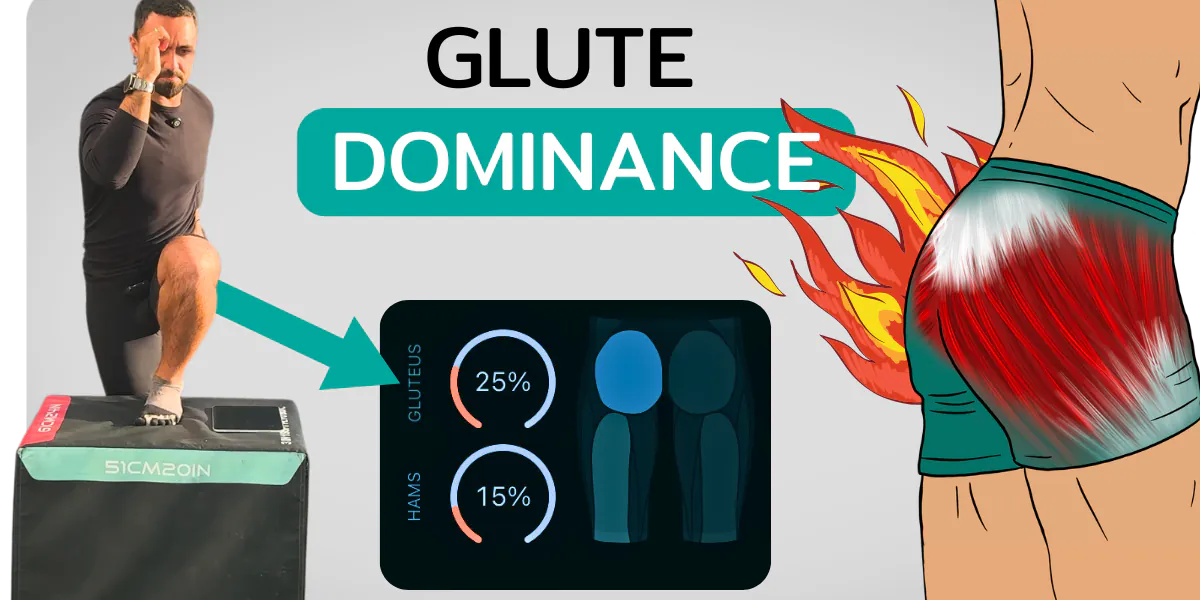
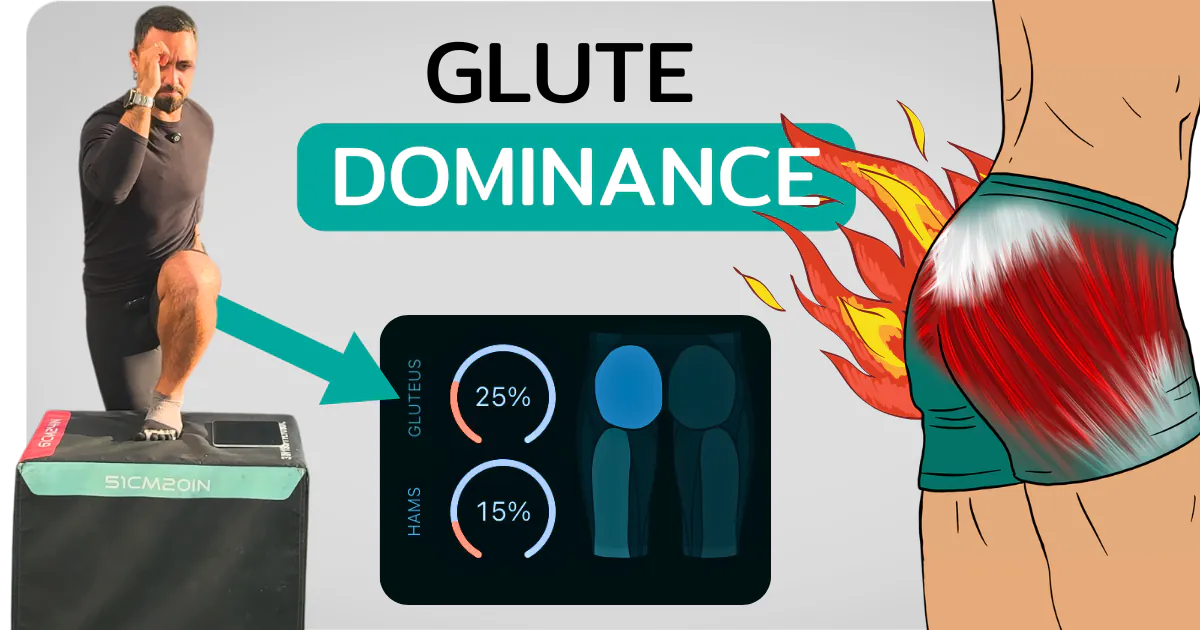
Research shows that the step-up is the best squat variation for glute activation [1][2].
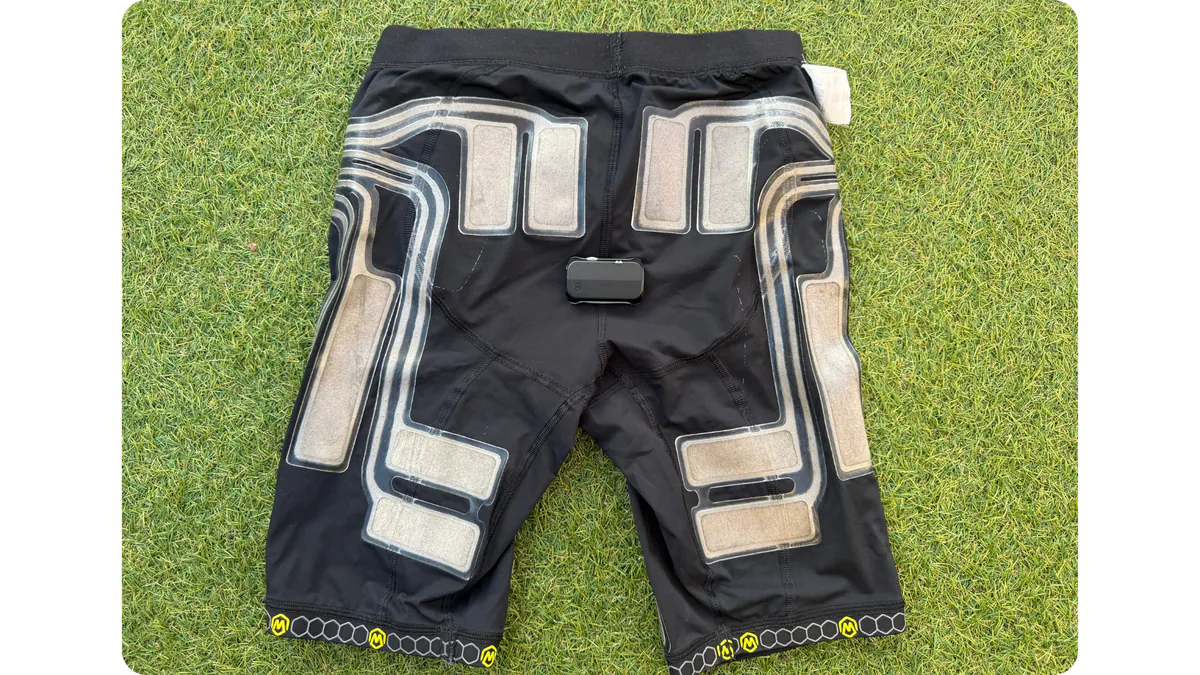
We took this highly effective exercise and enhanced it using science-based techniques refined through years of research, then tested these modifications internally with advanced EMG muscle tracking shorts.
The results demonstrate that we can elevate the step-up exercise to achieve even higher glute contraction.
Watch our full commentary of these exciting findings 👇
These are the high-tech EMG muscle tracking shorts we used.
We began with a standard step-up on a low box and observed higher hamstring activation relative to the glutes.
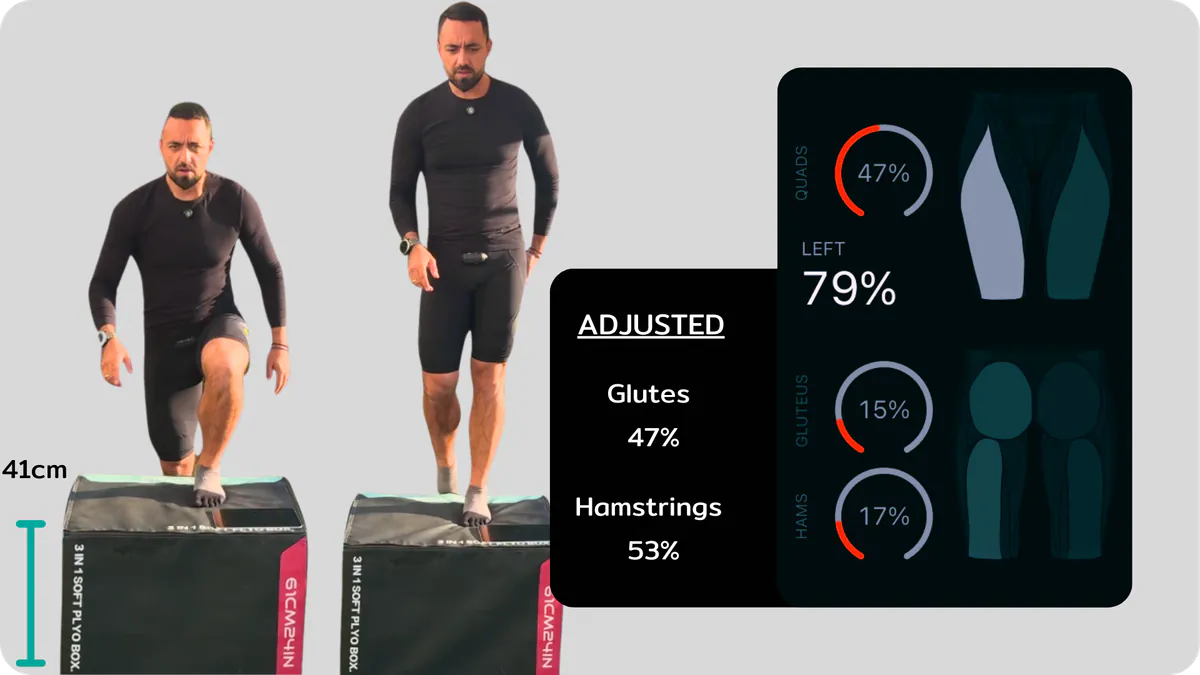
Increasing the box height enhanced glute activation by increasing hip flexion, which provided a deeper stretch in the glutes and shifted the load away from the hamstrings.
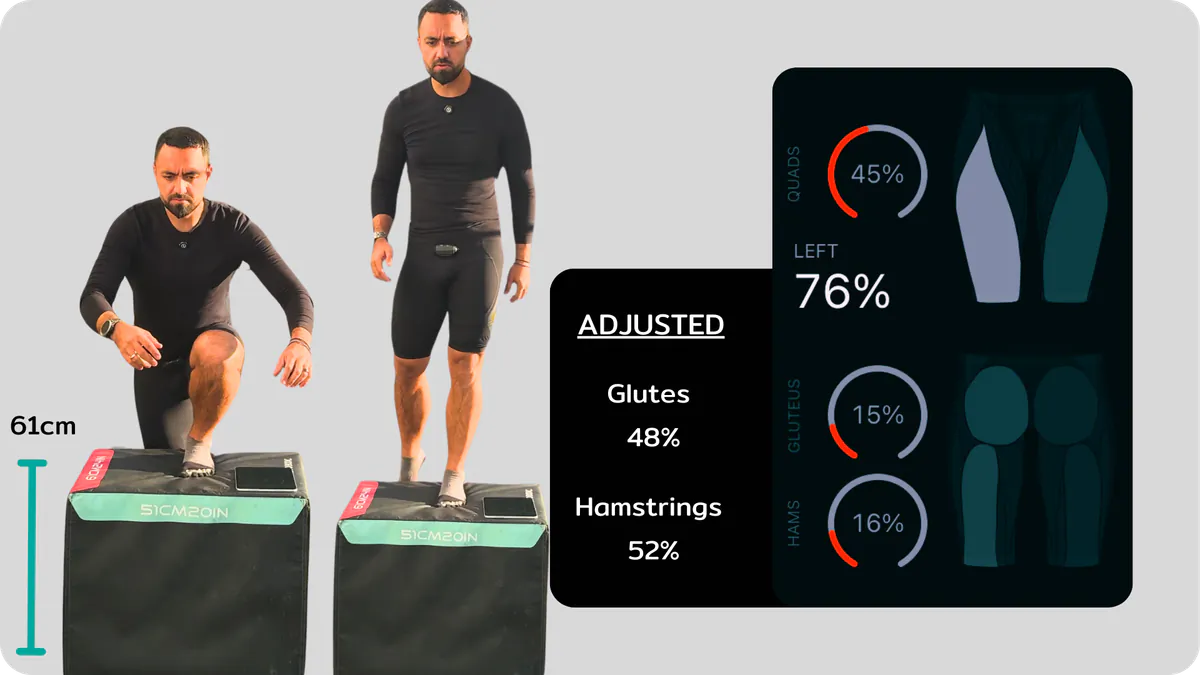
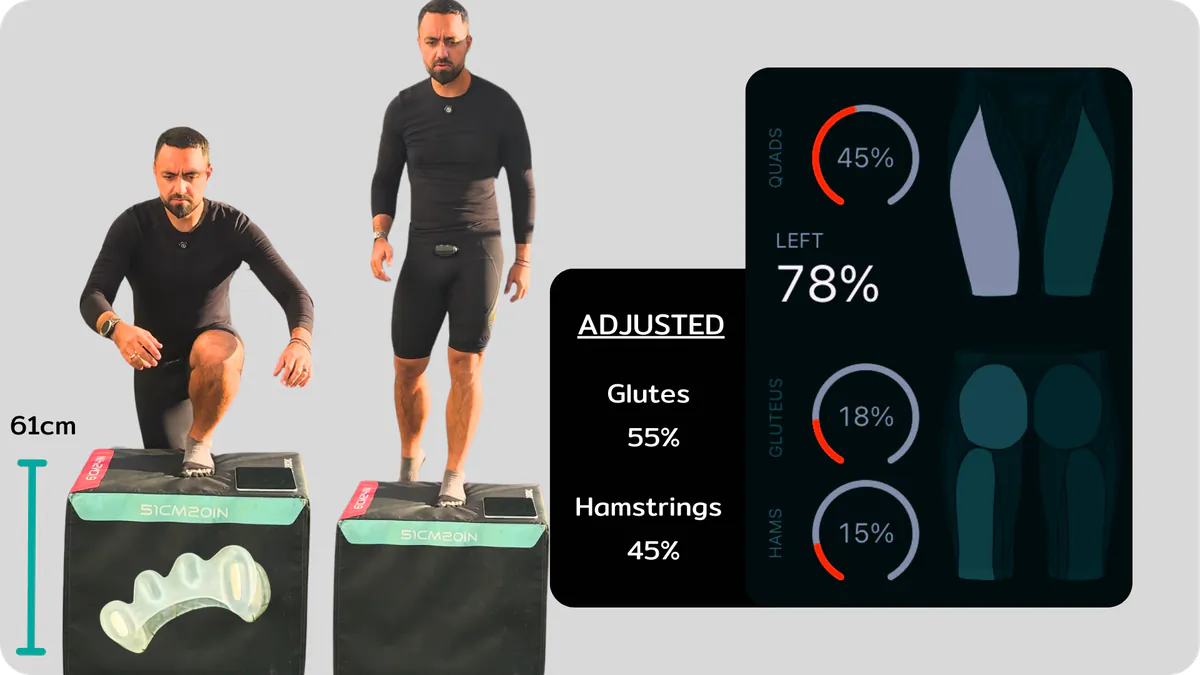
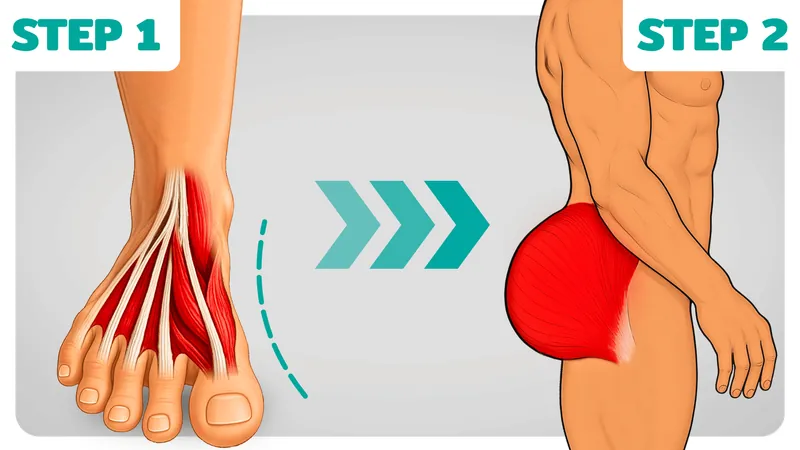
Next, adding silicone toe spacers created a significant bump in glute activity, making them the dominant hip extensor.
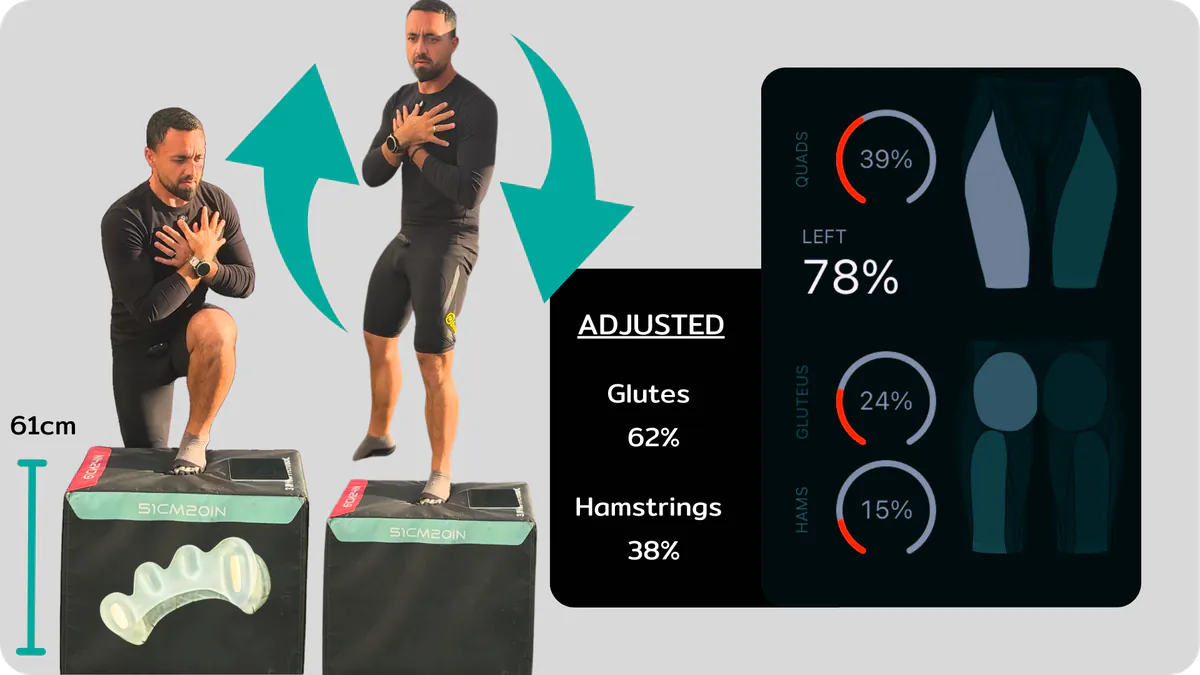
Further modifications—introducing rotation without arm movement had the greatest impact on the glutes. They were now by far the most dominant hip extensor.
The final modification entailed incorporating a controlled arm swing to engage the lats and posterior oblique sling—produced additional gains in glute activation.
Interestingly, this technique reduced quad involvement. Perhaps the arm-swing assisted in the momentum of ascent, reducing overall load on the legs.
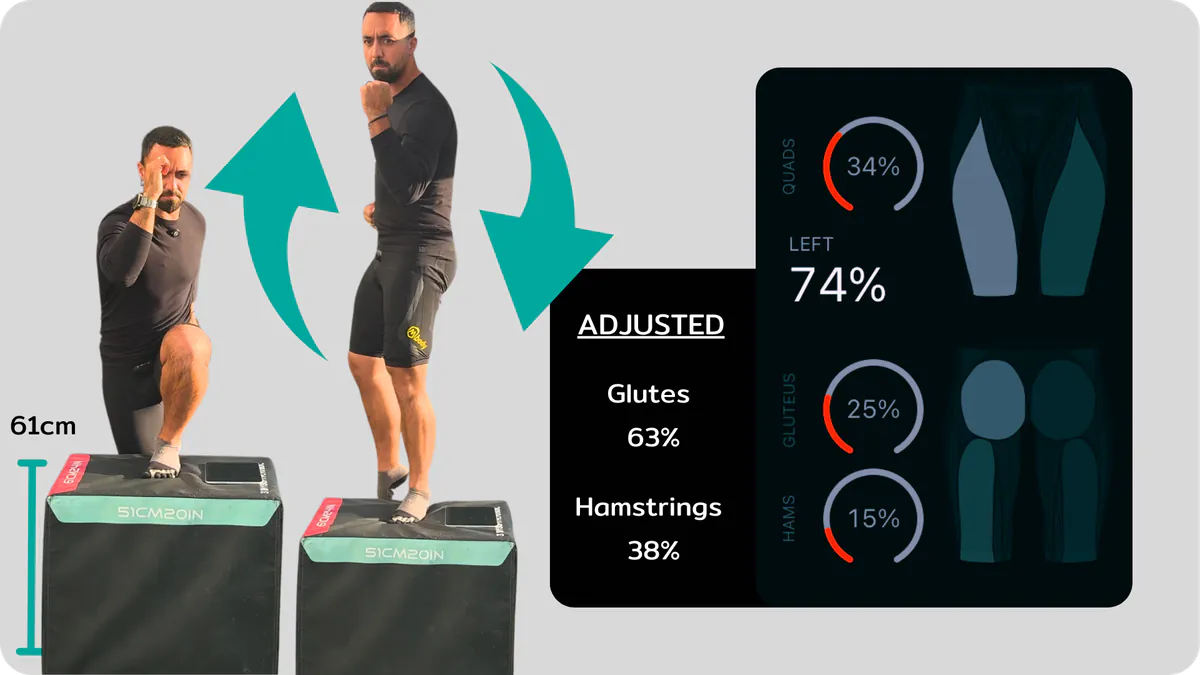
*Just be aware that over-rotating through the spine can introduce unnecessary load on the lower back. So, be sure to limit spinal rotation by moving only through the hips.
We did these tests just yesterday as research for an upcoming YouTube video, and you are now the first to see this breakthrough. This step-up variation is a culmination of years of experience, thousands of hours of research, and the application of science-based principles.
This is the value of our academy. We delve deep into the science to help you build a strong foundation through your glutes and feet—a level of detail and rigor you won’t find anywhere else.
So, take advantage of our unique workouts and exercises to become a better mover for the future.
How to do this exercise with perfect technique: #Exercise #3 – Step-Up With Rotation
Sources
The sources cited in this article. Select a small reference number to return to its place in the article.
- Gluteus Maximus Activation during Common Strength and Hypertrophy Exercises: A Systematic Review. Walter Krause Neto, Enrico Gori Soares, Thais Lima Vieira, Rodolfo Aguiar, Thiago Andrade Chola, Vinicius de Lima Sampaio, Eliane Florencio Gama. Journal of sports science & medicine. 2020. 1
- AN EXAMINATION OF THE GLUTEAL MUSCLE ACTIVITY ASSOCIATED WITH DYNAMIC HIP ABDUCTION AND HIP EXTERNAL ROTATION EXERCISE: A SYSTEMATIC REVIEW.. Macadam P, Cronin J, Contreras B.. Int J Sports Phys Ther. 2015. 2
Watch the video
FREE 7-DAY EMAIL COURSE
Sign up for our free Strong Feet and Glutes course
Get a lesson in your inbox every day for 7 days.
Start your free course
You'll also join our newsletter. Unsubscribe at any time.