
The Strong Feet Guide (5 Steps to Build Your Foundation)
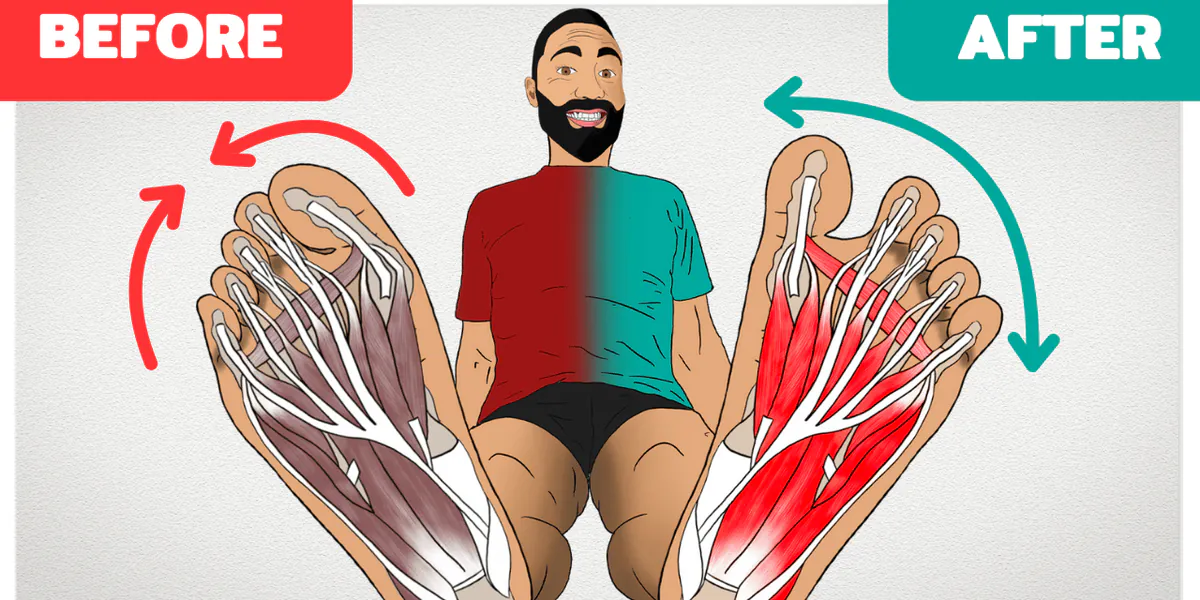
Your feet contain 26 bones, 33 joints, and over 100 muscles, tendons, and ligaments. Yet most people take them for granted—stuffing them into shoes without a second thought.
This is shocking, considering the feet form the foundation of human movement. And when that foundation is weak, the entire body pays the price.
Your ankles lock up (compensating for instability)
Your knees collapse inward (due to overpronation)
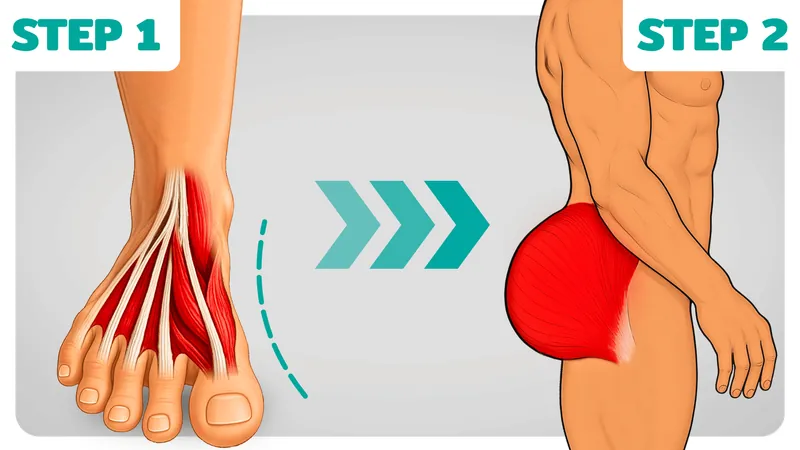
Your glutes lose power
Your back takes a beating
This is exactly why researchers describe the supportive structures of the foot as the "foot core system" [1] – just like a weak core destabilizes your spine, weak feet destabilize your entire body from the ground up.
The 5 Essential Foot Skills (That Most People Never Develop)
1. Toe Splay
Your toes are meant to spread like fingers. This creates a stable tripod base, aligns your foot bones, and activates the 29 intrinsic muscles that hold up your arch [2] [1].
2. Single-Leg Stability
Walking requires balancing on one foot 60-70% of the time. Running? 100% [3].
Yet most feet can't handle this basic requirement without wobbling or compensating through overpronation.
3. Ankle Mobility
Without adequate ankle range of motion, your foot is forced to compensate by collapsing inward, essentially becoming a “second” ankle joint.
That’s why research has found that up to 70% of people with fallen arches also have restricted ankles [4].
4. Impact Absorption (Pronation Strength)
Each running step generates 3-4 times your body weight in force [5]. For a 70kg person running just 3km, that's 840 tonnes of cumulative impact!
Your feet must absorb this impact through controlled pronation – not collapse under it (overpronation).
5. Instant Stiffening (Supination Strength)
After absorbing impact, your foot must instantly transform from a mobile shock absorber (pronation) to a rigid platform for propulsion (supination).
This requires serious strength most feet simply don't have.
Try This Quick Assessment
Test your foot strength right now:
Can you spread your toes wide apart like fingers and hold it for 60 seconds without cramping?
Can you balance on one foot for 60 seconds without wobbling?
Can you hop on one leg 90 times in 60 seconds without losing your balance?
Struggled with any of these? Your feet are weaker than they should be.
The 3 Reasons Your Feet Are Weak
1. Modern Shoes Are Foot Prisons
Narrow toe boxes act like casts, restricting natural toe splay.
Stiff soles prevent the 33 joints from moving.
Excessive cushioning blocks any sense of feeling with the ground.
Research shows this "paralyzed" state causes muscles to literally atrophy [6] [1].
2. We've Lost Varied Terrain
Our ancestors navigated rocks, grass, sand, and hills daily. This constant surface variation challenged every foot muscle.
Today's flat, predictable surfaces don’t challenge our foot muscles enough. Zero challenge = zero strength.
3. We Never Focus on Foot-Specific Training
You wouldn't expect to build strong arms without training them. Yet we expect our feet to handle enormous forces with zero targeted work.
The Foundation-First Solution
Here's what the research tells us works:
Step 1: Free Your Feet
Studies show that switching to wide toe-box, flexible shoes can improve toe alignment and foot function [7].
Just 6 months in barefoot-style shoes increased foot strength by almost 60% in one study [6].
You can find the barefoot shoes we recommend using our #Barefoot Shoe Finder
Step 2: Progressive Barefoot Training
Research found that gradually increasing barefoot activity over 4 months raised foot arches by 4.7mm [8].
The key word: GRADUAL.
Start with barefoot warm-ups, then progress slowly.
That's why we developed our science based #Barefoot Transition Plan for our academy members.
Step 3: Targeted Skill Development
A 6-week single-leg balance program significantly increased arch height in participants [9].
But balance is just one of the five skills you need for strong feet. We cover all 5 skills in our #15-min Daily Workouts.
Here's the Thing...
Building strong feet is just the beginning.
At the Barefoot Strength Academy, you’ll train 10 Essential Movement Skills to build a rock-solid foundation—from feet to glutes—for powerful, injury-free movement.
How we do it…
✓ #Functional Tests pinpoint YOUR exact weaknesses (not just your feet)
✓ #15-min Daily Workouts help you fix those weaknesses
✓ #Strong Feet & #Power Glutes expose the lifestyle culprits behind your weaknesses
A complete blueprint from feet to glutes
Bottom line: We've removed all the guesswork. So you can just start and follow the plan. Simple.
Join thousands who've stopped wondering "what should I work on?" and started building real, lasting strength from the ground up.
See you inside,
Chris & The Barefoot Strength Team
Sources
The sources cited in this article. Select a small reference number to return to its place in the article.
- The foot core system: a new paradigm for understanding intrinsic foot muscle function. Patrick O McKeon, Jay Hertel, Dennis Bramble, Irene Davis. British Journal of Sports Medicine. 2014. 1a 1b 1c
- Relationship between adolescent bunions and flatfeet.. Kalen V, Brecher A.. Foot Ankle. 1988. 2
- The Vital Glutes: Connecting the Gait Cycle to Pain and Dysfunction. John Gibbons. 2014. 3
- Prevalence of Calf muscle tightness in asymptomatic flat foot subjects. Sara H. Kamel Mohamed, Enas F. Youssef, Mona S. Faggal, Mona M. Ibrahim. Egyptian Journal of Physical Therapy. 2022. 4
- Impact and overuse injuries in runners.. Hreljac A.. Med Sci Sports Exerc. 2004. 5
- Daily activity in minimal footwear increases foot strength. Curtis, Rory, Willems, Catherine, Paoletti, Paolo, D’Août, Kristiaan. Scientific Reports. 2021. 6a 6b
- Effectiveness of the custom-mold room temperature vulcanizing silicone toe separator on hallux valgus: A prospective, randomized single-blinded controlled trial.. Chadchavalpanichaya N, Prakotmongkol V, Polhan N, Rayothee P, Seng-Iad S.. Prosthet Orthot Int. 2018. 7
- Running-related injury prevention through barefoot adaptations.. Robbins SE, Hanna AM.. Med Sci Sports Exerc. 1987. 8
- The Effect of a 6-Week Strength and Balance Training Program on Navicular Drop and Proprioception in Excessive Pronated Foot. Ryoko Suzuki. University of Tennessee, Knoxville — Master's thesis. 2004. 9
Watch the video
FREE 7-DAY EMAIL COURSE
Sign up for our free Strong Feet and Glutes course
Get a lesson in your inbox every day for 7 days.
Start your free course
You'll also join our newsletter. Unsubscribe at any time.