
The Squat Method That Transforms Glute Development
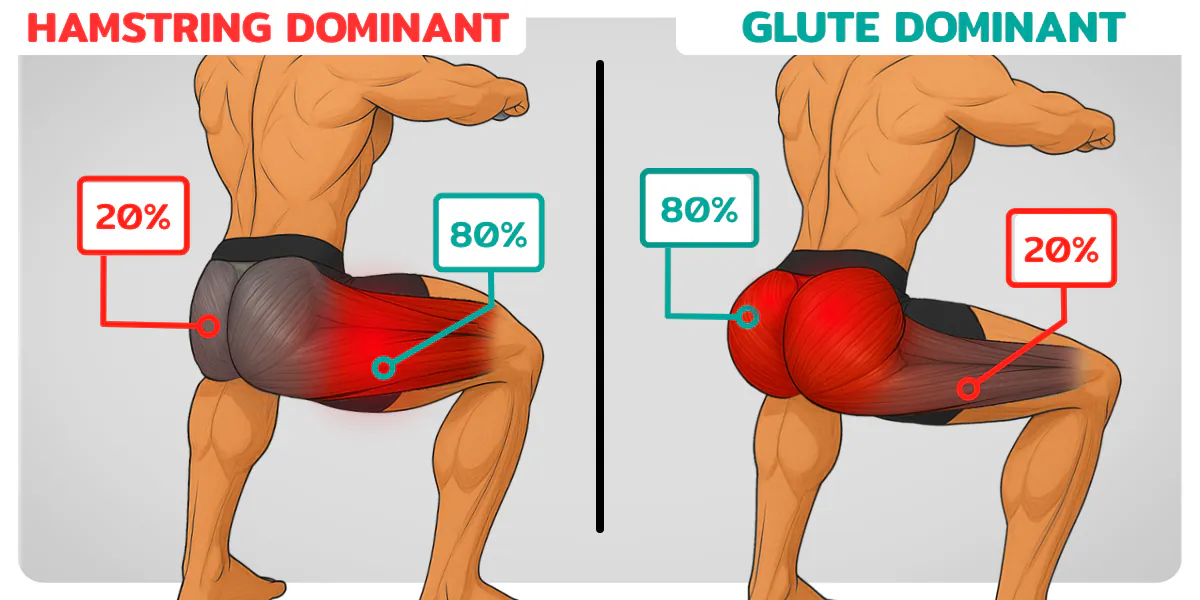
The best squats for glutes: front squats and step-ups
Short answer: The best squats for glute growth are front squats and step-ups.
Front squats activate 94% of maximum glute effort—significantly more than back squats (84%) or deadlifts (72%). Step-ups go further still, triggering over 100% of maximum voluntary glute contraction, making them the single most effective squat variation for glute development according to a 2018 study[1].
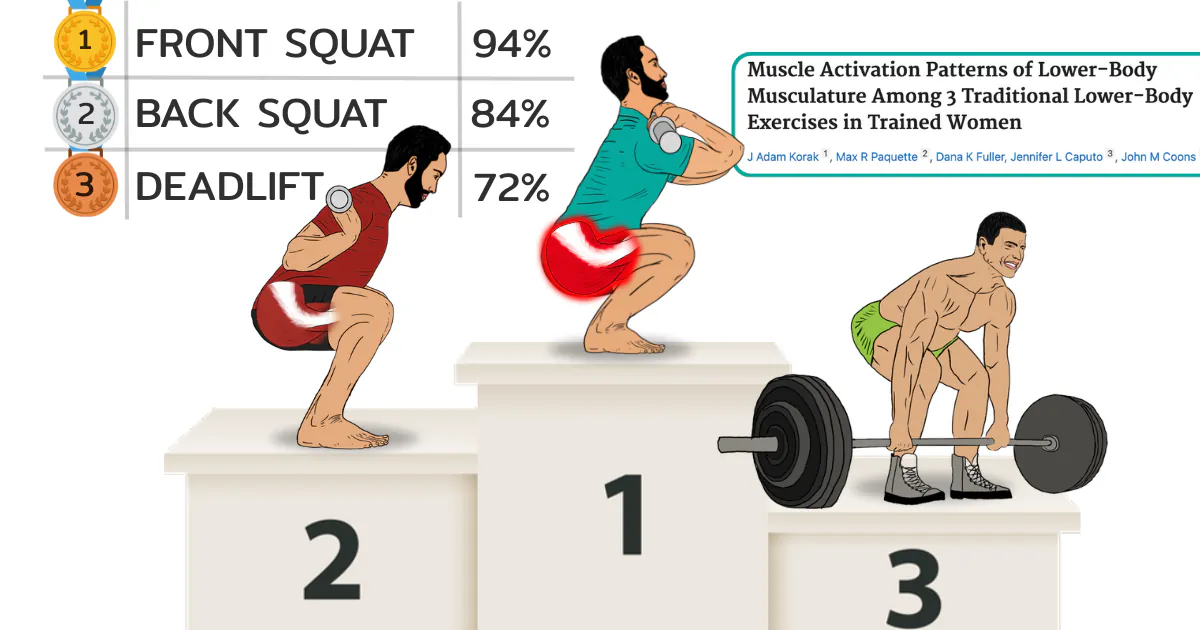
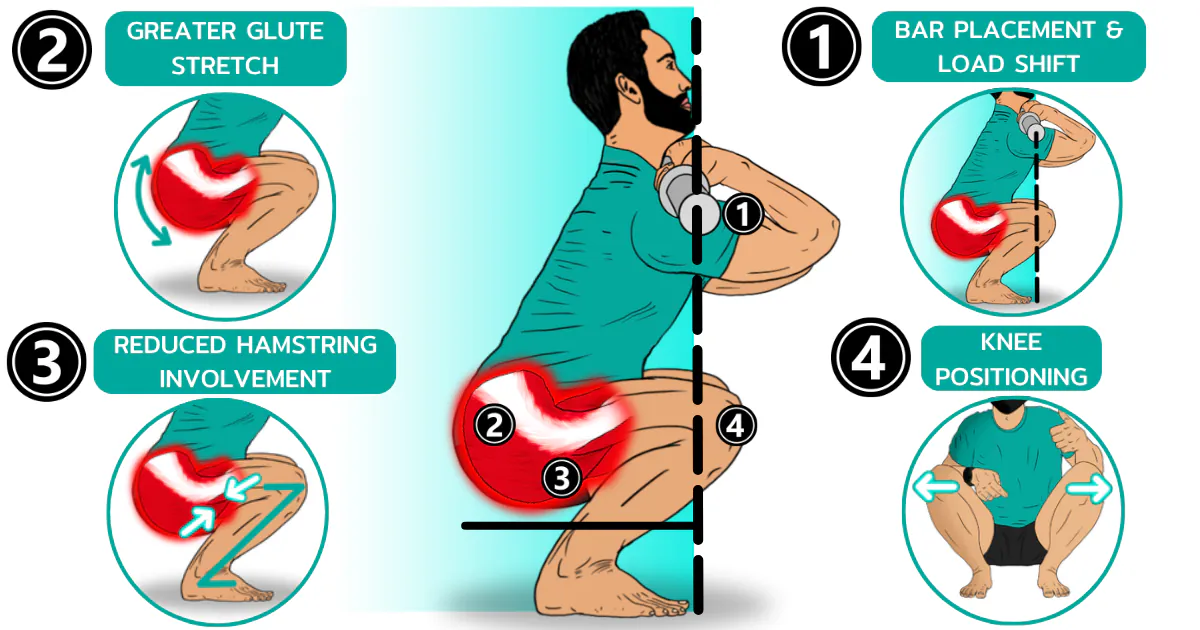
The front squat emerged as the best bilateral squat for glute activation. This happens due to four key factors:
Bar Placement & Load Shift: The bar’s forward position shifts the body’s center of mass, increasing the external load on the hips and requiring more glute engagement [1].
Greater Glute Stretch: The front squat places the hips deeper, stretching the glutes more and triggering a stronger muscle response [1].
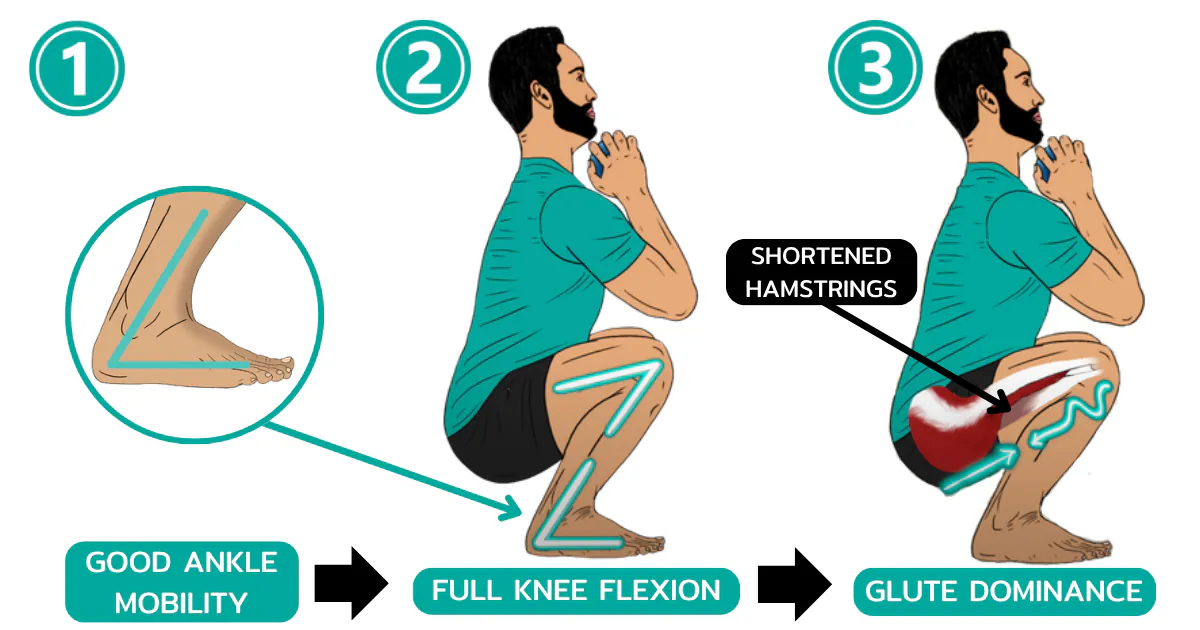
Reduced Hamstring Involvement: More knee flexion shortens the hamstrings, limiting their role and making the glutes work harder [2].
Knee Positioning: The front rack position forces the knees outward, increasing hip abduction and external rotation, further engaging the glutes [2].
While the front squat is the best bilateral option, for maximal glute activation, single-leg variations take the crown.
The Step-Up: The King of Glute Activation
A 2020 meta-analysis[3] of 16 studies found that the step-up generated over 100% max voluntary glute contraction—even exceeding the participants’ own ability to voluntarily squeeze their glutes as hard as possible.
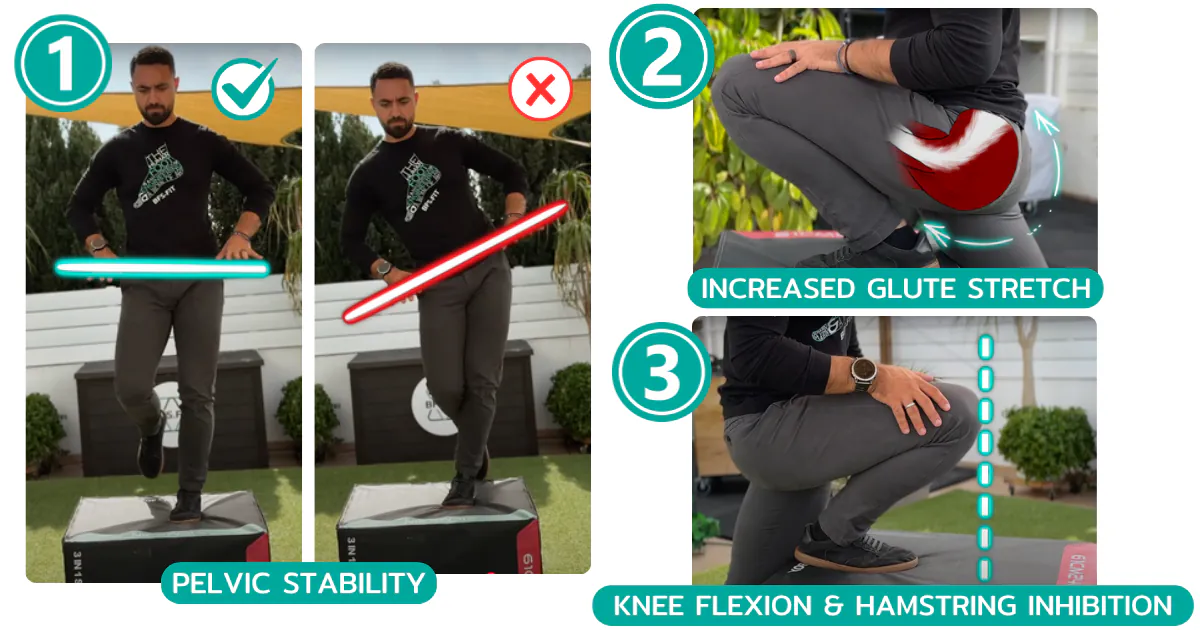
Why is the step-up so effective?
Pelvic Stability: The glutes must work harder to keep the pelvis level when standing on one leg [3].
Increased Glute Stretch: A higher box position (around 45cm for female athletes, likely higher for taller males) creates more stretch in the glutes, increasing muscle activation [4].
Knee Flexion & Hamstring Inhibition: Similar to the front squat, the step-up requires deep knee flexion, reducing hamstring involvement and shifting the workload to the glutes [5].
Science-Backed Techniques to Enhance Glute Activation
If you want to get even more out of your squat variations, consider these research-supported techniques.
1. Core Bracing for 15% More Glute Activation
A 2007 study[6] found that stiffening the core using the belly bracing technique can increase glute activation by up to 15%. This works because the pelvis, which houses the glutes, becomes more stable when the core is engaged [7].
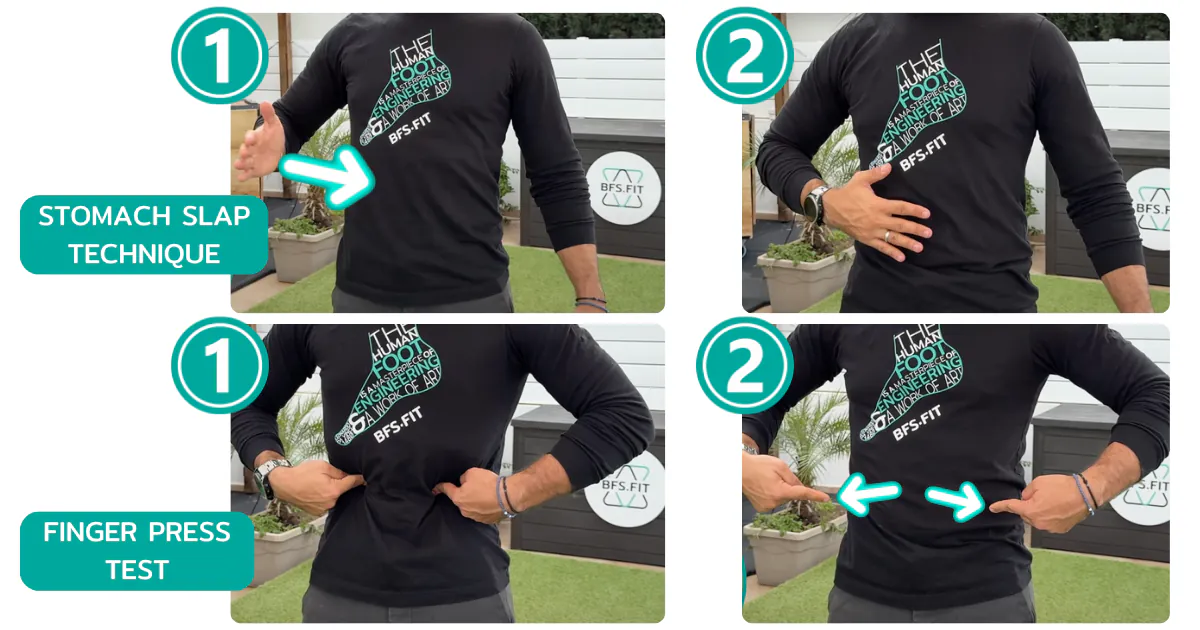
Two simple ways to brace your core before squatting:
Stomach Slap Technique: Lightly slap your stomach before lifting; your body will automatically brace in anticipation.
Finger Press Test: Poke your fingers into your abdomen, then brace your abs to push them out.
2. Resistance Bands for 60% More Glute Activation
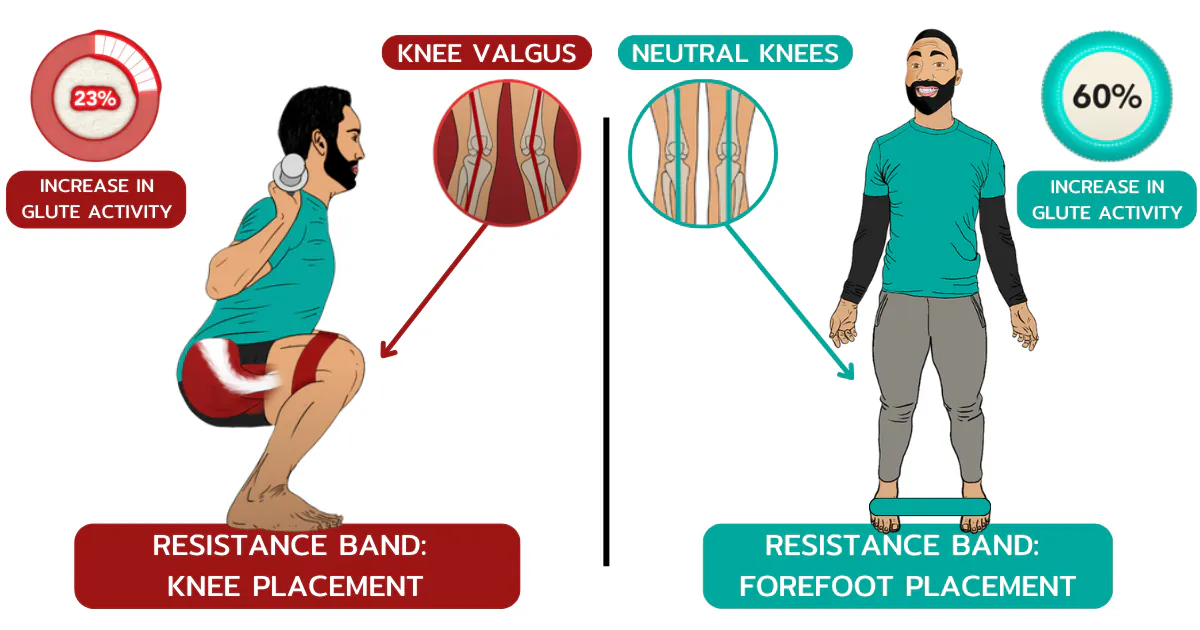
A 2020 study[8] found that adding resistance bands around the knees can increase glute activity by up to 23%. However, this can cause knee valgus (inward collapse), increasing injury risk.
A follow-up study found that placing the band lower on the leg—especially around the forefoot—provided an even bigger 60% increase in glute activity, while also preventing knee valgus [9].
Find the resistance bands we recommend here: #Strength Tools
3. The Rotational Step-Up: A 3D Glute Builder
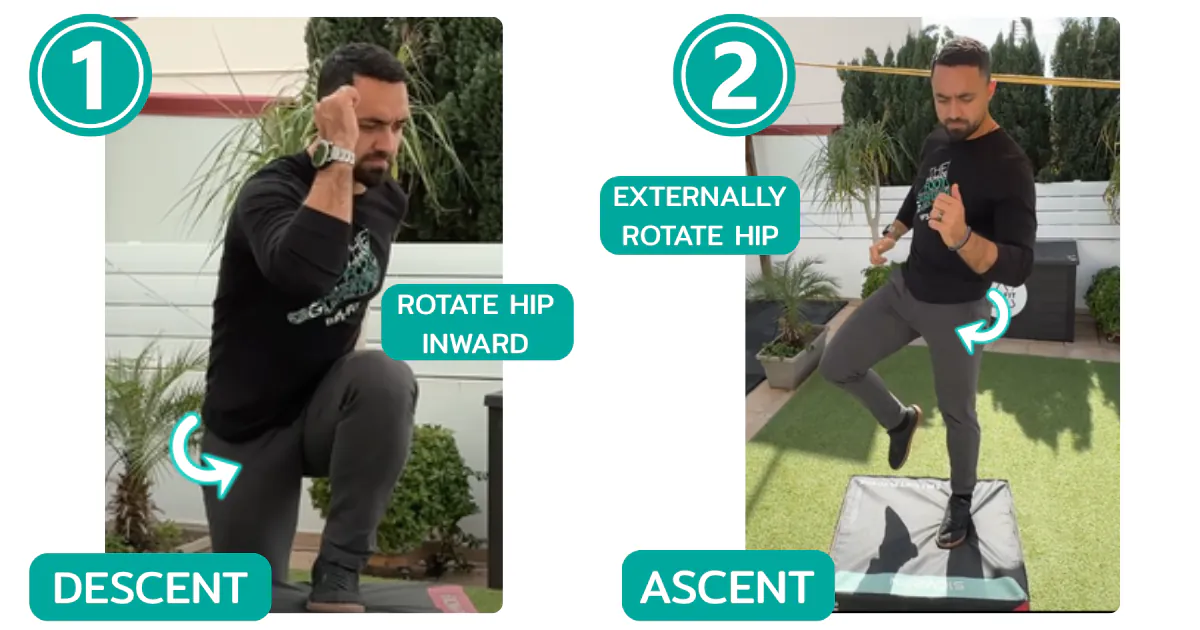
The traditional step-up is already the best squat variation for glute activation, but adding hip rotation can further enhance engagement across all three movement planes:
Sagittal Plane: Hip flexion and extension (up and down motion)
Transverse Plane: Rotational control of the hip
Frontal Plane: Pelvic stability on one leg
By rotating the hip inward on the descent and externally rotating as you stand up, the glutes are forced to work through a greater range of motion, maximizing contraction.
4. The Posterior Oblique Sling Technique
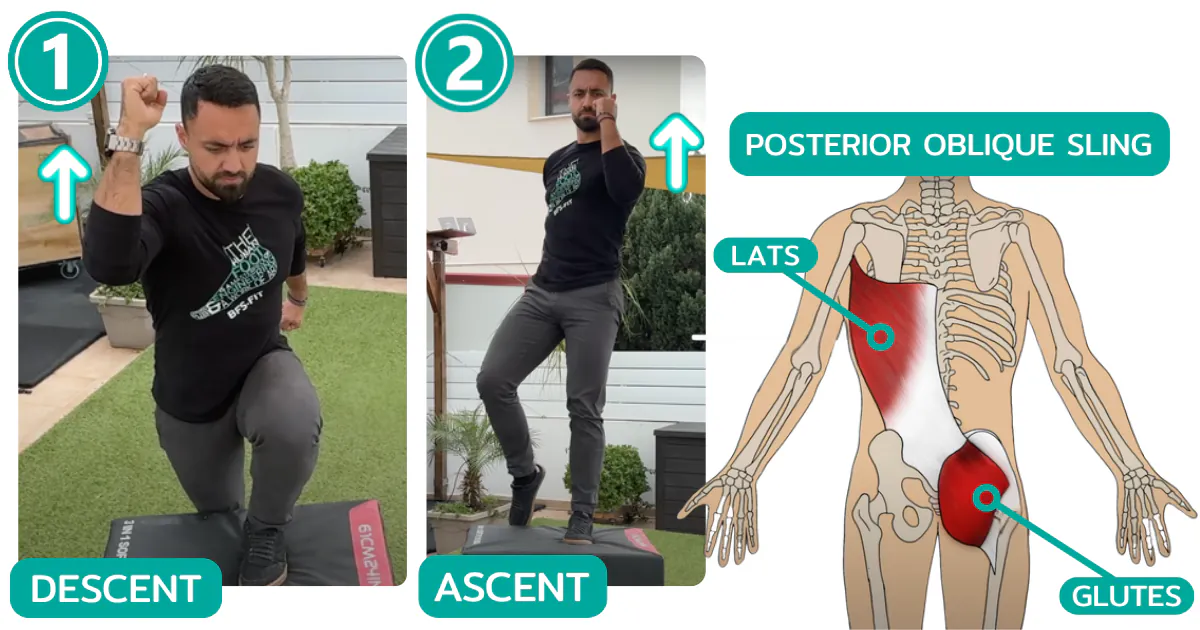
For an even greater glute burn, incorporate opposite-side arm drive while stepping up:
As you lower yourself, raise the opposite arm with a bent elbow.
As you stand up, drive the elbow back forcefully.
This activates the posterior oblique sling—a connection between the lats and opposite glute—further enhancing glute activation.
The Key to Glute Activation: Ankle Mobility
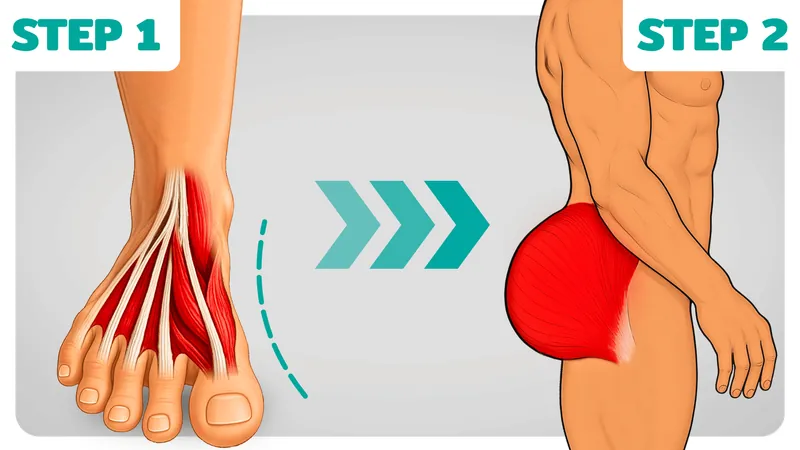
One often-overlooked factor in squat performance is ankle mobility. Full knee flexion in deep squats shortens the hamstrings due to active insufficiency, preventing them from dominating the movement and allowing the glutes to take over.
Without good ankle mobility, your depth will be limited, and your body will compensate with poor mechanics—robbing your glutes of the activation they need.
The Limiting Factor in The Squat
No matter what squat variation you choose, your body must be functional enough to move through these positions correctly. If you lack core stability, hip mobility, ankle mobility, or single-leg balance, you won’t get the full benefits of these glute-focused squat optimizations.
That’s why we developed the Barefoot Strength Academy—a science-based training system designed to help you build a solid foundation of strength from the ground up. Inside the academy, you’ll find:
Self-assessments in the #Strong Feet and #Power Glutes for key movement functions like ankle mobility, hip stability, and glute activation.
Personalized #Member Consultations based on your test results. Your consultation will be delivered within 30 calendar days after we receive your complete intake form and all required assessment videos. If your purchase includes an earlier agreed delivery deadline, that deadline still applies.
#15-min Daily Workouts designed to strengthen your feet, glutes, and core.
Direct feedback from our coaching team in our private #Barefoot Strength Journal chat group.
Ready to unlock the full potential of your squat and build stronger glutes?
Join the Barefoot Strength Academy
Start Your Transformation >>See you inside!
Common questions
What is the best squat for glutes?
The front squat is the best bilateral squat for glute activation, engaging 94% of maximum glute activity compared to 84% for the back squat and 72% for the deadlift, per a 2018 study[1] of trained athletes. For even greater activation, single-leg step-ups trigger over 100% of maximum voluntary glute contraction, more than any bilateral squat variation, per a 2020 meta-analysis[3] of 16 studies.
Do squats actually build glutes?
Yes, squats build glutes when performed with the right variation and technique. Front squats and step-ups produce the highest glute activation. A 2007 study[6] found that bracing the core adds up to 15% more glute activation, and a 2022 follow-up study[9] found that placing a resistance band around the forefoot adds up to 60% more.
Are step-ups better than squats for glutes?
For glute activation, yes. A 2020 meta-analysis[3] of 16 studies found that step-ups trigger over 100% of maximum voluntary glute contraction, more than any bilateral squat variation. The single-leg stance forces the glutes to stabilize the pelvis, amplifying engagement.
Why is the front squat better for glutes than the back squat?
The front squat places the bar in front of the body, shifting the center of mass and increasing external load on the hips, per a 2018 study[1]. This creates a greater glute stretch, and deeper knee flexion reduces hamstring involvement (per biomechanics research[2]) so the glutes take over, raising activation to 94% of max.
Sources
The sources cited in this article. Select a small reference number to return to its place in the article.
- Muscle Activation Patterns of Lower-Body Musculature Among 3 Traditional Lower-Body Exercises in Trained Women. J Adam Korak, Max R Paquette, Dana K Fuller, Jennifer L Caputo, John M Coons. Journal of strength and conditioning research. 2018. 1a 1b 1c 1d 1e
- Examination of gluteus maximus electromyographic excitation associated with dynamic hip extension during body weight exercise: a systematic review.. Paul Macadam, Erin H Feser. International journal of sports physical therapy. 2019. 2a 2b 2c
- Gluteus Maximus Activation during Common Strength and Hypertrophy Exercises: A Systematic Review. Walter Krause Neto, Enrico Gori Soares, Thais Lima Vieira, Rodolfo Aguiar, Thiago Andrade Chola, Vinicius de Lima Sampaio, Eliane Florencio Gama. Journal of sports science & medicine. 2020. 3a 3b 3c 3d
- Electromyographical analysis of lower extremity muscle activation during variations of the loaded step-up exercise. Christopher J Simenz, Luke R Garceau, Brittney N Lutsch, Timothy J Suchomel, William P Ebben. Journal of strength and conditioning research. 2012. 4
- Building a better gluteal bridge: electromyographic analysis of hip muscle activity during modified single-leg bridges.. Lehecka BJ, Edwards M, Haverkamp R, Martin L, Porter K, Thach K, Sack RJ, Hakansson NA.. International journal of sports physical therapy. 2017. 5
- Effects of performing an abdominal drawing-in maneuver during prone hip extension exercises on hip and back extensor muscle activity and amount of anterior pelvic tilt. Jae-Seop Oh, Heon-Seock Cynn, Jong-Hyuk Won, Oh-Yun Kwon, Chung-Hwi Yi. The Journal of orthopaedic and sports physical therapy. 2007. 6a 6b
- Effect of core stability exercises versus Surya Namaskar on hamstring tightness in healthy adults using active knee extension test at the end of 6 weeks: A comparative study. Saniya M Shaikh, Asmita C Moharkar. International Journal of Applied Research. 2020. 7
- Barbell back squat: how do resistance bands affect muscle activation and knee kinematics?. Reece MB, Arnold GP, Nasir S, Wang WW, Abboud R.. BMJ open sport & exercise medicine. 2020. 8
- Looped Elastic Resistance during Squats: How Do Band Position and Stiffness Affect Hip Myoelectric Activity?. Martins EC, Steffen LB, Gomes D, Herzog W, Haupenthal A, de Brito Fontana H.. Journal of functional morphology and kinesiology. 2022. 9a 9b
Watch the video
FREE 7-DAY EMAIL COURSE
Sign up for our free Strong Feet and Glutes course
Get a lesson in your inbox every day for 7 days.
Start your free course
You'll also join our newsletter. Unsubscribe at any time.