
The Arch Support Guide
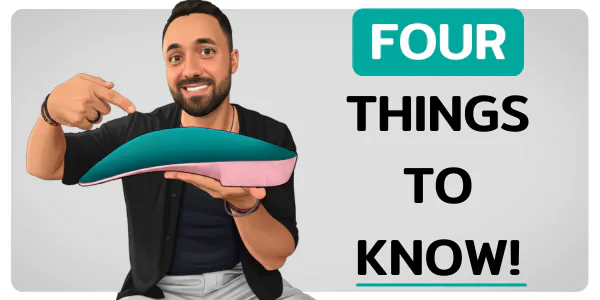
Aim:
List 4 characteristics arch-supporting insoles need to be effective.
How to avoid becoming dependent on arch support in the long term.
How to safely transition out of arch-supporting insoles.
The 4 Characteristics of Effective Arch-Supporting Insoles
1. Three-Quarter Length Design
The best arch-support insoles stop short of your toes.
That’s because toe box space is fixed and cannot be adjusted, unlike the mid-foot area, where laces and tongue can provide extra volume.
So, when you add a full-length insole, you're essentially stealing space from your toes, forcing them into a cramped position where they can lose mobility.
Second, if you're using toe spacers, which add material between the toes, you'll need all the space you can get from the shoe’s toe box to accommodate them.
Three-quarter insoles solve both of these issues.
Finally, three-quarter length insoles are compatible with toe shoes – something impossible with full-length designs. There's no other type of insole you could wear with a pair of Vibram FiveFingers or Peluva shoes.
2. Zero Heel Elevation (Flat Design)
A good insole has no heel elevation.
Why?
A raised heel shifts your ankle into plantar flexion – shortening your calf muscles and Achilles tendon over time.
Tight calves can actually cause your foot to overpronate and flatten while walking [1]. Ironically, this is the exact problem you're trying to fix with arch support.
A flat, zero-drop design, by contrast, allows your ankle to move through its full range of motion, supporting rather than sabotaging your arch stability.
3. Rigid Construction, Not Cushioned
Arch support isn't meant to cushion your feet like a pillow. It's designed to provide structural stability and realign your foot mechanics.
A study comparing soft and hard insoles in older adults found that rigid insoles significantly outperformed soft ones for stability, especially when visual input was limited (eyes closed) [2]. The researchers identified three key reasons why:
Better sensory feedback: Firm surfaces help your feet sense their position more accurately, whereas soft surfaces dampen feedback.
Less muscle work required: Soft insoles actually demand more effort from your muscles to maintain stability. Think of how tired your feet feel walking on soft sand versus stable ground.
Improved foot positioning: Hard insoles keep the foot in a more neutral, stable position.
4. Heel Cup Design
A heel cup is a feature that significantly improves stability. It should have a concave shape that cradles your heel with vertical lip on the sides.
Research on different insole types found that cupped insoles significantly improved dynamic stability during walking [3].
There are two main reasons why:
Enhanced proprioceptive feedback: The cup increases surface area contact with the heel, providing more sensory input to your feet, which can improve overall balance and stability.
Mechanical support: The vertical walls limit lateral heel movement (rolling in or out), which directly reduces overpronation.
The Best Insole Option Available
After analyzing dozens of insoles against these criteria, the PCS Insole (available on Amazon) consistently comes out on top. It meets all four essential characteristics:
Three-quarter length design that preserves toe mobility
Zero heel elevation to maintain natural posture
Rigid construction for proper support without compromising ground feel
A well-designed heel cup for enhanced stability
It also comes in various sizes
Most importantly, it's affordable. There's no need to spend $300+ on custom orthotics when a well-designed option exists for a fraction of the price.
How to avoid becoming dependent on arch support
Here's what most podiatrists won't tell you: arch support can weaken your feet over time. A recent study found that wearing custom orthotics for just 12 weeks caused three key arch-supporting muscles to shrink by an average of 14.7% [4].
That's significant muscle loss in less than three months.
Think of arch support like a cast for a broken bone: necessary for healing, but prolonged use leads to weakness and dependency.
Your feet have 29 muscles designed to support your arches naturally. But when you constantly prop them up with external support, these muscles essentially go on vacation.
The real solution is to address the root causes of arch collapse:
1. Fix Toe Alignment
Bunions and collapsed arches go hand in hand. When your big toe shifts out of position, it pulls the your main arch muscle (abductor hallucis) into a mechanically disadvantaged position where it can't properly contract [5].
Wide toe box shoes and silicone toe spacers can help restore proper alignment, allowing your arch muscles to function correctly again [6].
2. Improve Ankle Mobility
Tight ankles cause the feet to spin out like a duck and overpronate in each step. This is the body’s way of compensating for the restriction. Unfortunately, this promotes arch collapse.
Research has found that over 70% of people with fallen arches have ankle mobility restrictions [7].
Restoring full range of motion in the ankles can help fix the feet by allowing them to remain stable with each step.
3. Build Intrinsic Foot Strength
Your foot muscles help form and support the foot arch. That's why multiple studies show that working on foot strengthening can significantly improve arch height within 4-6 weeks [8] [9].
4. Strengthen Your Glutes
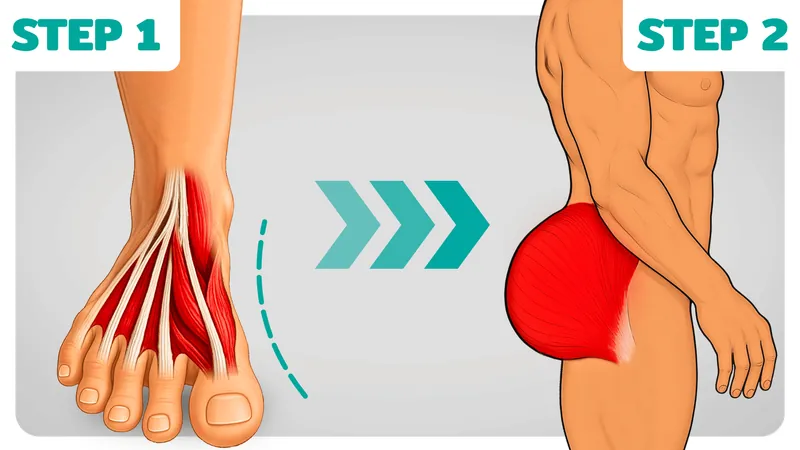
This might surprise you, but weak glutes are often the hidden culprit behind flat feet. Your glutes control the rotation of your entire leg and when they're weak the pelvis loses stability the knees cave inward, and the arches collapse. That's why Studies show that adding glute strengthening to a foot exercise program significantly improves arch stability [10] [11].
So, glute strengthening has to be a part of your long term strategy for improving arch height.
How to Safely Transition Out of Insoles
Removing arch support cold turkey is a recipe for injury.
Instead, after about 3 months of dedicated foot and glute strengthening, follow this simple plan to safely and gradually transition out of arch support.
Weeks 1-3: Wear insoles 2 days on, 1 day off
Weeks 4-6: Alternate days (1 on, 1 off)
Weeks 7-8: Wear insoles 1 day on, 2 days off
Weeks 9-11: Reduce to 1 day on, 3 days off
Week 12+: Use only after strenuous activities (as a recovery tool)
The goal is to use arch support as a recovery aid to help tissues recover, not something you need for normal function.
For example, after a long run or an intense day on your feet, pop in your arch supports for a day or two afterwards. This gives your foot muscles a chance to recover.
The Bottom Line
The best arch-support insoles share four non-negotiable traits:
Three-quarter length
Zero heel elevation
Rigid construction
A proper heel cup
The PCS Insole checks all these boxes at an affordable price point.
But remember: insoles should support your journey toward stronger feet, not replace your foot's natural support system. Use them strategically while you build the intrinsic strength, mobility and alignment your feet need to stand strong on their own.
Once your feet are stronger and more functional, start transitioning out of them until you use them only as a recovery tool after intense training.
Join our academy to start your feet and glutes strengthening journey 👇
Sources
The sources cited in this article. Select a small reference number to return to its place in the article.
- Biomechanics and pathophysiology of flat foot.. Van Boerum DH, Sangeorzan BJ.. Foot Ankle Clin. 2003. 1
- Impact of soft and hard insole density on postural stability in older adults.. Losa Iglesias ME, Becerro de Bengoa Vallejo R, Palacios Peña D.. Geriatr Nurs. 2012. 2
- Impacts of different types of insoles on postural stability in older adults.. Qu X.. Appl Ergon. 2015. 3
- The effect of a 12-week custom foot orthotic intervention on muscle size and muscle activity of the intrinsic foot muscle of young adults during gait termination.. Protopapas K, Perry SD.. Clin Biomech (Bristol). 2020. 4
- Treatment of Progressive First Metatarsophalangeal Hallux Valgus Deformity: A Biomechanically Based Muscle-Strengthening Approach.. Glasoe WM.. J Orthop Sports Phys Ther. 2016. 5
- Effectiveness of the custom-mold room temperature vulcanizing silicone toe separator on hallux valgus: A prospective, randomized single-blinded controlled trial.. Chadchavalpanichaya N, Prakotmongkol V, Polhan N, Rayothee P, Seng-Iad S.. Prosthet Orthot Int. 2018. 6
- Prevalence of Calf muscle tightness in asymptomatic flat foot subjects. Sara H. Kamel Mohamed, Enas F. Youssef, Mona S. Faggal, Mona M. Ibrahim. Egyptian Journal of Physical Therapy. 2022. 7
- Effect of plantar intrinsic muscle training on medial longitudinal arch morphology and dynamic function.. Mulligan EP, Cook PG.. Man Ther. 2013. 8
- The Effect of a 6-Week Strength and Balance Training Program on Navicular Drop and Proprioception in Excessive Pronated Foot. Ryoko Suzuki. University of Tennessee, Knoxville — Master's thesis. 2004. 9
- Enhancing Athletes' Foot Stability: A Comparative Analysis of Gluteus Maximus and Gluteus Medius Muscle Strengthening Effects on Navicular Drop, Balance, and Foot Posture Index in Over-Pronated Foot. Uma Raghav, Bharti Sharma, Harsirjan Kaur, Charu Chhabra. Pamukkale Journal of Sport Sciences. 2024. 10
- EFFECTIVENESS OF GLUTEAL MUSCLE STRENGTHENING ON FLAT FOOT. Pooja A Mulchandani, Trupti Warude, Amrutkuvar Pawar. Asian Journal of Pharmaceutical and Clinical Research. 2017. 11
Watch the video
FREE 7-DAY EMAIL COURSE
Sign up for our free Strong Feet and Glutes course
Get a lesson in your inbox every day for 7 days.
Start your free course
You'll also join our newsletter. Unsubscribe at any time.