
How To Walk With Perfect Posture & No Pain
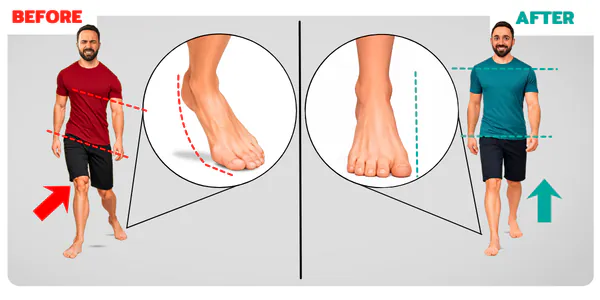
When your feet are weak and collapse inward with every step, it creates a chain reaction that ruins your entire posture.
This makes sense because the feet are what supports the entire body while standing, walking, running, squatting and all other weight bearing movements.
So if they’re not strong and stable, nothing above them can be either – causing your posture and movement to break down as a consequence.
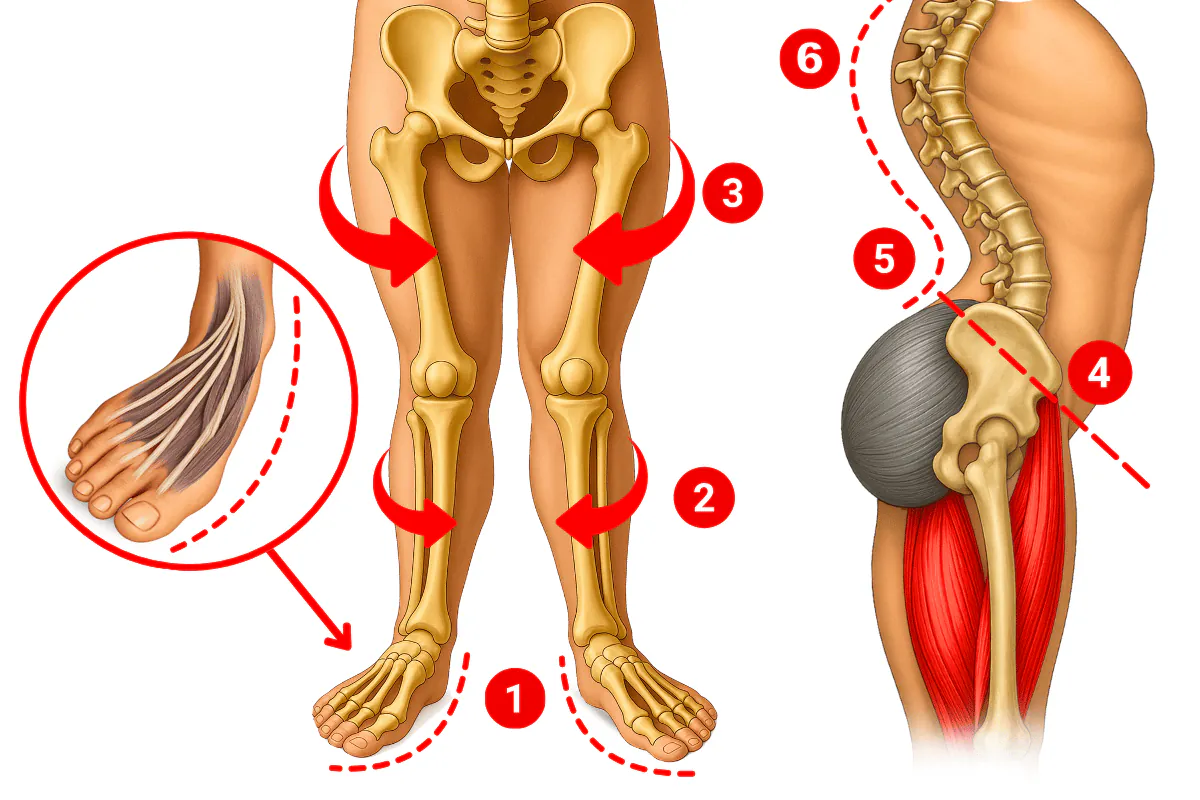
There are 3 steps you need to follow to fix your feet and maintain perfect posture.
Step 1: Build Strong Foot Arches
The Problem
When your arches are weak and collapse into overpronation during movement, they pull the ankles into eversion. That destabilizes the knees, which shift inward into knee valgus.
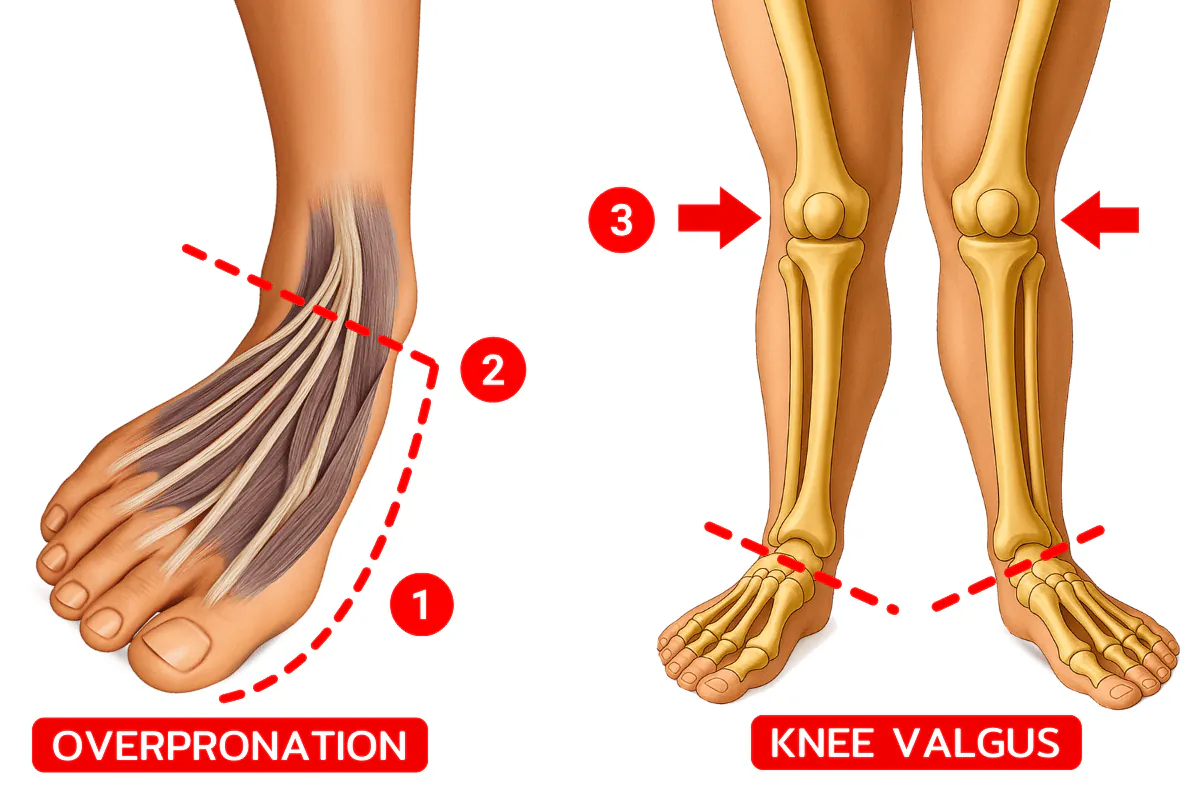
This valgus alignment puts the knee at serious risk. ACL research shows that people who overpronate are significantly more likely to develop ACL injuries because a collapsed foot can't properly stabilize the knee [1].
Knee valgus also creates a weak position for the pelvis, making it harder to keep the spine in good alignment and increasing lower back strain.
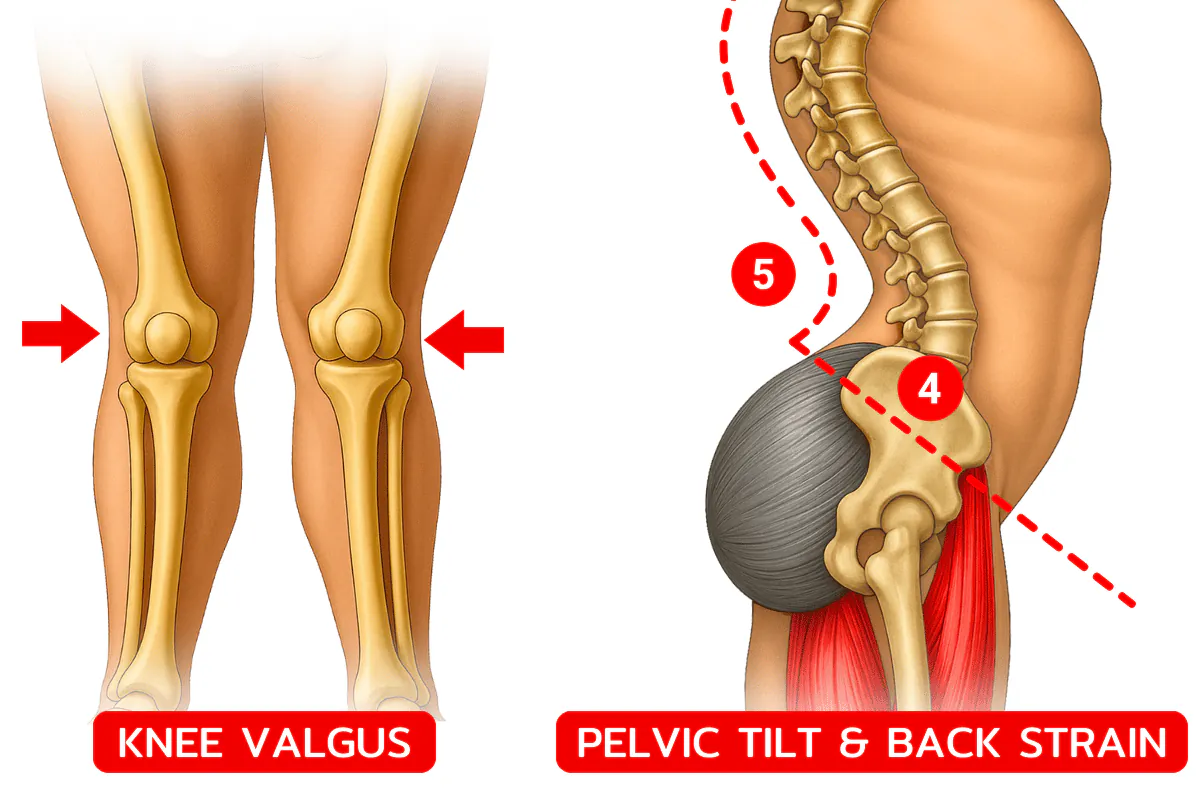
A 2024 study compared 50 people with lower-back pain to 50 without and examined their feet. They found flat arches in 58% of those with back pain versus just 18% in those without. Statistically, people with flat feet are over six times more likely to have back pain than those with higher foot arches [2].
The Fixes – Short & Long-Term
Short-term solution: Wear arch-supporting insoles. They act like a brace, blocking the feet from collapsing inward on each step. Studies confirm their short-term effectiveness in improving foot posture while standing and walking [3] [4].
But here's the problem: If you wear arch supports too long, your feet get weaker. A 2020 study found that 12 weeks in arch support reduced intrinsic foot muscle strength by 14.7%. That's counterproductive if you're trying to build arch strength.
Long-term solution: Foot strengthening exercises. A 2024 study compared arch supports alone versus arch supports plus foot strengthening exercises. The group that strengthened their feet while wearing supports showed significantly better results [5].
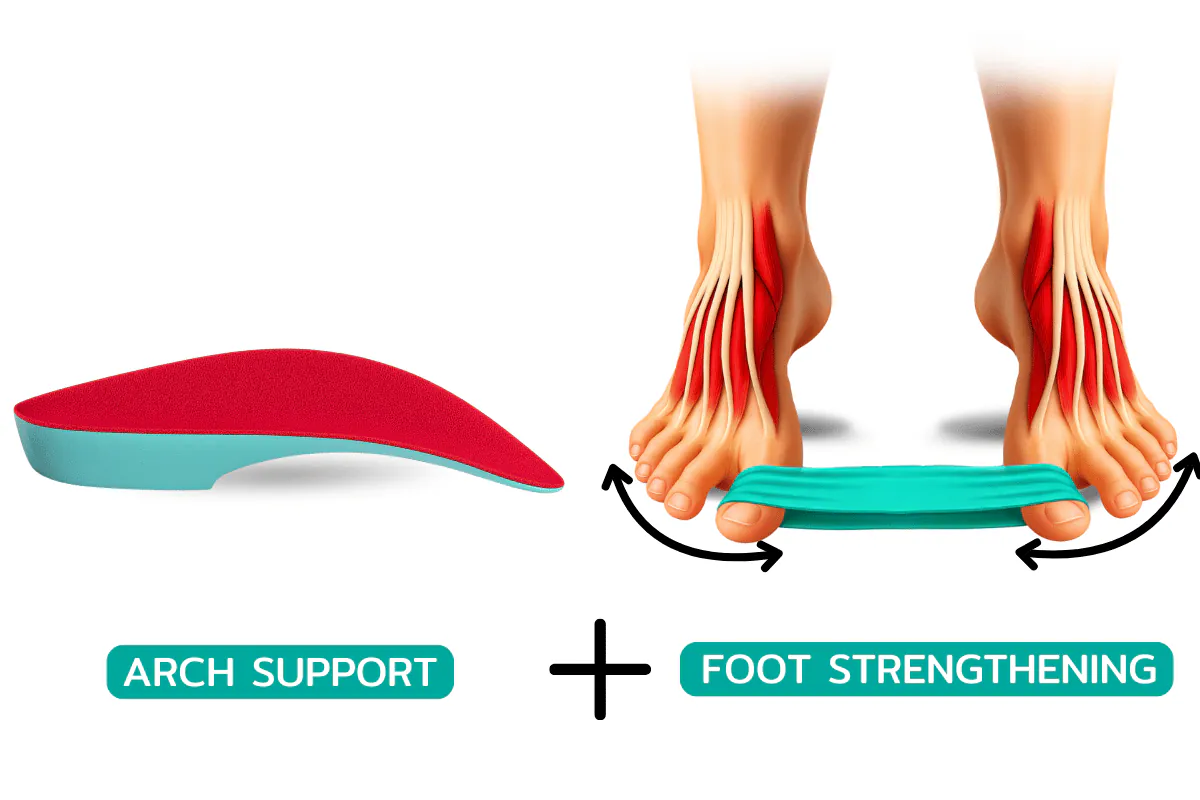
Here's how this multi-modal foot strengthening approach works in practice:
Start with arch-supporting insoles for immediate posture improvement
Begin a basic foot-strengthening routine simultaneously
As your intrinsic foot strength improves, transition out of the supports gradually—from every day to two days on/one day off, then one day on/one day off, until you no longer need them
Progressively increase exercise intensity so your foot muscles can take over the job of supporting your arches
This approach gives you day-one foot posture improvement from arch support and long-term support from your own foot strength—without side effects.
Step 2: Restore Ankle Mobility
Here's what happens when you walk with restricted ankles:
Each step requires enough ankle dorsiflexion to let your body travel over the foot into the next step. When you don't have that mobility, your gait breaks down—and your posture goes with it.
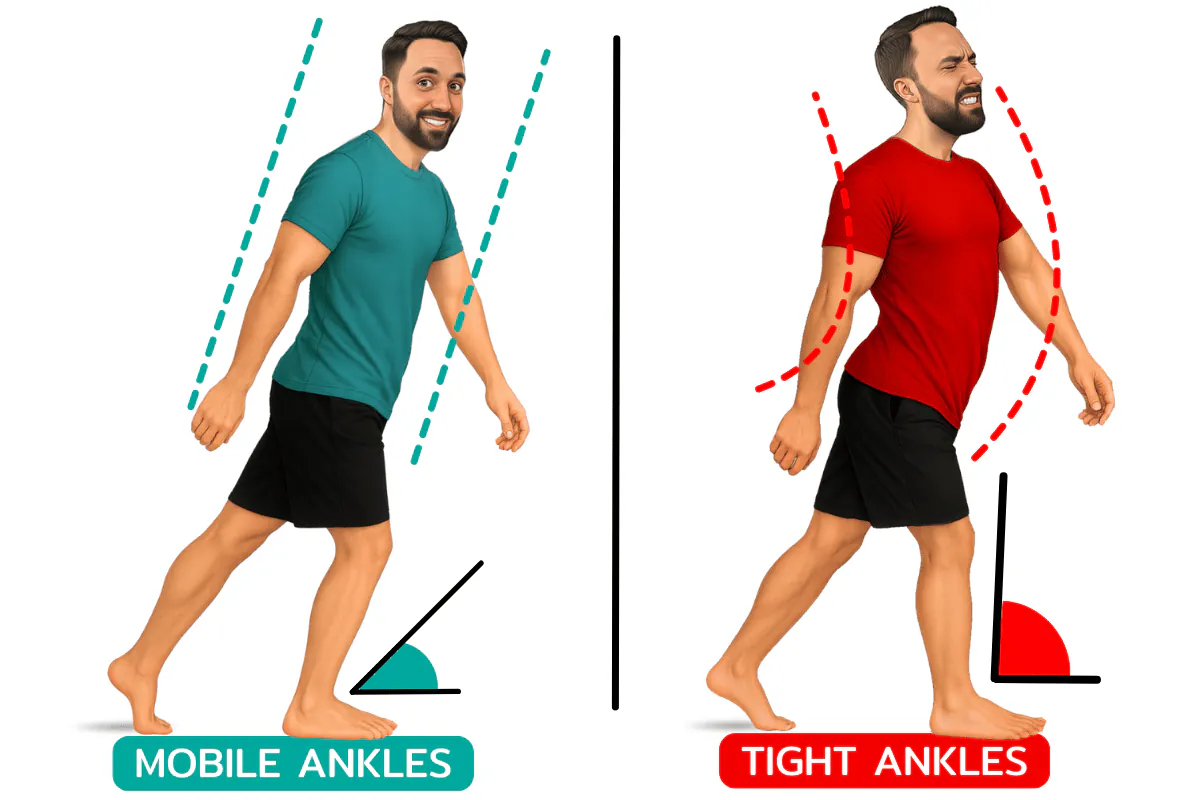
The first thing to break down is the feet below the ankle. They spin out like a duck, and the arch collapses into overpronation. Your body is trying to "borrow" ankle range from the foot, essentially turning the midfoot into a “second” ankle joint.
Because body weight shifts to the inside of the foot, the knee follows the same direction and travels inward—falling into that dreaded valgus alignment [6].
Moving higher up the chain, the thigh bone also falls inward causing the pelvis to tilt up on one side and drop on the other.
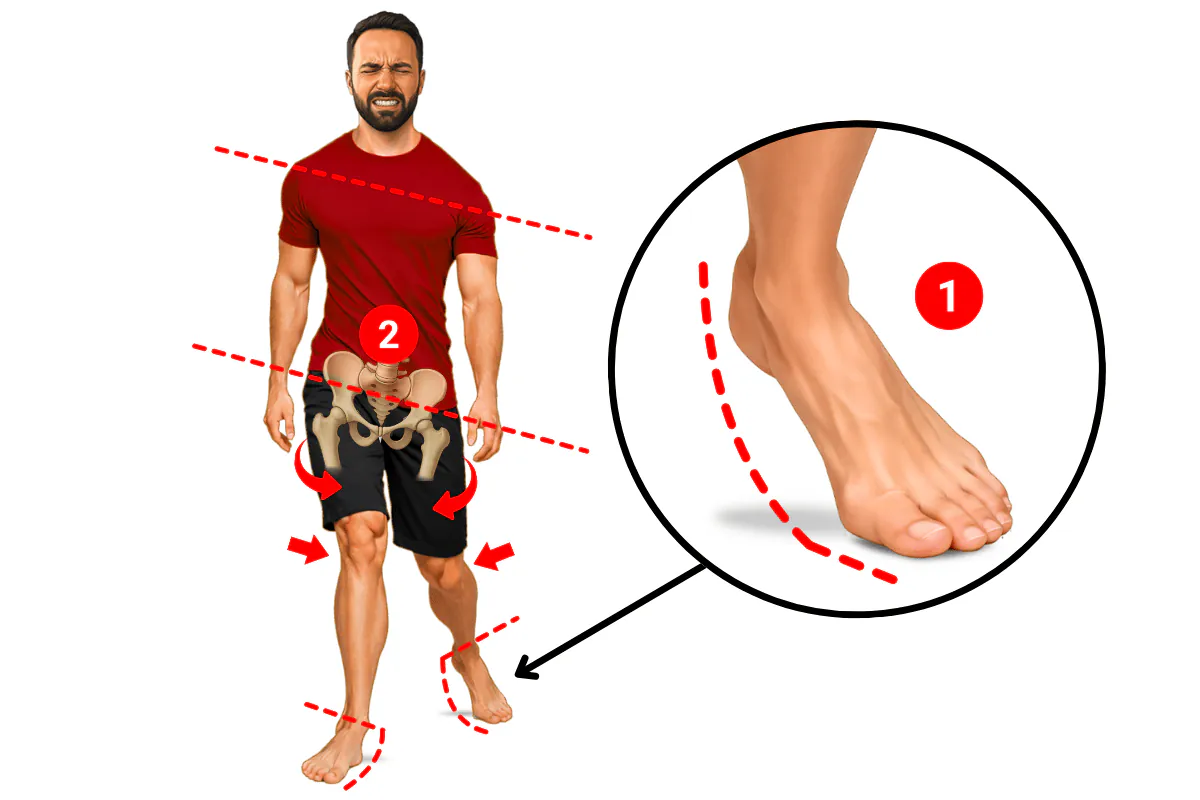
That pelvic drop carries real injury risk. Research in runners shows that for every 1 degree of pelvic drop, injury risk increases by 80% [7].
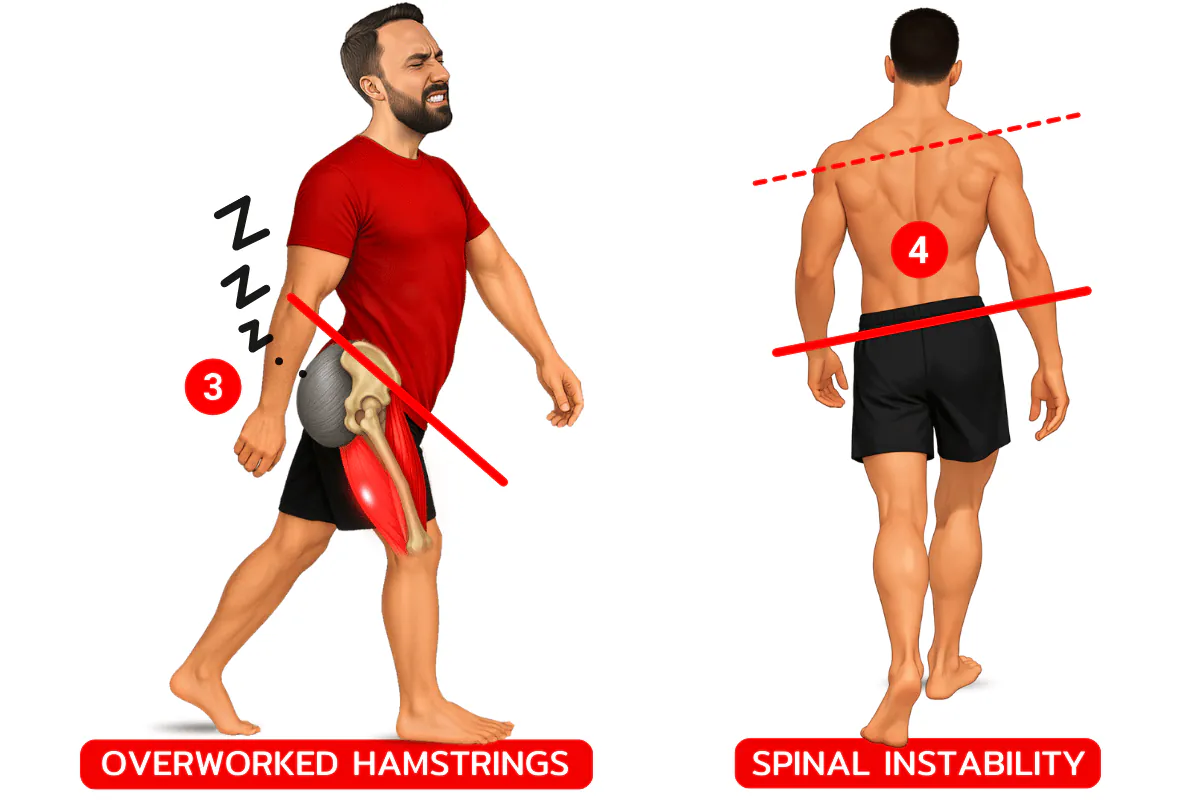
The cascade of problems from pelvic misalignment:
The IT band gets stretched on the stance leg, causing excess tension that can lead to IT band syndrome
Hip extension gets cut short, limiting glute activation and forcing the hamstrings to compensate and overwork
The lower back starts side-bending and hyperextending, creating spinal instability
A study on army recruits found that those with the tightest ankles had 2.5x the injury risk of those with average ankle flexibility—and 8x the risk compared to the most flexible group [8].
See how an ankle mobility problem becomes an alignment and posture problem, which leads to injury.
Three Solutions to Restore Ankle Mobility
1. Transition to zero-drop footwear
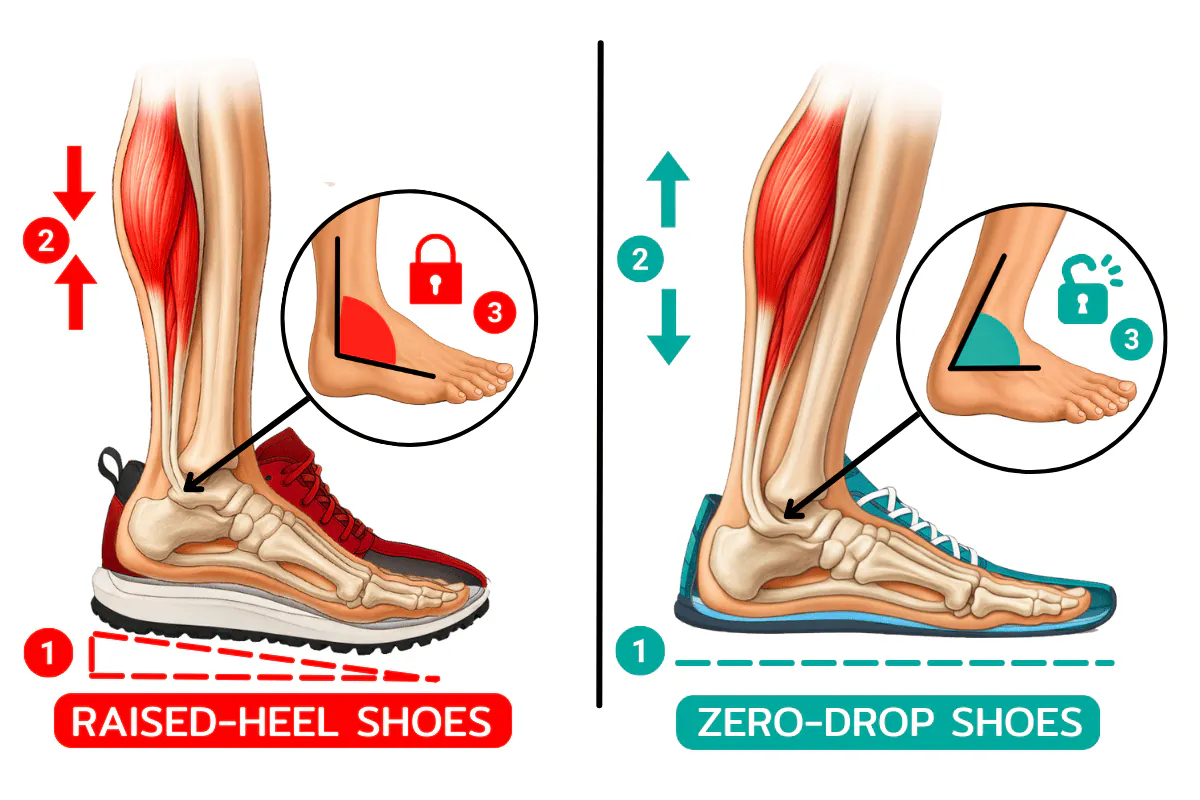
When you wear shoes with elevated heels, your ankles are held in plantar flexion, which causes your calf muscles shorten over time [9] [10]. Short calves block ankle dorsiflexion.
Zero-drop shoes put the foot back into neutral and let the calves lengthen to normal, so they stop restricting ankle range of motion.
2. Strengthen your foot muscles
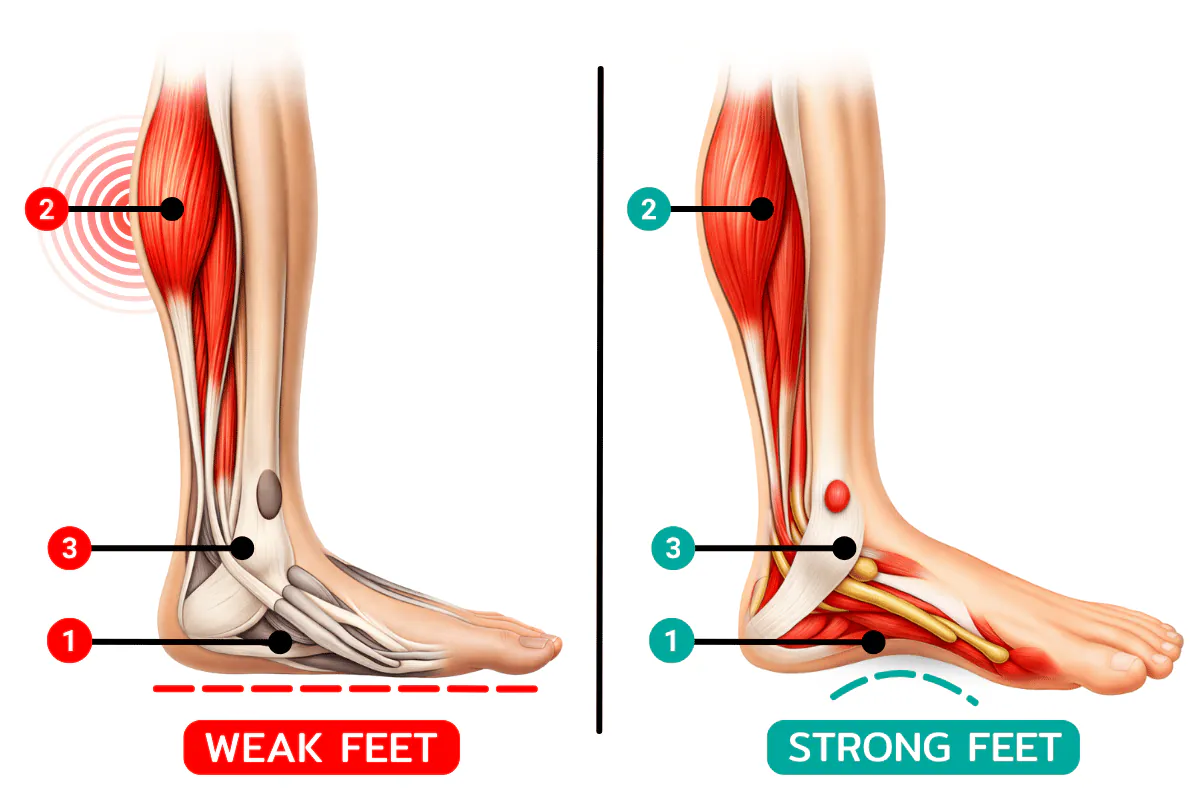
When intrinsic foot muscles are weak, they can't stabilize the arch. The larger extrinsic foot muscles around the ankle have to compensate, they get overworked, and tightness sets in—blocking ankle mobility again.
Strengthen your feet with daily exercises. As they get stronger, the muscles around the ankles can relax and lengthen, giving the ankles their mobility back.
3. Practice positions that challenge your ankles' full range of motion
A deep squat requires full ankle dorsiflexion. Chair-sitting doesn't. But modern life keeps us at chair height, so the ankles seldom bend past 90 degrees.
And when it comes to ankle mobility, it’s a simple case of use it or lose it.
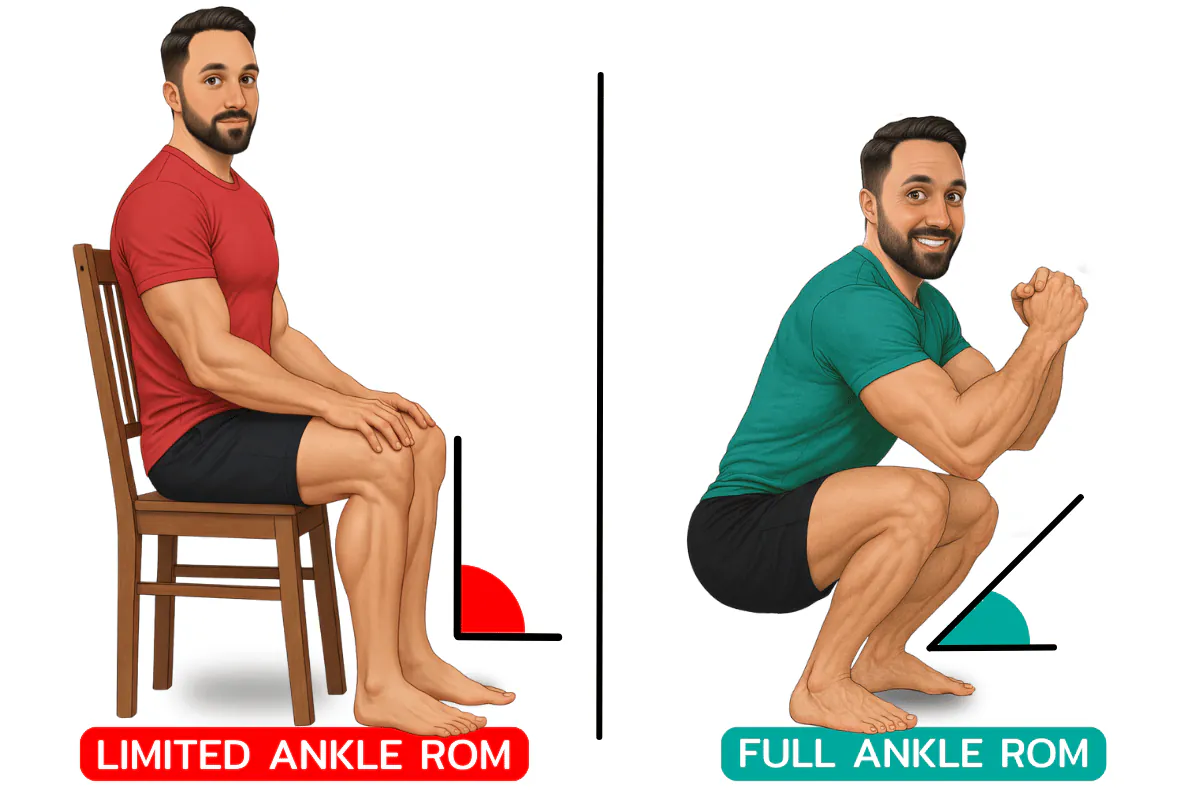
The fix: Spend 5-10 minutes a day in deep squats, even broken into short holds. In Eastern cultures where squatting remains the preferred resting position, people maintain excellent ankle flexibility well into old age—proof that daily practice preserves joint function.
Step 3: Restore Proper Toe Splay
The third foot characteristic you need for a solid base that supports good posture is toe splay.
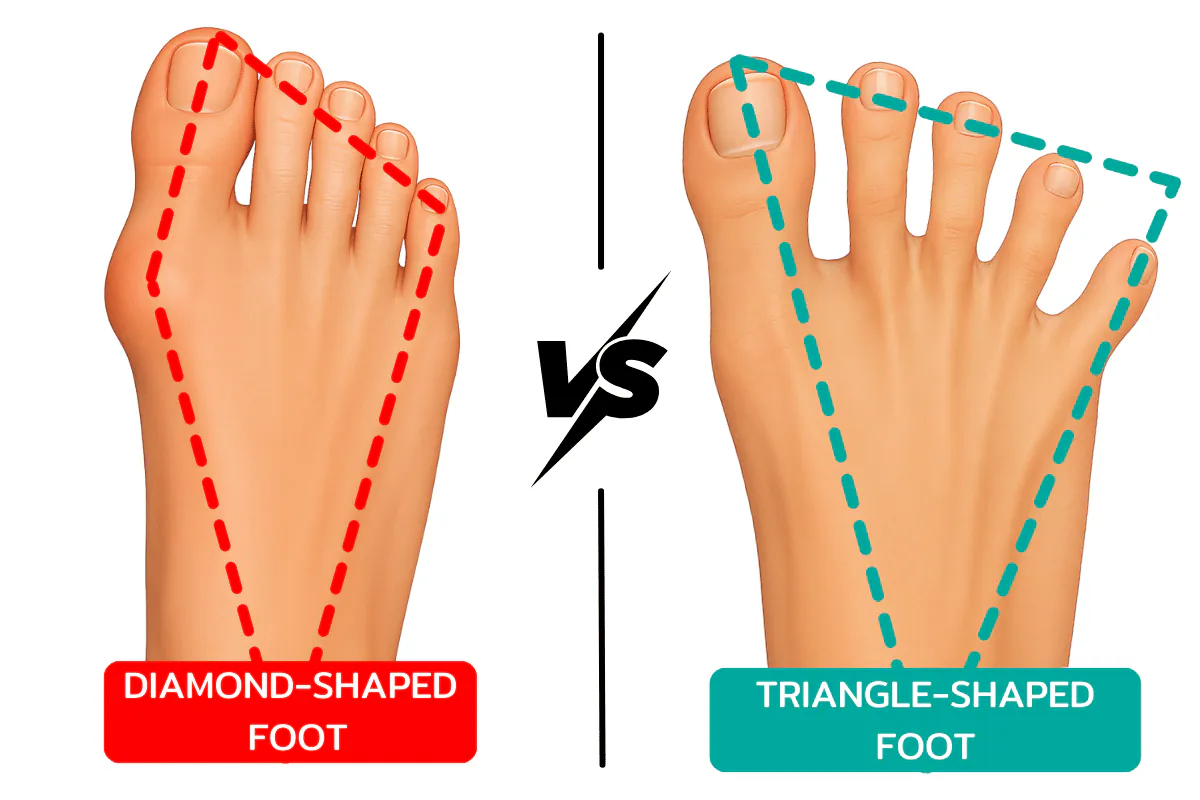
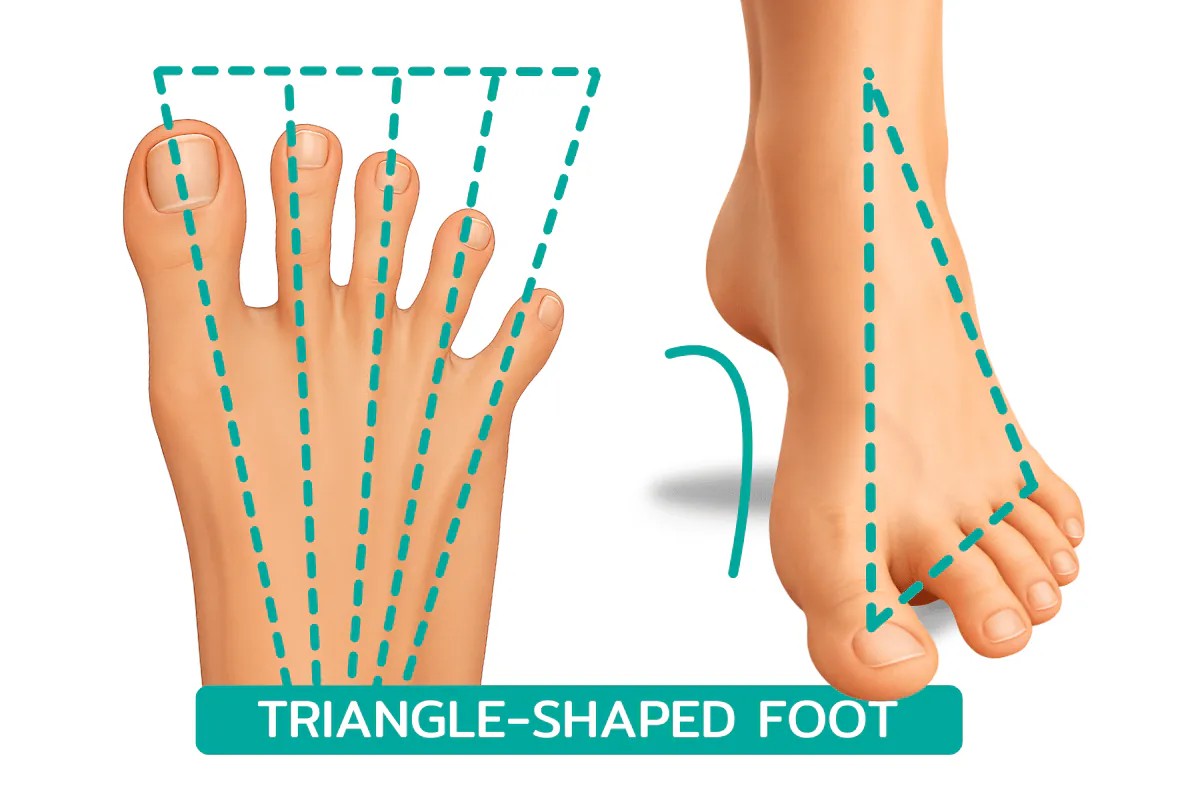
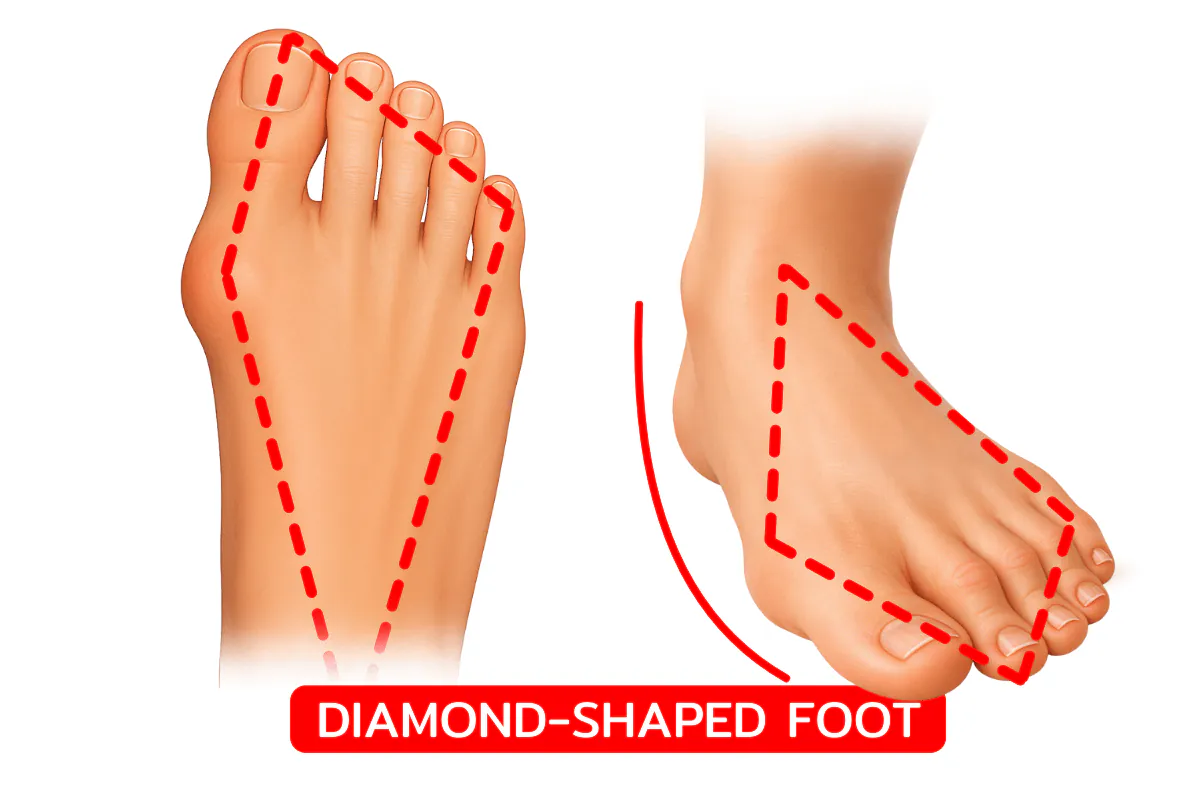
Which foot shape would you rather have? A diamond shape where the toes pinch inward, or a triangular shape where the toes fan out?
Choose the triangle. Here's why.
A triangle foot shape comes from having proper toe splay, where each toe is aligned with its metatarsal. This good toe alignment allows the connected muscles to also rest in optimal alignment and generate maximum strength to support the foot arch. That alignment, paired with the wider base toe splay creates, lets the arches hold their shape and support your whole body in good posture.
With a diamond-shaped foot, the toes are misaligned and the base narrows—hurting the foot's ability to stabilize the arch, so it collapses into overpronation on every step.
Research confirms a clear connection between toe misalignment and flat feet [11] [12].
How Toe Misalignment Ruins Your Gait
Misaligned toes also limit toe mobility, which directly impacts your posture during movement.
When we walk or run, we rely on full toe extension to push off the ground efficiently and reach full knee and hip extension. This coordinated push-off is called triple extension.
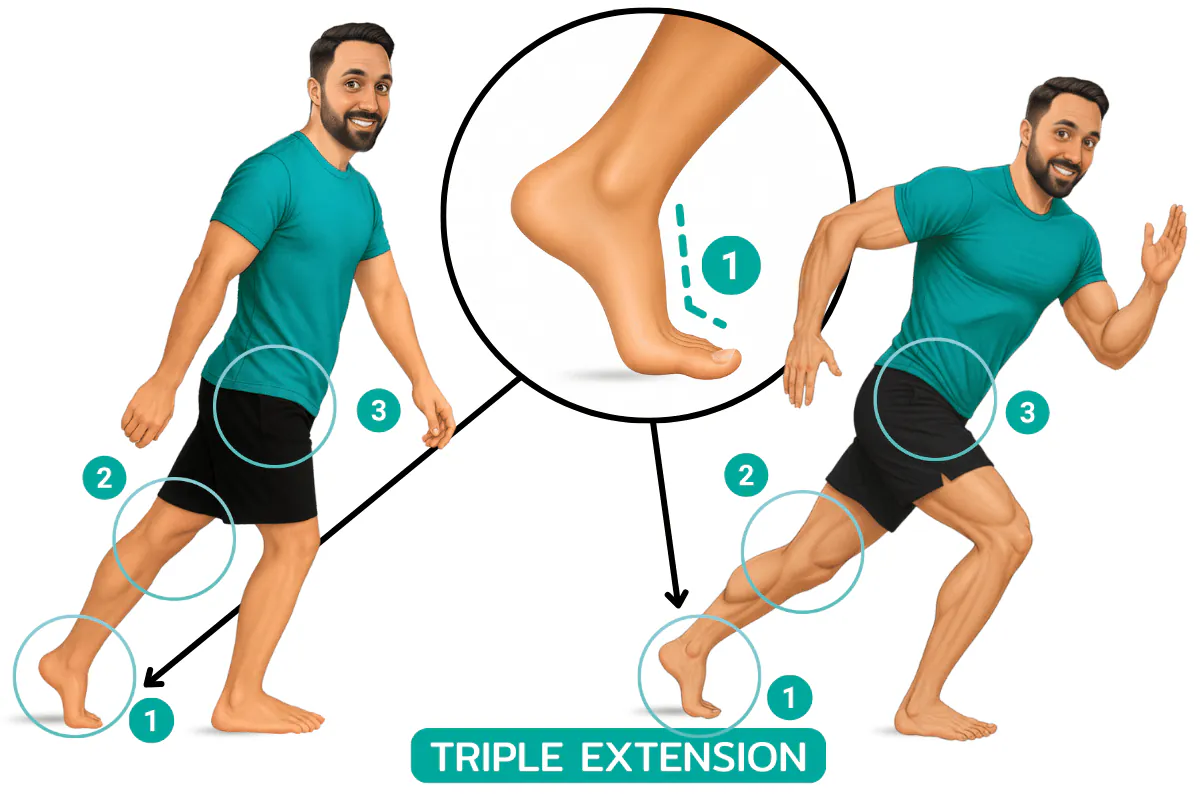
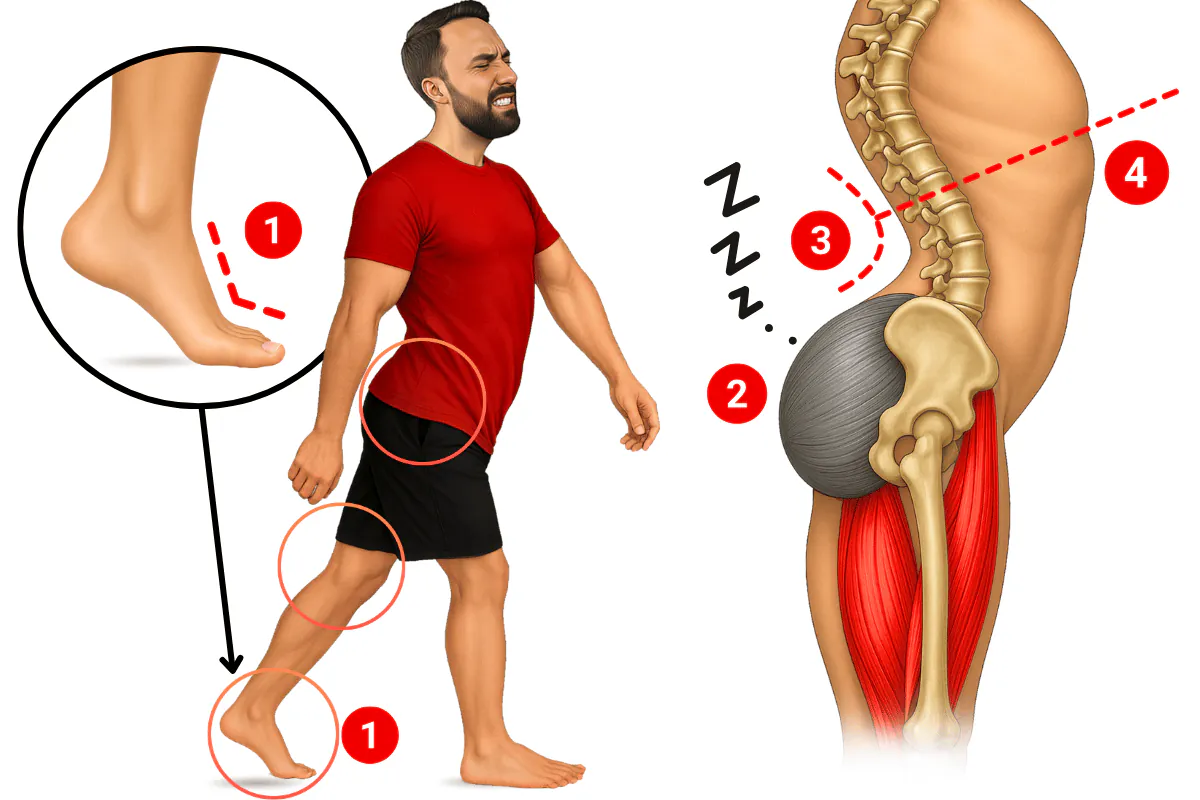
If the toes don't have enough mobility, it disrupts this chain by limiting knee and hip extension. When those joints are limited, the quads and glutes can't produce as much force [13].
The body compensates by using the back extensors more, leading to lower-spine hyperextension [14]. That overextended lower back—often identified by rib-cage flare—shows up on every step, especially during running.
I ran a quick experiment to demonstrate the effects of toe alignment on toe mobility.
Using a goniometer, I measured my maximum great-toe mobility with the toe in perfect alignment versus out of alignment. The difference was significant: the aligned toe gave me 30 degrees more range of motion.
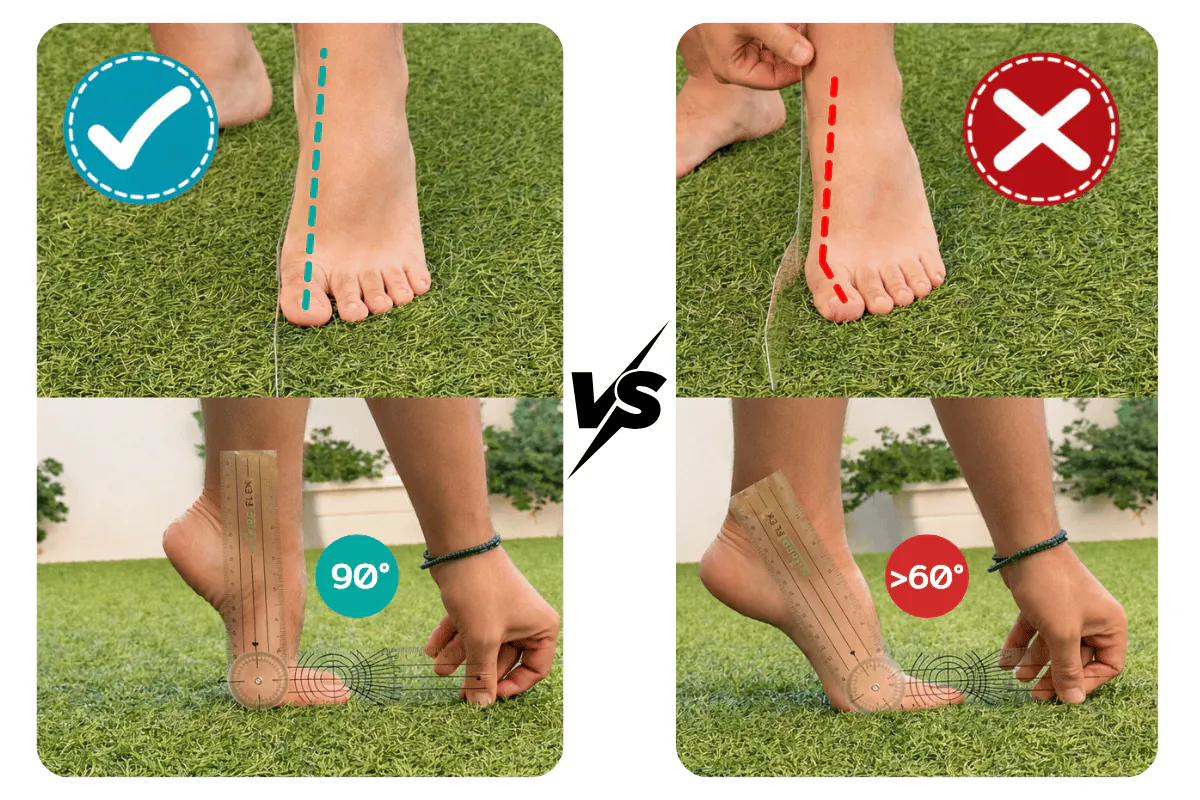
So, this is how it all comes together:
Better toe extension → improved knee and hip extension → stronger quad and glute activation → spine stays neutral throughout the gait cycle.
Isn’t it crazy that your toes can determine if you have good posture or not. And because toe misalignment affects up to 50% of the adult population, fixing this should be a primary focus for people concerned with correcting their posture [15].
Fix Your Dynamic Posture Through Strong Feet – Summary
Perfect posture isn't about standing tall with your shoulders back for a moment—it's about maintaining optimal alignment through every movement your body makes.
And it all starts with your feet.
Focus on these three fundamentals:
Build strong foot arches through targeted strengthening exercises, and use arch supports only as a short-term bridge while your muscles develop
Restore ankle mobility by transitioning to zero-drop shoes, strengthening your feet, and practicing deep squats daily
Restore proper toe splay to maximize arch stability and unlock full triple extension in your gait
Your feet are the foundation of your entire kinetic chain. When they're strong and stable, everything above them can maintain proper alignment. When they're weak and collapsed, dysfunction cascades upward through your knees, hips, spine, and shoulders.
Fix your feet first. Your posture will follow.
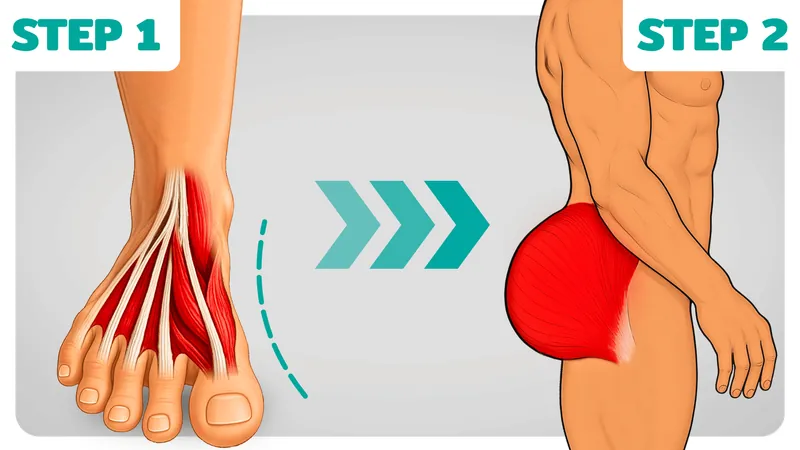
For a complete follow-along system to build your body's foundation through the feet and glutes—including functional assessments, personalized exercise plans, and daily guided workouts—join the Barefoot Strength Academy.
Sources
The sources cited in this article. Select a small reference number to return to its place in the article.
- The relationship between static posture and ACL injury in female athletes.. Loudon JK, Jenkins W, Loudon KL.. J Orthop Sports Phys Ther. 1996. 1
- Flat Foot and Its Association with Mechanical Low Back Pain: A Case-Control Study Utilizing Clarke’s Angle Measurement. Filjordan Andrisoni Imanuel Lulupoy, Tasya Meidy Pradhana, Yusak Mangara Tua Siahaan. World Journal of Clinical Medicine Research. 2025. 2
- Short-term effects of customized arch support insoles on symptomatic flexible flatfoot in children: A randomized controlled trial.. Hsieh RL, Peng HL, Lee WC.. Medicine (Baltimore). 2018. 3
- The arch support insoles show benefits to people with flatfoot on stance time, cadence, plantar pressure and contact area. Yu-ping Huang, Hsien-Te Peng, Xin Wang, Zong-Rong Chen, Chen-Yi Song. PLOS ONE. 2020. 4
- Effects of foot exercises and customized arch support insoles on foot posture, plantar force distribution, and balance in people with flexible flatfoot: A randomized controlled trial.. Kirmizi M, Sengul YS, Akcali O, Angin S.. Gait Posture. 2024. 5
- The association of ankle dorsiflexion and dynamic knee valgus: A systematic review and meta-analysis. Yuri Lopes Lima, Victor Matheus Leite Mascarenhas Ferreira, Pedro Olavo de Paula Lima, Márcio Almeida Bezerra, Rodrigo Ribeiro de Oliveira, Gabriel Peixoto Leão Almeida. Physical Therapy in Sport. 2018. 6
- Performance in the Deep Squat Test and musculoskeletal injuries: a systematic review. Priscila dos Santos Bunn, Glória de Paula Silva, Elirez Bezerra da Silva. Fisioterapia em Movimento. 2018. 7
- Effects of ankle dorsiflexion range and pre-exercise calf muscle stretching on injury risk in Army recruits.. Pope R, Herbert R, Kirwan J.. Aust J Physiother. 1998. 8
- Footwear: The Primary Cause of Foot Disorders — Part 2. William A. Rossi. Podiatry Management. 2001. 9
- Postural assessment of lumbar lordosis and pelvic alignment angles in adolescent users and nonusers of high-heeled shoes.. de Oliveira Pezzan PA, João SM, Ribeiro AP, Manfio EF.. J Manipulative Physiol Ther. 2011. 10
- Effects of hallux valgus deformity on rear foot position, pain, function, and quality of life of women.. Coşkun G, Talu B, Bek N, Bayramlar KY.. J Phys Ther Sci. 2016. 11
- Relationship between adolescent bunions and flatfeet.. Kalen V, Brecher A.. Foot Ankle. 1988. 12
- Sagittal plane compensations for artificially induced limitation of the first metatarsophalangeal joint: a preliminary study.. Hall C, Nester CJ.. J Am Podiatr Med Assoc. 2004. 13
- Changes in hip and spine movement with increasing running speed.. Tojima M, Osada A, Torii S.. J Phys Ther Sci. 2019. 14
- Prevalence estimation and familial tendency of common forefoot deformities in Turkey: A survey of 2662 adults. Uğur ŞAYLI, Elif Çiğdem ALTUNOK, Melih GÜVEN, Budak AKMAN, Jnev BİROS, Ayşe ŞAYLI. Acta Orthopaedica et Traumatologica Turcica. 2020. 15
Watch the video
FREE 7-DAY EMAIL COURSE
Sign up for our free Strong Feet and Glutes course
Get a lesson in your inbox every day for 7 days.
Start your free course
You'll also join our newsletter. Unsubscribe at any time.