
How to Use Insoles & Toe Spacers for Flat Feet
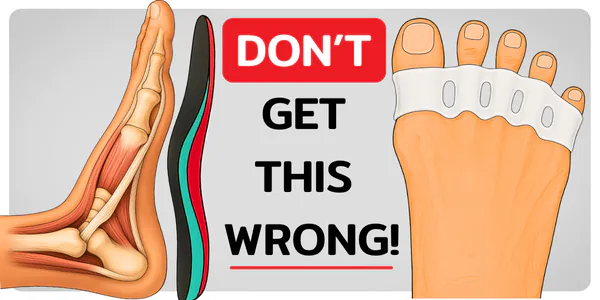
Flat feet can be a common concern for many, leading to discomfort and various foot-related issues. In this post, we will explore the multi-modal approach to managing flat feet using insoles and toe spacers. By combining immediate relief with long-term solutions, we can effectively address the underlying issues associated with flat feet.
The Multi-Modal Approach
Insoles and toe spacers are two types of foot orthotics that provide passive support to the feet. Initially, I was skeptical about their use, believing that relying on external aids could mask the underlying problems. However, as my understanding evolved, I realized that combining orthotics with foot strengthening exercises yields the best results. This is what I refer to as the multi-modal approach to fixing flat feet.
Arch Height vs. Control
It's essential to understand that the height of your foot arch is not the sole indicator of flat feet. At rest, some individuals may have higher arches while others have flatter ones due to genetic variations. The critical factor is how well you control your arches during weight-bearing movements [1].
A well-functioning foot arch acts like a spring, absorbing impact forces and efficiently releasing energy for the next step [2]. Research indicates that strong arches can conserve up to 17% of movement energy [3]. Conversely, arches that collapse during movement can lead to overpronation, increasing stress on the legs and joints.
Navicular Drop Test
To determine if you have flat feet, you can perform the Navicular Drop Test:
Locate your navicular bone, the bony protrusion below the ankle, and mark it with a pen.
While seated, measure the height of the marking from the floor.
Stand on one leg and measure the height again.
If the difference exceeds 9mm, you may have true flat feet.
Make sure to test both feet for accurate results [2] [4].
Insoles as a Short-Term Fix for Flat Feet
If your arches collapse during weight-bearing activities, the impact forces while running can exacerbate the issue, leading to injuries. Arch-supporting insoles can provide immediate stabilization and improve biomechanics for individuals with flat feet [5] [6]. However, it's crucial to remember that insoles do not address the root causes of flat feet.
Long-Term Solutions
To achieve lasting improvements, focus on three key areas alongside using arch supports:
Toe Alignment: Bunions and toe misalignment can contribute to fallen arches.
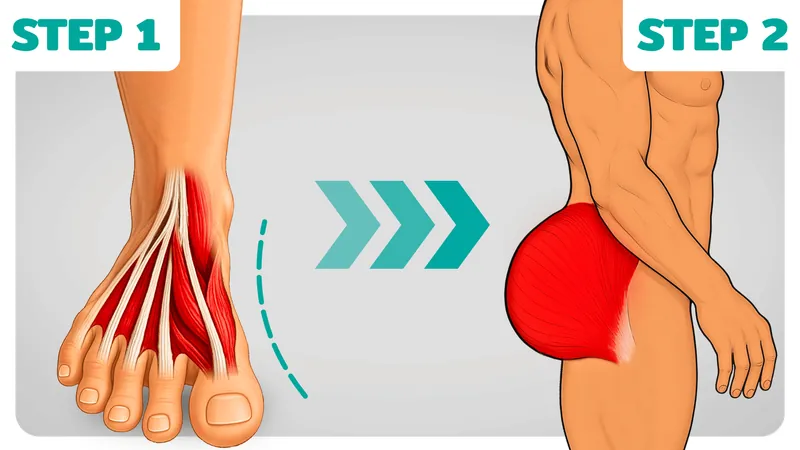
Intrinsic Foot Strength: Strengthening the muscles that support the foot arch is vital.
Glute Strength: Strong glutes stabilize the entire leg, supporting foot health.
Toe Misalignment and Flat Feet
Research has shown a strong correlation between toe misalignment and flat arches. Even a slight misalignment of the great toe can hinder the foot's ability to maintain a strong arch [7]. To improve toe alignment, consider the following:
Finding the Right Shoes
Choose shoes that match the desired shape of your foot. Look for designs that provide ample room for your toes to spread naturally. Avoid narrow, pointy shoes that can exacerbate bunion issues.
Silicone Spacers for Bunions
While transitioning to foot-shaped shoes is beneficial, it may not be enough to realign misaligned toes. A study found that using silicone toe spacers alongside wide shoes significantly improved toe alignment over 12 months [8]. These spacers help guide the toes into the correct position.
Importance of Intrinsic Foot Muscle Strength
The muscles in your feet play a crucial role in maintaining arch height. Studies have shown that when these muscles are weakened, the arches can drop significantly [9]. Therefore, strengthening these intrinsic muscles is essential for foot health.
Arch Support Weakens Intrinsic Foot Muscles
While arch-supporting orthotics provide immediate relief, they can also weaken the intrinsic foot muscles over time [10]. To mitigate this, use insoles as a temporary support while focusing on strengthening your foot muscles.
Arch Support Insoles + Exercises
Combining foot-strengthening exercises with arch-supporting insoles can enhance both balance and foot posture [11]. This dual approach allows for both passive and active support, maximizing the benefits of your routine.
Glute Strength for Flat Feet
Strengthening your glutes is vital for maintaining proper foot posture. Weak glutes can lead to pelvic tilting, knee rotation, and foot arch collapse. Research indicates that glute strengthening can significantly improve foot control and posture [12] [13] [14].
Conclusion
In summary, managing flat feet requires a comprehensive approach that includes the use of insoles and toe spacers, alongside targeted exercises for foot and glute strength. By treating the body as an interconnected system, you can achieve lasting improvements in foot health.
Sources
The sources cited in this article. Select a small reference number to return to its place in the article.
- Conclusions Drawn from a Comparative Study of the Feet of Barefooted and Shoe-Wearing Peoples. Phil. Hoffman. The American Journal of Orthopedic Surgery. 1905. 1
- Effects of Pronated and Supinated Foot Postures on Static and Dynamic Postural Stability.. Cote KP, Brunet ME, Gansneder BM, Shultz SJ.. J Athl Train. 2005. 2a 2b
- The spring in the arch of the human foot. Ker, R. F., Bennett, M. B., Bibby, S. R., Kester, R. C., Alexander, R. McN.. Nature. 1987. 3
- The relationship between static posture and ACL injury in female athletes.. Loudon JK, Jenkins W, Loudon KL.. J Orthop Sports Phys Ther. 1996. 4
- Short-term effects of customized arch support insoles on symptomatic flexible flatfoot in children: A randomized controlled trial.. Hsieh RL, Peng HL, Lee WC.. Medicine (Baltimore). 2018. 5
- The arch support insoles show benefits to people with flatfoot on stance time, cadence, plantar pressure and contact area. Yu-ping Huang, Hsien-Te Peng, Xin Wang, Zong-Rong Chen, Chen-Yi Song. PLOS ONE. 2020. 6
- Hallux valgus, first metatarsal pronation and collapse of the medial longitudinal arch--a radiological correlation.. Eustace S, Byrne JO, Beausang O, Codd M, Stack J, Stephens MM.. Skeletal Radiol. 1994. 7
- Effectiveness of the custom-mold room temperature vulcanizing silicone toe separator on hallux valgus: A prospective, randomized single-blinded controlled trial.. Chadchavalpanichaya N, Prakotmongkol V, Polhan N, Rayothee P, Seng-Iad S.. Prosthet Orthot Int. 2018. 8
- Intrinsic pedal musculature support of the medial longitudinal arch: an electromyography study.. Fiolkowski P, Brunt D, Bishop M, Woo R, Horodyski M.. J Foot Ankle Surg. 2003. 9
- The effect of a 12-week custom foot orthotic intervention on muscle size and muscle activity of the intrinsic foot muscle of young adults during gait termination.. Protopapas K, Perry SD.. Clin Biomech (Bristol). 2020. 10
- Effects of foot exercises and customized arch support insoles on foot posture, plantar force distribution, and balance in people with flexible flatfoot: A randomized controlled trial.. Kirmizi M, Sengul YS, Akcali O, Angin S.. Gait Posture. 2024. 11
- Resistance training is accompanied by increases in hip strength and changes in lower extremity biomechanics during running.. Snyder KR, Earl JE, O'Connor KM, Ebersole KT.. Clin Biomech (Bristol). 2009. 12
- The effects of gluteus maximus and abductor hallucis strengthening exercises for four weeks on navicular drop and lower extremity muscle activity during gait with flatfoot.. Goo YM, Kim TH, Lim JY.. J Phys Ther Sci. 2016. 13
- EFFECTIVENESS OF GLUTEAL MUSCLE STRENGTHENING ON FLAT FOOT. Pooja A Mulchandani, Trupti Warude, Amrutkuvar Pawar. Asian Journal of Pharmaceutical and Clinical Research. 2017. 14
Watch the video
FREE 7-DAY EMAIL COURSE
Sign up for our free Strong Feet and Glutes course
Get a lesson in your inbox every day for 7 days.
Start your free course
You'll also join our newsletter. Unsubscribe at any time.