
How to Build Strong Feet & Glutes in 5 Steps
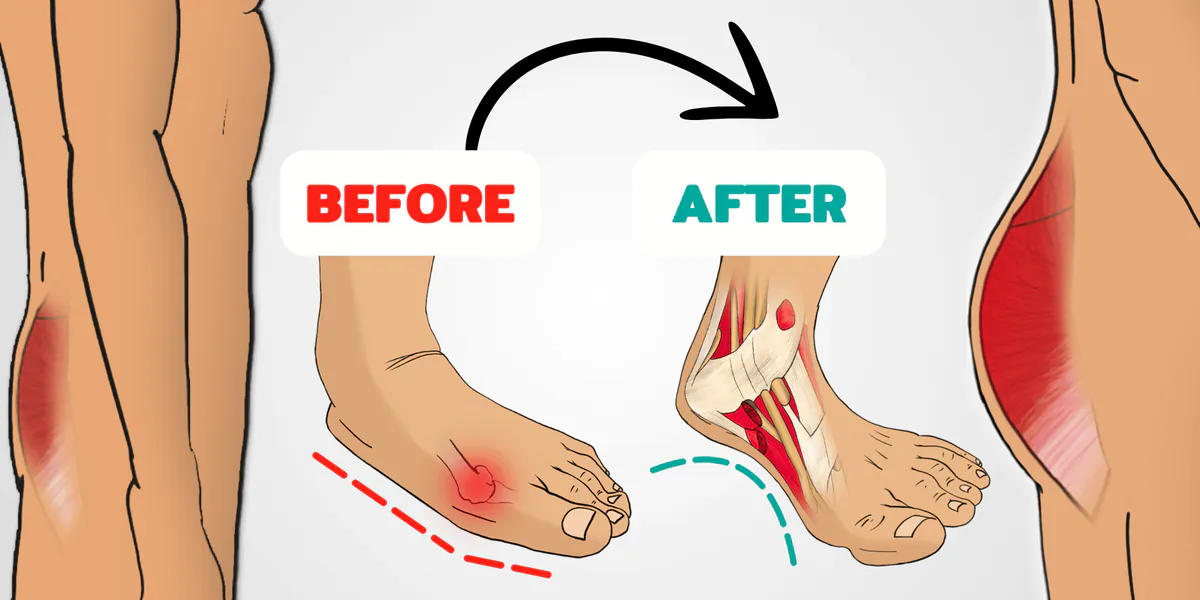
Whatever your fitness goals, if you don't have strong feet and glutes, you won't have the foundation necessary to achieve those goals.
Here are the 5 steps to build that essential foundation.
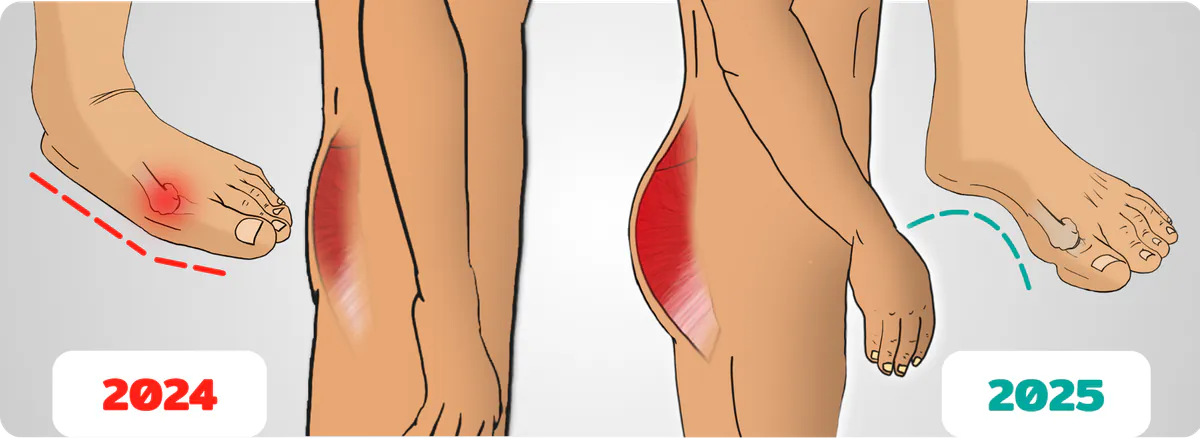
1. Wear Barefoot Shoes
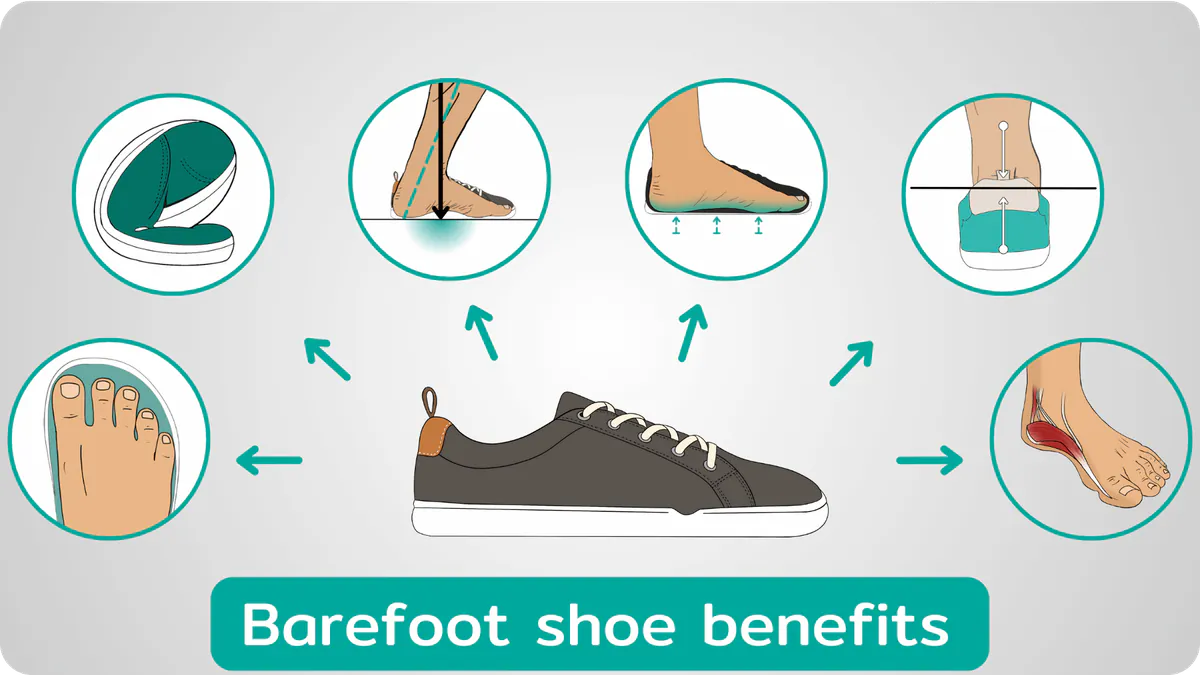
Wearing barefoot shoes is the simplest way to improve how our bodies function. Key benefits include:
✅ Improved toe alignment
✅ Increased foot strength
✅ Better posture & balance
Learn more—> #The Benefits of Barefoot Shoes (According to Science)
And with today's wide selection of barefoot shoe brands and designs, there's no reason not to wear them.
Just incase price is a factor, here is a list of our favorite budget-friendly models:
Best budget barefoot shoes2. Increase toe splay
Our feet are the foundation for every upright movement.
It’s remarkable that our bodies, over 5 feet tall, are supported by feet only about 1 foot long—a 1:5 stability ratio!
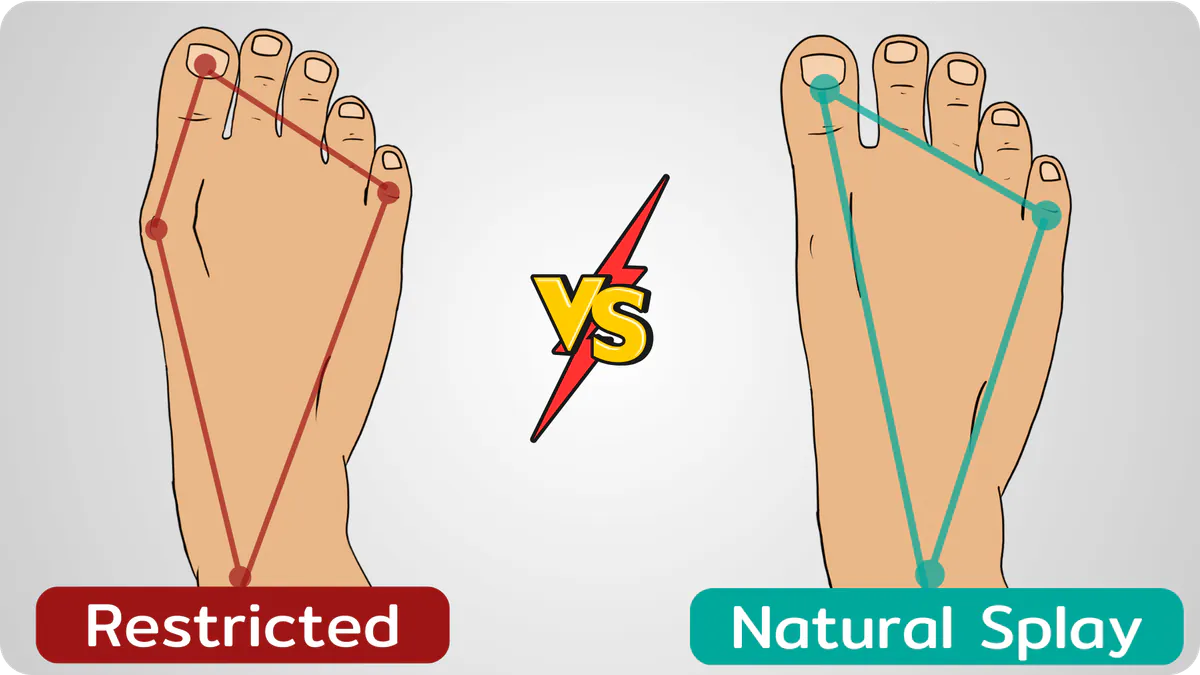
By increasing our footprint through toe splay, we enhance our ability to support and stabilize our bodies during walking, running, lifting, and carrying.
Yet, most of us have toes that are out of alignment — reducing our base of support.
More than this, toe misalignment also shuts down all the muscles connected to the toes, hurting our ability to maintain a solid foot arch. Learn more—> #How to Fix Bunions & Flat Feet at the Same Time
The Fix:
✅ Wear wide toe-box shoes
✅ Spend time in silicone spacers
✅ Mobilize the toes ––> #Mobilization #2 – Five-Finger Toe Stretch
✅ Improve toe strength (the #Toe Splay Primer – Level 1 & #Toe Splay Primer – Level 2 workouts are the best for this)
3. Improve ankle and hip mobility
Prioritizing mobility ensures proper positions for building strength safely and effectively.
Why do you think we are born with good mobility before developing strength?
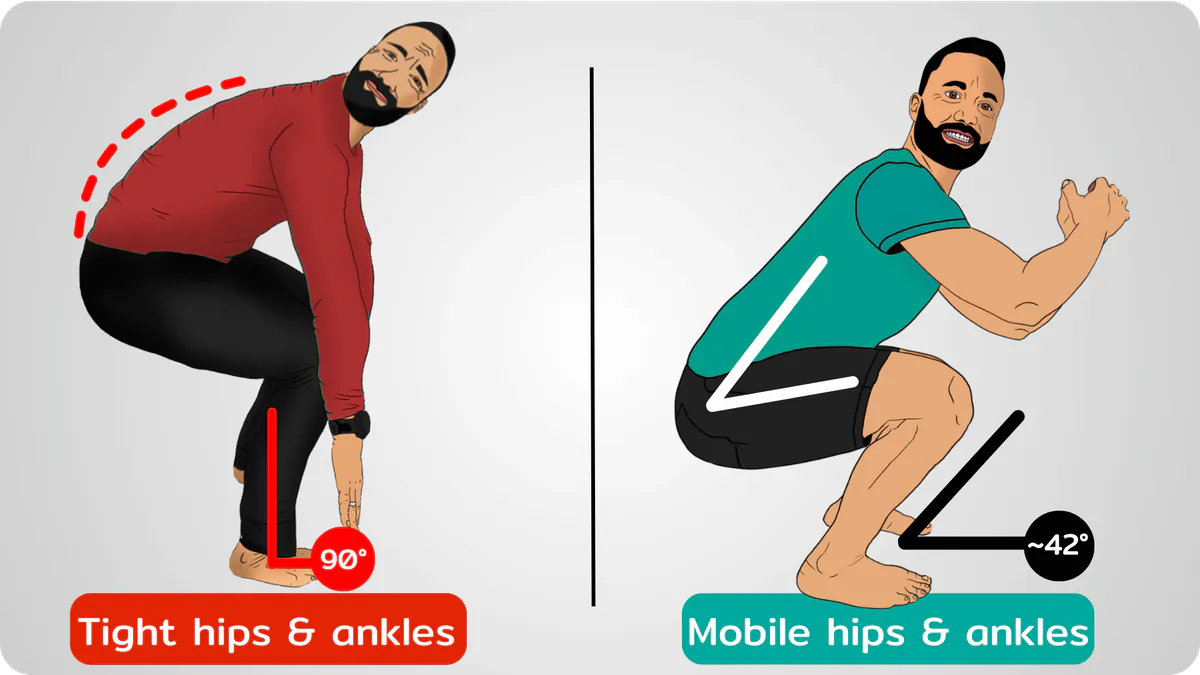
Of all the joints, the ankles and hips need the most mobility – they are key hinge points in all major movements like walking, running, squatting and lifting.
Unfortunately, these same joints are the most affected by our modern sedentary lifestyles.
Long hours of sitting and wearing raised-heel shoes—both common habits—can severely limit ankle and hip mobility. Learn more—> #Three Causes of Tight Ankles (with Solutions) & #How to Fix Hip Mobility – 3 Steps
The Fix:
✅ Adopt a sit/stand desk setup
✅ Wear zero-drop barefoot shoes
✅ Practice the deep squat —> #Mobilization #1 – Counterbalance Squat
✅ Regularly do mobility exercises targeting the hips and ankles (the #Ankle Mobility for Running – Level 1 & 2 & #Hip Mobility Reset – Level 1 workouts are best for this)
4. Work on Single Leg Stability
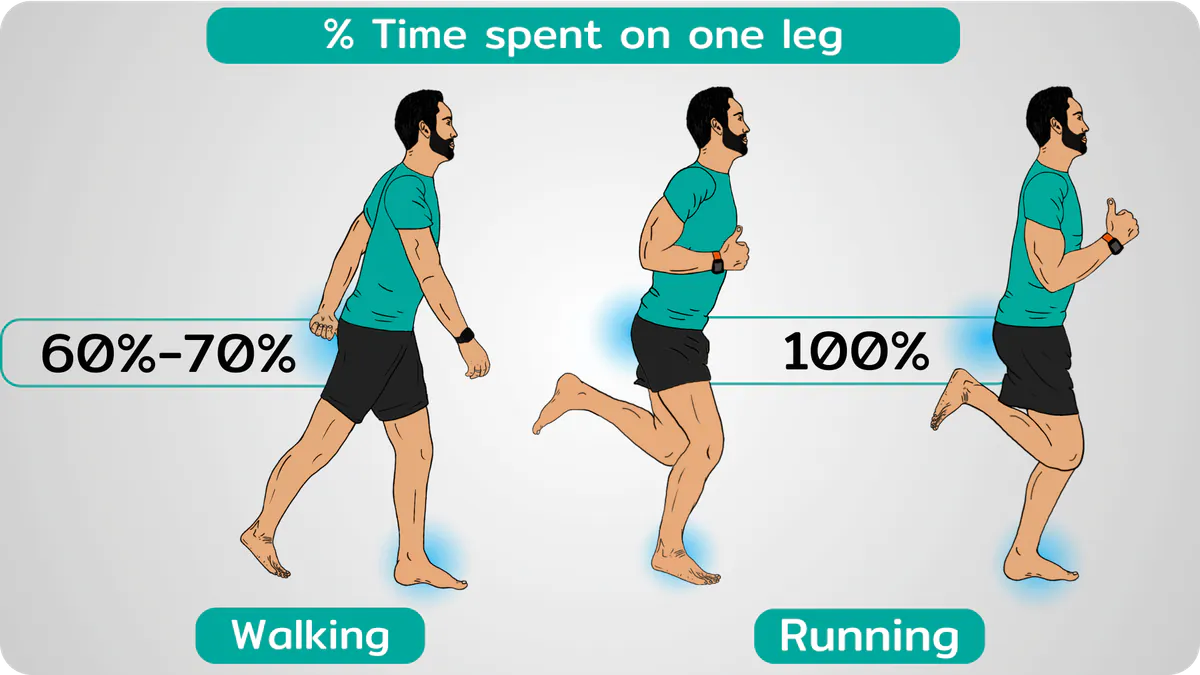
While moving, we spend more time supported by one leg than two.
While running, for example, we are only ever supported by one leg at a time.
So if you’re not stable on one leg, you’re not moving well – period.
A simple test: #Single-leg Stability Test
If you struggle to do this, then you’ve got some work to do on your glute and foot stability.
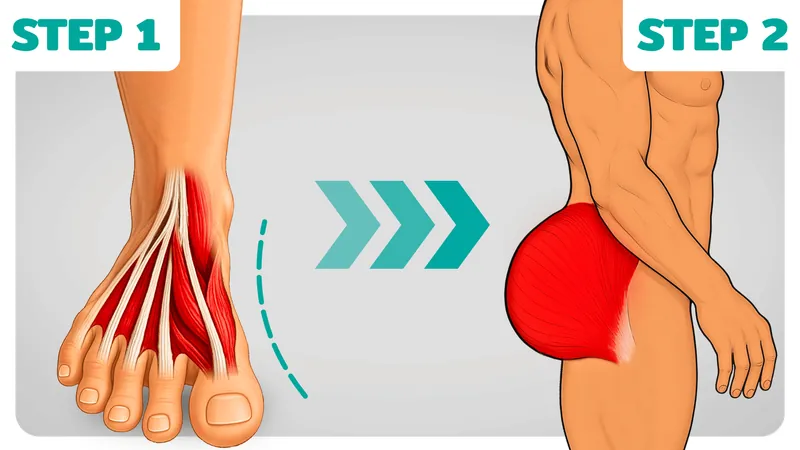
The feet stabilize us from the ground up ↑ , and the glutes from the hips down ↓
The Fix:
✅ Improve toe splay for a wider footprint and base of support (the #Toe Splay Primer – Level 1 & #Toe Splay Primer – Level 2 are best for this)
✅ Build up your foot arches (try the #Anti-pronation – Level 1 workout)
✅ Increase glute activity (try the #Glute Activation – Level 1 & #The Glute Buster – Level 1-3 workouts)
✅ Stabilize your core –– this helps stabilize the pelvis, allowing the glutes to work more effectively (the #Big 3 Core Stability – Level 1 & #Big 3 Core Stability – Level 2 are best for this)
5. Become glute dominant
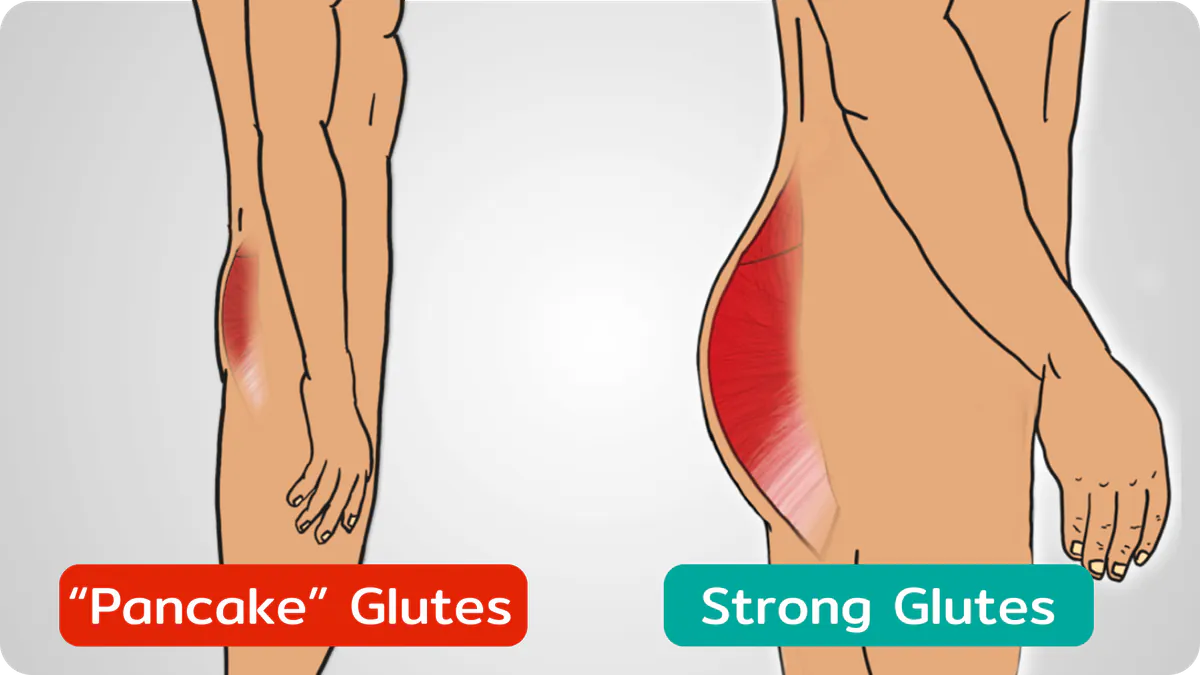
The glutes are the biggest muscle group in our body for a reason — they’re the engines driving our movements!
Yet, we sit on them for 10+ hours a day and reduce them to “pancakes”.
This reduces power and increases the risk of movement dysfunctions and injuries.
The Fix:
✅ Eliminate the glute killers (sitting is the major one)
✅ Stretch the hip flexors ––this stops the glutes from being ’blocked’ during hip extension movements (use the #Mobilization #1 – Kneeling Hip Extension to improve hip flexor flexibility)
✅ Focus on exercises that target the glutes (check our #The Glute Buster – Level 1-3 workout)
Want personalized help:
We have educational courses, weekly follow-along workouts, and chat groups to support you every step of the way.
Start Your Transformation ––>FREE 7-DAY EMAIL COURSE
Sign up for our free Strong Feet and Glutes course
Get a lesson in your inbox every day for 7 days.
Start your free course
You'll also join our newsletter. Unsubscribe at any time.