
How Strong Glutes Fix Flat Feet & Weak Ankles (Science-Based)
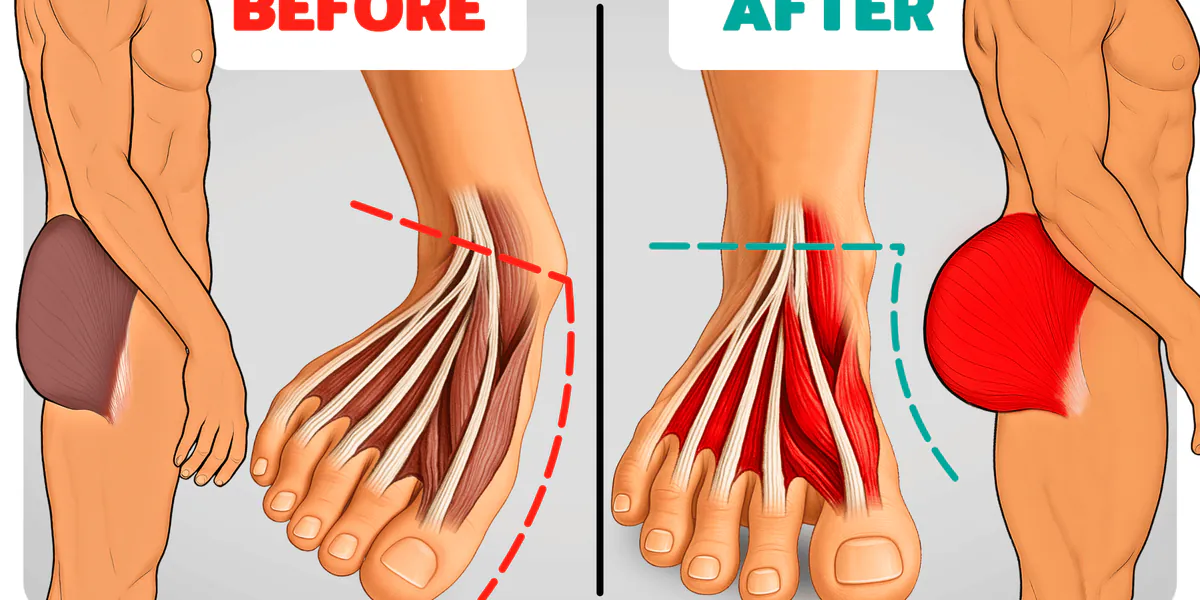
If you've been struggling with flat feet and weak ankles for years, you've probably tried everything—supportive shoes, expensive insoles, ankle braces. Yet none of it seems to provide lasting results.
Here's why: these approaches don't actually fix the underlying problem. They're just band-aids masking deeper dysfunction.
Your feet and ankles don't exist in isolation. They're part of an integrated system where weakness in one area creates a domino effect throughout your entire body. For instance:
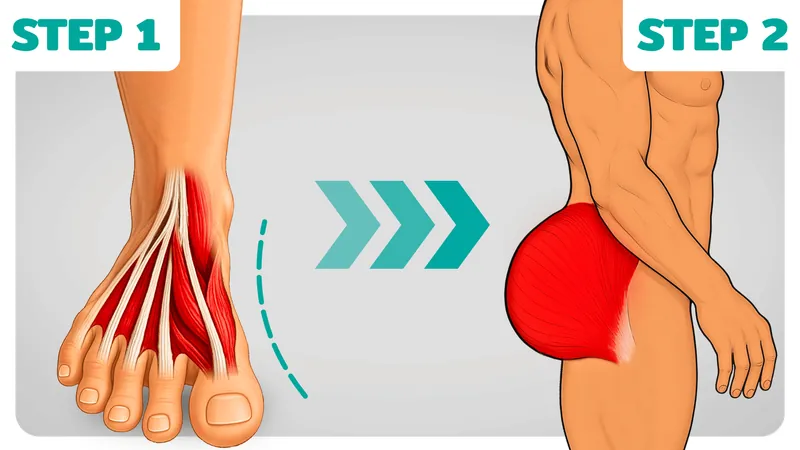
Poor toe alignment affects glute activation, while glute weakness compromises foot function.
Weak foot arches reduce ankle stability, and ankle tightness affects arch integrity.
These relationships in the body are known as regional interdependencies, and they mean that fixing one area often improves multiple systems.
In this post, I'll show you the root causes of flat feet and weak ankles, along with clear, science-backed solutions that actually work.
The Hidden Connection: Why Your Glutes Matter More Than You Think
Most people see the glutes only as power muscles – the engine that drives jumping, squatting, and running. But they also play a stabilizing role, using external rotation to keep the entire leg steady.
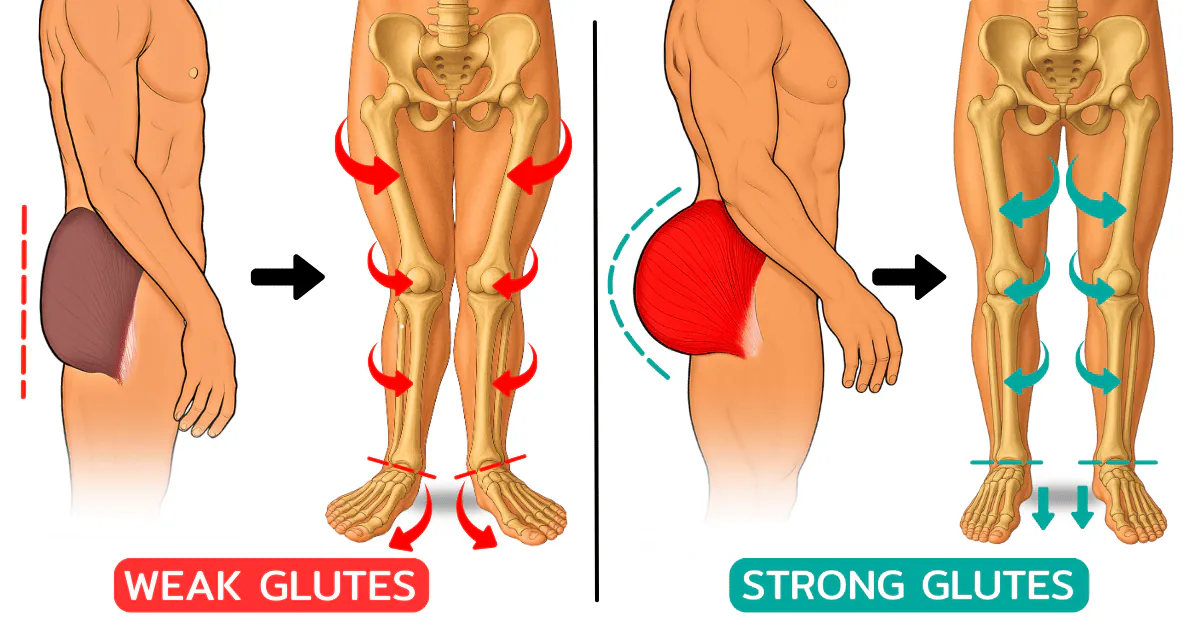
Think of your leg like a dishcloth. When your feet are flat and your knees cave inward, your leg becomes floppy and unstable—just like a loosely held cloth. But twist that cloth, and it instantly tightens up.
That's exactly what your glutes do when they're strong and active—they externally rotate the legs—creating tension and stability from your hips to your feet.
Try this now:
Stand naturally and let your knees drift inward. Notice how your arches flatten.
Now squeeze your glutes firmly. You'll immediately feel your knees rotate outward, your ankles stabilize, and your arches lift.
Two Factors Blocking Proper Glute Function
For your glutes to perform this stabilizing role, you need to address two critical issues:
Tight hips block proper glute activation through altered reciprocal inhibition (tight hip flexors inhibit the opposing glutes from firing properly).
When we tested this in our lab, participants who performed hip flexor stretches for just 20 minutes a day over five days showed a 17.1% increase in glute activity during goblet squats.
Watch video: #My 5-Day Glute Transformation ExperimentA weak core destabilizes your pelvis—the platform your glutes work from. When that base is unsteady, the glutes can't fire at full capacity, so power and control drop.
A 2011 study found that adding core stability to common glute exercises increased glute muscle activity by more than 40%— evidence that a stronger core improves glute activation and creates stability down the entire leg [1].
The Benefits of Single-Leg Balancing For Foot & Glute Strength
Once you've freed up your hips and stabilized your core, single-leg balancing becomes your secret weapon. This exercise trains your glutes, core, and foot muscles together by forcing all three systems to coordinate.
One study showed that after just four weeks of regular single-leg balance training, people with unstable ankles improved so much that their stability matched that of the control group – people who started with stable ankles [2].
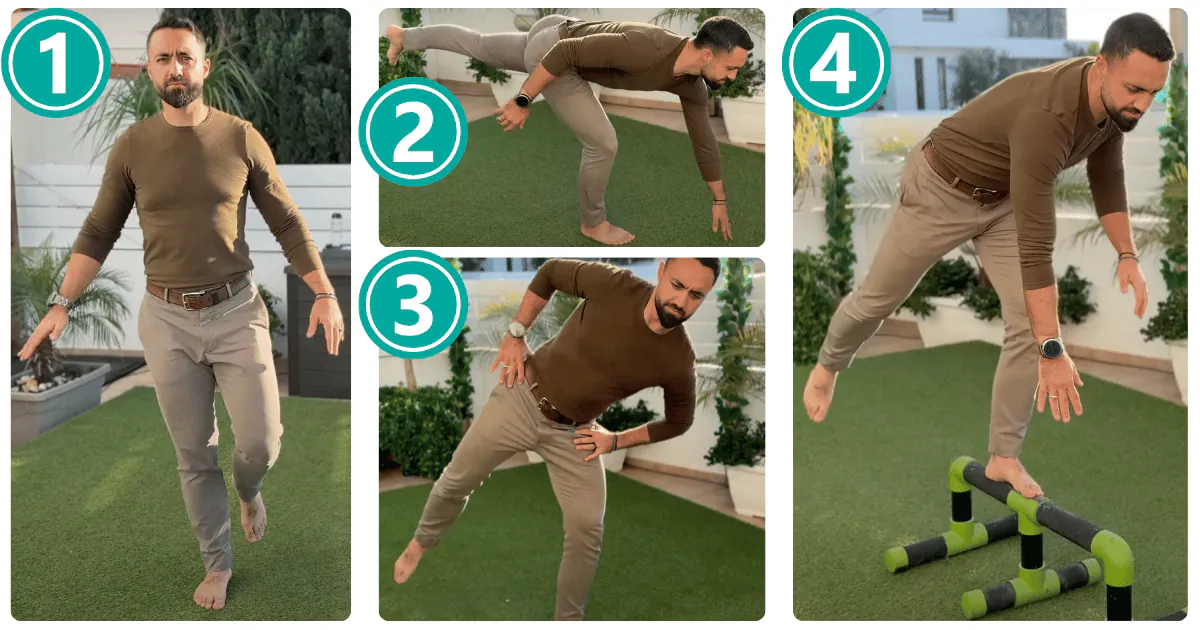
Here's an easy single-leg stability progression: Basic to Advanced
Start by standing barefoot on one leg for one minute, keeping your pelvis level
Add gentle hip hinging while maintaining a stable core and neutral spine
Introduce hip rotation to challenge your glutes in multiple planes
Progress to an unstable surface like a balance beam
How Tight Ankles Ruin Foot Arch Stability
Tight ankles limit dorsiflexion—the ability for your knee to travel over your toes in movements like walking, running, and squatting. When this range is restricted, your body compensates by rotating the foot outward and collapsing the arch inward, which effectively turns the mid-foot into a makeshift second ankle joint [3].
In fact, research shows that 76.6% of people with flat feet have ankle dorsiflexion restrictions [4].
Restricted dorsiflexion also makes the ankle itself more prone to injury.
When the joint can't move as needed, it's more likely to deviate into compromised positions under load or during dynamic tasks [5].
A study on army recruits found that those with the stiffest ankles were five times more likely to sprain their ankles, compared to those with average flexibility [6].
Two Simple Fixes for Tight Ankles
Ditch raised-heel shoes
They lock your ankle in plantar flexion (toes pointed down), which gradually shortens your calf muscles and Achilles tendon.
Switching to flat, zero-drop shoes keeps your foot in its natural position, allowing your calves and Achilles tendon to maintain their full length and flexibility. See our list of recommended zero-drop shoes: #Barefoot Shoe Finder
Practice the deep squat daily
Without regularly challenging your ankles through their full dorsiflexion range, you'll gradually lose that mobility.
In Eastern cultures where squatting remains the preferred resting position, people maintain excellent ankle flexibility well into old age—proof that daily practice preserves joint function.
How to Rebuild Foot Strength
Your feet contain 29 muscles that work like tension cables supporting a tent. When these muscles are weak, it's like having loose cables—the entire structure becomes unstable and can't hold its shape under stress.
There are 3 ways you can increase the strength of the foot muscles.
1. Minimalist Footwear
Minimalist shoes are highly flexible and lack arch support, allowing the 33 joints and 29 muscles in each foot to work harder in every step.
In a 2021 study, participants increased their foot strength by 57.4% in just six months simply by wearing minimalist shoes during daily activities—no additional exercises required [7].
A word of caution: If your feet are currently weak, transition gradually. Jumping straight into barefoot shoes can overwhelm unprepared muscles and lead to injury. For a science-based, step-by-step approach, follow our #Barefoot Transition Plan.
2. Toe Alignment
Your toes should be the widest part of your foot, creating a stable tripod-like foundation. But there's another benefit: most intrinsic foot muscles connect to your toes, so proper alignment directly impacts their force production.
When I tested my toe flexion strength in a university lab, misalignment reduced my big toe's force by nearly 20%.
This strength loss compounds over time. In a study of 32 women with bunions, every participant also had flat feet—clear evidence that toe misalignment and arch collapse go hand in hand [8].
Toe misalignment → weakens intrinsic foot muscles → reduces arch height
Three approaches to fix toe alignment:
Wear shoes with wide toe boxes. These match your foot's natural shape, allowing your toes to maintain proper alignment instead of being squeezed together.
Use silicone toe spacers consistently. Research shows significant improvements after 12 months of regular use [9].
Practice the toe spread-out exercise. This exercise targets the toe abductors—the muscles responsible for maintaining proper toe alignment and arch height [10].
3. Enhancing Your Ground Feel
The soles of your feet contain thousands of mechanoreceptors—specialized nerve endings similar to those in your hands. They gather sensory data that lets your body adjust muscle tension in real time, a process that helps prevent ankle sprains by improving “time to stability,” or how quickly you regain balance with every step [11] [12] [13].
Thick cushioned shoes interfere with this system.
In one study, walking on soft EVA foam significantly reduced foot muscle activation compared to hard surfaces, especially at initial contact [[14]].
By dampening sensory input, these barriers weaken natural arch support and overall stability [15].
Minimalist shoes—typically with soles under 1 cm—offer protection without dulling feedback. This sharper stimulation activates your intrinsic foot muscles, allowing your body to fine-tune shock absorption and maintain balance naturally.
You can find the best minimalist shoes here: #Barefoot Shoe Finder
Take Action Today
Don't just cover up flat feet and weak ankles with expensive insoles and supportive shoes. Address the following root causes instead:
Strengthen your glutes with single-leg training
Restore ankle mobility through daily deep squats
Build foot strength with minimalist shoes and targeted exercises
Realign your toes with spacers and naturally-shaped footwear
Improve ground feel by ditching excessive shoe cushioning
Start with one change today and layer in the others over time.
For a full system – complete with personalized assessments, guided progressions, and over 150 targeted exercises and follow-along workouts become a member of The Barefoot Strength Academy.
Sources
The sources cited in this article. Select a small reference number to return to its place in the article.
- Electromyographic analysis of gluteus medius and gluteus maximus during rehabilitation exercises.. Boren K, Conrey C, Le Coguic J, Paprocki L, Voight M, Robinson TK.. Int J Sports Phys Ther. 2011. 1
- Balance training for persons with functionally unstable ankles.. Rozzi SL, Lephart SM, Sterner R, Kuligowski L.. J Orthop Sports Phys Ther. 1999. 2
- The effect of reduced ankle dorsiflexion on lower extremity mechanics during landing: A systematic review.. Mason-Mackay AR, Whatman C, Reid D.. J Sci Med Sport. 2017. 3
- Prevalence of Calf muscle tightness in asymptomatic flat foot subjects. Sara H. Kamel Mohamed, Enas F. Youssef, Mona S. Faggal, Mona M. Ibrahim. Egyptian Journal of Physical Therapy. 2022. 4
- Ankle-dorsiflexion range of motion and landing biomechanics.. Fong CM, Blackburn JT, Norcross MF, McGrath M, Padua DA.. J Athl Train. 2011. 5
- Effects of ankle dorsiflexion range and pre-exercise calf muscle stretching on injury risk in Army recruits.. Pope R, Herbert R, Kirwan J.. Aust J Physiother. 1998. 6
- Daily activity in minimal footwear increases foot strength. Curtis, Rory, Willems, Catherine, Paoletti, Paolo, D’Août, Kristiaan. Scientific Reports. 2021. 7
- Effects of hallux valgus deformity on rear foot position, pain, function, and quality of life of women.. Coşkun G, Talu B, Bek N, Bayramlar KY.. J Phys Ther Sci. 2016. 8
- Effectiveness of the custom-mold room temperature vulcanizing silicone toe separator on hallux valgus: A prospective, randomized single-blinded controlled trial.. Chadchavalpanichaya N, Prakotmongkol V, Polhan N, Rayothee P, Seng-Iad S.. Prosthet Orthot Int. 2018. 9
- Treatment of Progressive First Metatarsophalangeal Hallux Valgus Deformity: A Biomechanically Based Muscle-Strengthening Approach.. Glasoe WM.. J Orthop Sports Phys Ther. 2016. 10
- The Effect of a 6-Week Strength and Balance Training Program on Navicular Drop and Proprioception in Excessive Pronated Foot. Ryoko Suzuki. University of Tennessee, Knoxville — Master's thesis. 2004. 11
- From barefoot hunter gathering to shod pavement pounding. Where to from here? A narrative review. Peter Francis, Grant Schofield. BMJ Open Sport & Exercise Medicine. 2020. 12
- Foot strike patterns and collision forces in habitually barefoot versus shod runners.. Lieberman DE, Venkadesan M, Werbel WA, Daoud AI, D'Andrea S, Davis IS, Mang'eni RO, Pitsiladis Y.. Nature. 2010. 13
- Fine-wire electromyography of the transverse head of adductor hallucis during locomotion.. Robb KA, Melady HD, Perry SD.. Gait Posture. 2021. 14
- Minimal footwear improves stability and physical function in middle-aged and older people compared to conventional shoes. Tomasz Cudejko, James Gardiner, Asangaedem Akpan, Kristiaan D'Août. Clinical Biomechanics. 2020. 15
Watch the video
FREE 7-DAY EMAIL COURSE
Sign up for our free Strong Feet and Glutes course
Get a lesson in your inbox every day for 7 days.
Start your free course
You'll also join our newsletter. Unsubscribe at any time.